In February 2026, Black History Month in the US, Democratic congressman Al Green held up a sign saying “Black people aren’t apes” during the State of the Union address. His protest was a direct response to a post from the President of the United States portraying Barack and Michelle Obama as simians. Knowledge of Black History would help non-Black people understand that this dehumanising comparison is nothing new.
In the UK, two leading Black actors, Delroy Lindo and Michael B. Jordan, maintained their poise but clearly expressed their shock and disbelief while a man suffering from Tourettes shouted the “N” word at the BAFTA ceremony. White people wondered what was so offensive – although knowledge of Black History would have helped them understand the centuries of trauma and violence embodied in that slur.
As Black History Month comes to a close in the United States, Funmilayo urges its readers – as we do every year – to celebrate Black History every month. This is not just because of the insistent attempts to erase it in the US, occasionally thwarted by pushback from the courts, but because “history may not repeat itself, but it rhymes”.
Funmilayo’s publications are available year-round to remind readers that Black people worldwide have been artists, soldiers, and intellectuals, and always fought back against attempts to deny their freedom and humanity. Our Unsung Heroes in Black History series is growing every year. We hope you will check out some (or all) of our titles:
The Need for Heroes: Black Intellectuals Dig Up Their Past
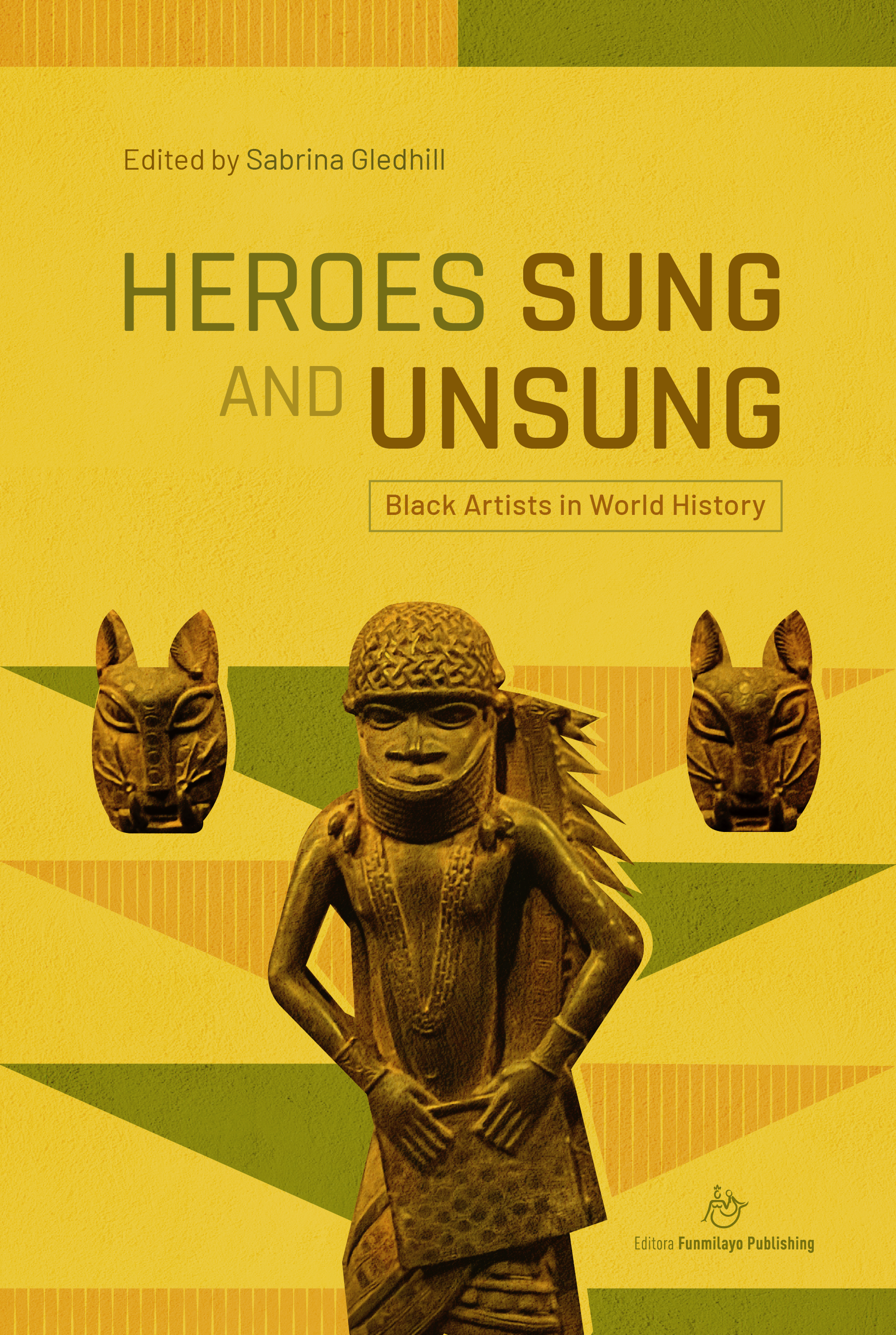
Heroes Sung and Unsung: Black Artists in World History
Manuel Querino (1851-1923): An Afro-Brazilian Pioneer in the Age of Scientific Racism
Black Atlantic Crossings: The Lives and Anti-Racist Tactics of Booker T. Washington and Manuel R. Querino
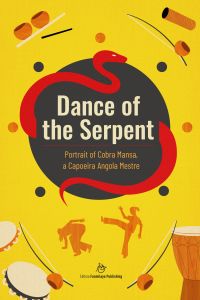
Dance of the Serpent: Portrait of Cobra Mansa, a Capoeira Angola Mestre
They are available through several online booksellers.
The story of Mestre Cobra Mansa is a powerful testament to transformation, offering inspiration not only to capoeiristas but to anyone interested in the resilience of the human spirit.
Often stating that capoeira saved his life, Cobra Mansa navigated a youth where the odds were stacked against him; while many of his peers fell victim to the systemic violence of the streets, he forged a different path. He rose to become one of the world’s most respected masters of Capoeira Angola, yet his journey didn’t stop at the edge of the roda. From embarking on a quest to Africa to uncover the art’s ancestral roots to his current work at Kilombo Tenondé, he has pioneered a decolonial approach to ecology. By blending traditional martial arts with permaculture, he has coined terms like PermAngola and CosmoAngola, reimagining our relationship with the soil and the soul.
This remarkable life story—spanning from the urban margins of Brazil to the forefront of global cultural activism—is now available for the first time in English.
The book is out, people around the world (from Poland to Japan!) are snapping it up, and the reviews are coming in:
Excellent book on the journey of Mestre Cobra Mansa! Lots of insights about his travels and Capoeira Angola. Loved it.
You can get it on Amazon and other online booksellers. Available in hardcover, black-and-white and full-colour paperback, and e-book editions. Here’s a link for the full-colour paperback https://amzn.eu/d/01IHg4fB
Mestre Cobra Mansa
Moscow, 24 April 2007. Photo by Zac Allan. Source: Wikimedia Commons / Pubic domain
Editora Funmilayo Publishing is thrilled to announce that Dance of the Serpent: Portrait of Cobra Mansa, a Capoeira Angola Mestre is now available for Kindle pre-order!
Witness the astonishing journey of Mestre Cobra Mansa, who rose from the poverty-stricken streets of a Rio de Janeiro suburb to become a global icon of the Afro-Brazilian martial art. This definitive biography tracks his life from mastering the deceptive jogo of Capoeira Angola to dedicating his later career to environmental justice and permaculture in Brazil.
If you love stories of profound personal transformation, cultural preservation, and resilience, secure your digital copy today.
Editora Funmilayo Publishing is pleased to announce the upcoming publication of Dance of the Serpent: Portrait of Cobra Mansa, a Capoeira Angola Mestre, the definitive biography of one of the most influential figures in the Afro-Brazilian martial art/dance capoeira. Due out on 15 December 2025, the book traces the astonishing journey of a man who rose from the poverty-stricken streets of a Rio de Janeiro suburb to become a global master, transforming a martial art into a way of life, and dedicating his later career to environmental and social justice.
Mestre (Master) Cobra Mansa’s life is a profound testament to the power of Capoeira Angola as a tool for personal and communal liberation. Born in the deprived town of Duque de Caxias, he initially found refuge and strength in the practice, mastering the deceptive, strategic movements of the jogo (the game). He quickly ascended through the ranks of the GCAP (Grupo de Capoeira Angola Pelourinho), the organization founded by his mentor, Mestre Moraes. Along the way, he earned a PhD and became Dr Cobra Mansa.
The book details how, as a young man, Cobra Mansa became instrumental in establishing Capoeira Angola in the United States and worldwide. He has spent decades travelling, ensuring the art—a living link to the history of the Forced African Diaspora—retained its cultural authenticity and philosophical depth, always emphasizing that capoeira is more than a practice; it is a dynamic way of existing in the world.
The biography also examines the Mestre’s social activism. After teaching in the USA, Cobra Mansa returned to Brazil to found Kilombo Tenondé, an Afro-Brazilian centre dedicated to preserving the cultural heritage of Afro-Brazilians and Indigenous people while practicing permaculture and sustainable farming. His current mission is the preservation of ancestral wisdom and the construction of autonomous, thriving communities.
Dance of the Serpent is an essential read for enthusiasts of martial arts, Black history, cultural studies, and anyone seeking an inspiring account of transformation and purpose.
About Mestre Cobra Mansa
Mestre Cobra Mansa is a renowned master of Capoeira Angola, recognized globally for his deep understanding of the art’s African roots. His life has been dedicated to teaching, preserving cultural heritage, and applying the philosophies of Capoeira to environmental and community development projects in Brazil.
Mestre Cobra Mansa, Moscow, 24 April 2007. Photo by Zac Allan. Source: Wikimedia Commons / Public Domain
Black History Month (BHM) in the UK, observed every October, is a vital annual affirmation of the continuous and profound contributions of people of African and African Caribbean descent to British life. This month provides a crucial, focussed period to move beyond narrow, often fragmented historical narratives and instead highlight the sprawling, centuries-long legacy of Black individuals who have shaped society, culture, and intellectual life globally. While this annual celebration is necessary, its deeper purpose is to seed the knowledge and understanding that must take root all year long.
Celebrating the Sung and Unsung
The history recognised during BHM is one defined by both immense resilience and extraordinary creativity. We rightly honour the legacies of the Windrush generation and literary voices like Bernardine Evaristo and Zadie Smith. Yet, the crucial task is to move beyond the surface and uncover the foundational stories that support them. This commitment to wide recognition is central to Funmilayo’s mission, perfectly embodied by titles such as The Need for Heroes, which powerfully advocates for recognizing aspirational Black leadership, and Heroes Sung and Unsung, which is dedicated to illuminating the pioneering figures often overlooked by mainstream history. These works remind us that heroism and talent exist at all levels of society, waiting to be acknowledged.
The Global and Transatlantic Thread
BHM demands that we understand Black history not just as a British concern, but as a global, interconnected force. We must look beyond national borders to grasp the full scope of Black intellectual achievements. For instance, Funmilayo’s scholarship on the Afro-Brazilian polymath, Manuel Querino (1851–1923): An Afro-Brazilian Pioneer in the Age of Scientific Racism, demonstrates how pioneering thought emerged in the face of brutal institutional racism. Further expanding this view is Black Atlantic Crossings, which emphasizes the vital transnational dialogues between figures separated by geography, challenging us to see Black experiences as an integral thread within the fabric of global history.
A Promise of Year-Round Learning
Ultimately, the dedicated month of October serves as a powerful catalyst for a broader cultural shift. By promoting the rigorous recovery and visibility found in publications like Black Atlantic Crossings and Heroes Sung and Unsung, we fulfill BHM’s promise. The month is a joyous celebration, but it is also a renewed promise to maintain a year-round focus where the accomplishments and heritage of all Black people, from the famous to the previously forgotten, are recognized, valued, and taught without end.
It’s Black History Month in the UK, but our goal is to ensure the accomplishments of Black people worldwide are celebrated and studied all year long. A reader of Heroes Sung and Unsung: Black Artists in World History recently sent us an email with herfeedback,which we wanted to share with you:
“Heroes Sung and Unsung really speaks to the reader, and every story you’ve included brings that person back to life. What I find is that I’m reading a chapter, and then the stories will trickle around in my mind, and send me back to re-read a story and see what else I can find out about the person.
“Two of them stand out for me in particular.
“The most heart-wrenching story I’ve so far come across in your book is that of Richard Lonsdale Brown. He seems to have been so modest in his own estimation of his abilities, needing to seek out George de Forest Brush, the artist in New York, to bravely approach him and ask if de Brush thought that he could ever become an artist. Imagine how differently things would have turned out, had de Brush not been so encouraging and taken on Brown as a pupil, and taken him to de Brush’s summer home in New Hampshire to paint the scenery there. After all the discouragement that Brown received when he tried to make his way on his own in New York, at least we know that his skill in landscape painting was at last recognised, and an exhibition of his work was held on Fifth Avenue. However, although the obituary on page 51 indicates that the exhibition netted him a sufficient sum to begin his studies”, other mentions on the internet indicated that he struggled to pay his way as an artist, and ended up returning to live with his parents for precise reasons which nobody seems to know. Before leaving New York, he seems to have expanded his repertoire beyond landscapes to design and decoration, such as an illustration for the front cover of the Christmas Crisis of 1915, with a powerful, bold and colourful illustration of ‘The Star of Ethiopia’ (reproduced in the link below). There was also an interview he gave in 1913, also reproduced in the link below, in which Brown sets out his thoughts on how Negroes (to use the term he gave in the interview) were perceived:
May I say without being thought guilty of egotism or a desire to boast, which is far from my intention, that I think that what I have accomplished and what has been accomplished by other negroes in other lines gives proof that the negro is capable of worthy things, and that the conception of many white persons that the negro is good for nothing but manual labour and such other work as does not call for much mental effort is not only unfair but incorrect? After a people have been held down for centuries, as we have been, is it to be expected that we should in only fifty years of freedom equal or even approach the white race in every particular? Many persons, even today, gain their ideas of the negro from story books, while it is a fact that many educated persons who have not had the opportunity to know the negro at close range still regard him as but little more removed from the position in society he occupied while a slave.
The link to the article below contains a clue as to why Brown left New York and returned to his parents in Oklahoma – his interest was expanding beyond landscape painting to watching people: “In West Virginia he only loved landscape. Now he watched faces, saw the bright girls as they went to high school, their books under their arms, interested, alert. Saw them deteriorate, their ambition lost as they saw no chance for advancement. He watched the great procession of Harlem and wanted to be able someday to paint it.” According to the article below, he appears to have been unable to make a living as an artist, “like many black artists in that time”. So this severe set-back and realisation that he might not be able to make a living as an artist in New York, may also have led to his return to the parental home.
“Tragically, while staying with his parents in Oklahoma, he appears to have caught pneumonia (despite his young age), from which he died in 1917. Du Bois, writing of Brown in editorials after the young man’s death, writes of his frustration at the loss of Brown’s talent, and appears to have blamed this on people not being willing to financially support the creativity of the artists in their midst. Du Bois in 1922 writing in The Crisis: ‘There is a deep feeling among many people and particularly among colored people that Art should not be paid for. The feeling is based on….a dream that the artist rises and should rise above paltry considerations of dollars and food’.
“In the case of Blind Tom, I was struck by the way that his superb gift for music shone through. Although he appears to have had no formal musical education (a German musician in Columbus giving his opinion that Tom didn’t need any teaching as he would ‘work it all out by himself’!), he could identify every note when a number of chords were struck simultaneously, and he learned to play music on his master’s piano after listening to others perform those pieces. Listening to the rain running down a gutter, and claiming inspiration from ‘what the wind said to me’ or ‘what the birds said to me’, shows how his sense of music encompassed the sounds of nature, as much as the more formal concept of instrumental music and song. The Wikipedia article on Blind Tom Wiggins adds a rather bitter taste, explaining how Tom’s master, the lawyer Bethune, made a great deal of money out of Tom, touring him extensively and making him perform for up to four times a day. The concert promoter to whom Bethune hired out Tom apparently marketed Tom as a ‘Barnum-style freak’, and frequently compared him to a bear, baboon or mastiff. Very sadly, Blind Tom would usually introduce himself onstage in the third person, repeating what his managers had said about him (e.g. that he was non compos mentis) without any apparent understanding of how derogatory such a label was.
“I have much more to read of this book, but I wanted to let you know how interesting I’m finding it.”
Black Atlantic Crossings by Sabrina Gledhill examines the lives and anti-racist tactics of Booker T. Washington and Manuel R. Querino, two influential figures in the Black Atlantic world whose contributions have often been overlooked or belittled. Challenging this historical erasure, the book argues that these figures were not merely products of their respective national contexts (the United States and Brazil) but rather transatlantic intellectuals who navigated and challenged the racialised boundaries of their time. It emphasises the interconnectedness of Black experiences and intellectual movements across the Atlantic, highlighting how Washington and Querino, despite their geographical distance, shared common concerns and engaged in vital transnational dialogues. Furthermore, it analyses the strategies and tactics they employed to combat racism and promote social justice within their societies, including their engagement with education, politics, and cultural production, ultimately offering a crucial rethinking of their lives, work, and enduring impact beyond narrow nationalistic frameworks.
The latest addition to Funmilayo’s Unsung Heroes series, Black Atlantic Crossings is now available in full-colour and black-and-white editions. You can find it on all major online booksellers, including Amazon and Waterstones.
Praise for Black Atlantic Crossings As promised, Sabrina Gledhill’s research does, in fact, expand the Black Atlantic by putting into dialogue the ideas and activism of two giants of the African Diaspora in the Americas. The legacy of Booker T. Washington has been well known, including in Brazil, since the turn of the twentieth century. However, in addition to reinterpreting his legacy in a broader context, this book introduces the English-speaking reader to Manuel Querino, an insightful and multifaceted Afro-Brazilian thinker who is little known outside Brazil. Enjoy reading this original work, which is destined to become a classic. João José Reis, Universidade Federal da Bahia, author of Slave Rebellion in Brazil
Black Atlantic Crossings is a timely reflection on the challenges that African American intellectuals faced in the aftermaths of slavery in Brazil and the United States. While not always understood or accepted by later commentators, the anti-racist activism of Manoel Raimundo Querino and Booker T. Washington, ably analyzed by Sabrina Gledhill, profoundly challenged the emerging post-slavery hierarchies. She demonstrates that there is much to learn from these two men’s lives and the evolution of their historical memory in the century since their deaths. Hendrik Kraay, University of Calgary, author of Bahia’s Independence: Popular Politics and Patriotic Festival in Salvador, Brazil, 1824-1900
Crossing the Atlantic requires navigating a sea of stories through rough and calm waters, amidst fleeting encounters and enduring dialogues. In this insightful work, Sabrina Gledhill offers more than just a theoretical compass. Her sophisticated approach reveals the profound oceanic connections that shaped Booker T. Washington and Manuel R. Querino, revisiting them as original Atlantic characters, without borders, but with transnational margins. Flavio dos Santos Gomes, Universidade Federal do Rio de Janeiro, co-author of The Story of Rufino: Slavery, Freedom, and Islam in the Black Atlantic




 Editora Funmilayo Publishing