New neighbourhood, old issues

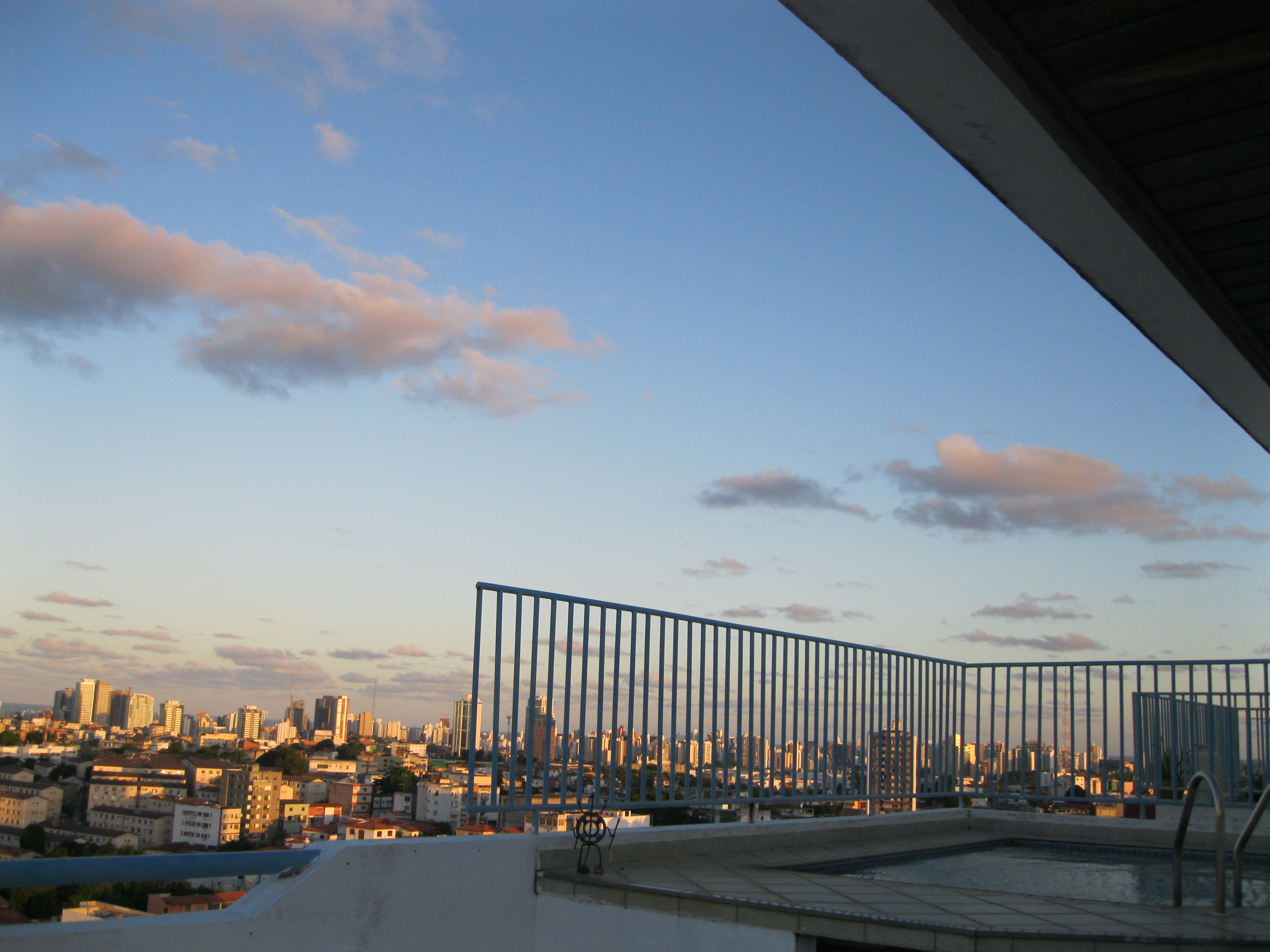
The new view makes it all worthwhile

The new view makes it all worthwhile

We are now living in Cabula, a district of Salvador with a distinctly African-sounding name that is home to one of its greatest terreiros (Afro-Brazilian temples). According to Wikipedia – caveats duly noted – this area used to be a maroon settlement, or quilombo, formed by escaped slaves of Bantu origin – from cultural groups currently found in Angola. Cabula is also the name of a secret 19th-century sect that combined elements of Spiritism, Islam and Bantu religious beliefs. Powerful stuff! I have also found that Cabula might also be the name of a town or region in Angola itself. Any confirmation of that will be greatly appreciated.

One thing I noticed right off when we moved into our new place was the high level of security – or at least, security preparedness. We received lots of keys, but the main doors to the two buildings in the complex are most always open. Now I know what all the keys are for.

Early this morning, before 6 am, I heard loud voices outside my bedroom door, which also leads to the outer staircase and the top end of the lift shaft. The building management had already advised us about a scheduled power outage that was supposed to start at 8 am, so I thought the voices and banging I heard were maintenance workers getting a head start. I almost popped my head out the door to complain. So glad I didn’t.

After tossing and turning in bed for a while, I heard more voices, and then the original two identified themselves as “police”. That gave me a chill, because the last time someone had shouted “police” outside my bedroom was when I lived in a very low-income district, and I had just heard the same voice issue death threats to the kids who were sheltering under our house’s overhang. I played possum both times.

This time around – and this is the most credible version of the story I’ve heard so far – an individual was seen running into the complex and the security guard called the police. The most incredible part – though I know it’s true – is that they actually came! They must have spent hours scouring every floor and stairwell, because I later heard that the police were still there when my housekeeper arrived at 7:30 am. They don’t seem to have found the intruder, and the janitor tells me no one was burglarised. The mystery deepens.

It is a bit strange after 17 years in a much larger complex with – presumably – much better security. Living in a country with such huge income disparities, where even people renting a flat in a run-down building in an up-and-coming neighbourhood would seem rich compared to those living in shacks in hardscrabble slums, invasions of apartment complexes are bound to happen. It’s not the first time we’ve experienced it – the last time was nearly 20 years ago. Two apartments in our building in Rio Vermelho were burglarised on All Souls’ Day, when many people in Bahia head for the cemeteries to remember their dead (we were home at the time, which may explain why we were spared).

Perhaps the main doors of this complex in Cabula will be locked from now on – or until we let our guard down once again.



Checking in

This post is just to signal I haven’t been swallowed alive by an anaconda or eaten alive by piranhas or any of the other things people living in Brazil are supposedly prey to (as well as to lighten up the tone of this blog).

It’s been a while since I last posted, and since then my family and I have moved from a formerly ritzy neighbourhood of Salvador that’s becoming more and more commercial to a formerly poor neighbourhood that’s currently up and coming (at least two bus stops from where we live) thanks to the construction of two major apartment complexes and a shopping mall down the road.

The World Cup has begun, without any of the doom and gloom predicted by Anarchist graffiti – a win for bread and circuses – and winter is not only coming, it’s already here, at least in this hemisphere.

More later.

A cautionary tale

Plagiarism. In recent memory, at least one US presidential candidate and a famous scientist have been accused of passing off other people’s words as their own. The candidate dropped out of the race. The scientist’s name, once revered, is mud.

To anyone who lives in a society where plagiarism is viewed as a serious offense that can lead to immediate expulsion from school or vilification in journalism or politics, it may come as a surprise that in some countries, it is a minor pecadillo. An embarrassment better swept under the rug.

One of those countries, sad to say, is Brazil.

I came across a recent and extreme case through an American friend, a respected scholar in her field whose PhD dissertation was published in Brazilian Portuguese by a university press. While routinely Googling her name for citations, she found a scholarly article published in an online journal – which also has a print edition – that plagiarized several pages from her book, word for word, and then went on seamlessly to do the same with an article by a famous anthropologist who passed away in 2010.

Going through the article line by line, my friend was shocked to find that the supposed author had only written two or three original lines. Ninety-nine percent of the paper was plagiarized.

My friend immediately contacted the journal’s publishers and got no reply. It took several increasingly irate emails to elicit a grudging response, and weeks before the offending article was removed from the web.

The plagiarist is a doctoral candidate. She may lose her scholarship. She may be sued by the publishers of the authors whose works she copied and pasted. There is no guarantee at all that she will be expelled – even though more examples of plagiarism have turned up in other papers she published. Even her MA thesis.

After all, people who live in glass houses don’t throw stones.

Lesson learned

cropped-sarava-shop.jpg

In my last post, I mentioned that practitioners of the traditional Afro-Brazilian religion Candomblé are sick and tired of being studied. We’re also tired of being misunderstood – yes, I’m speaking as a practitioner. I was initiated as a novice more than 20 years ago, and over the last couple of decades, I have taken several people to visit Candomblé temples and even for divination sessions by having cowries or Ifá opeles (divining chains) cast for them by respected religious leaders. Some experiences were positive, and some left me full of regret.

My most recent experience was the worst. I naively neglected to give a visitor “the lecture” to give her some background on the subject, or at the very least some reading materials, like the entry on Afro-Brazilian religions I wrote for the Brazil Today encyclopaedia. Somehow, I assumed that she would approach the subject with an open mind. I also assumed that she respected my knowledge and judgement and would let me be her guide. Unfortunately, people who firmly believe that Candomblé, orisha worship and their cousins, like Santeria (Lukumi) and Vodun, are purely negative and devoted to doing harm had already influenced her mindset.The result was a bizarre post on a major blog – with a much larger readership than this one – calling Candomblé “black magic” and “witchcraft.” When I explained that these terms have been used to persecute my religion for centuries, she simply removed my name from the post. Later, after receiving comments from two of my friends and presumably many others, she changed the wording, but left in “black magic mini-break” because it was a “joke.”

I’m deeply saddened and disappointed by this experience. As a result, anyone who turns up asking about Candomblé and cowrie divination in the future will have to sit through “the lecture” and read up on the subject first – I recommend Robert Farris Thompson’s Flash of the Spirit, for starters. Otherwise they will find any doors I could open firmly shut. There are plenty of charlatans about who will be more than happy to take their money.

Piled higher and deeper

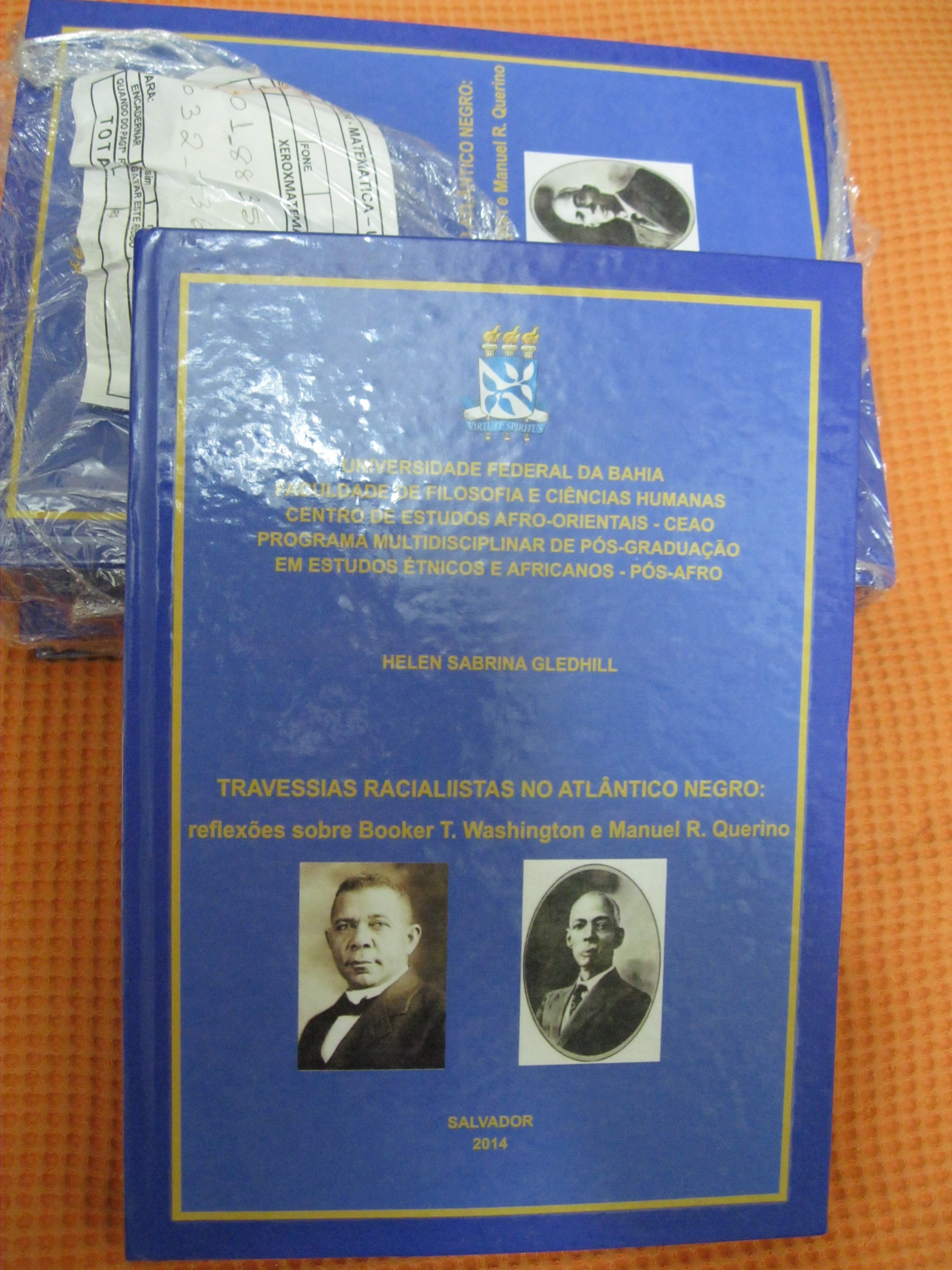
Bound dissertation

The hardcover version of my dissertation

When I arrived in Brazil in December 1986, I was only going to stay for three months. I had just completed my MA in Latin American Studies and was enrolled in the PhD program in History at UCLA. The plan was to gather information on the role of iyalorixás (high priestesses of the Afro-Brazilian religion Candomblé) in the lay community. Mãe Menininha, one of the most famous iyalorixás in history, had died that year, and I wanted to explore her influence in society at large and go beyond that to take a look at other religious leaders. I soon learned that the Candomblé community was (is) sick and tired of being studied, and decided that I’d rather be a part of it – and Bahian culture in general – than study it. Then I got involved in Capoeira Angola, building on the basics I had learned in LA. It was more of an activist movement than a martial art – helping revive and perpetuate another aspect of African resistance in Brazil.

Before the three months were up, I came to a decision: I would find a new home for my only “family” back in California – Lily, a lovely lilac-point Siamese cat – and stay in Brazil. With the help of good friends who made that possible – Susan, Steve and Cynthia, this  is a shout-out to you – I made my home in Bahia, and for a while there, I thought I had left academia behind me. I married a Capoeira classmate, had a beautiful daughter (who is now 25), got divorced, adopted another daughter, and worked as a translator and English teacher. But then, after a while, I started dreaming of that PhD I had left behind.

Fast forward a few decades. Based on the research I did for my MA, which focused on Brazilian intellectuals who studied Africans and Afro-Brazilian culture before it became an accepted field of study in the 1930s, I decided to turn my attention to an Afro-Brazilian, Manuel Querino, and an African American, Booker T. Washington. Both were self-made men who lived in the late 19th and early 20th centuries. They both believed that education was the best path for former slaves and their descendants to get ahead, and led by example. Although they were both highly respected in life, they were later maligned, Washington as an “accommodationist” and Querino as a “humble Black teacher” who lacked “intellectual sophistication”. My aim was to put both men in context and shed some light on their tactics and trajectories.

Reader, I graduated on March 18, 2014. After all these years I have earned a PhD in Ethnic and African Studies from the Federal University at Bahia Center for Afro-Asian Studies (CEAO/UFBA). And that is just the first step. Watch this space.

 Here’s a link to my dissertation (in Portuguese)