20 November marks the anniversary of the assassination of Zumbi dos Palmares, the best-known leader of Brazil’s most famous and enduring quilombo. This maroon settlement was established in the mountains of what is now Pernambuco by enslaved people who self-emancipated by escaping bondage.
This year, we published an anthology entitled The Need for Heroes. It contains writings by Black intellectuals from the US and Brazil that celebrate the heroism of maroons and soldiers who fought for liberation. One of the authors is Manuel Querino, writing about Palmares over a century ago.
A moving response to The Need for Heroes: Black Intellectuals Dig up their Past
The book is extremely timely, given the state/conditions of the politics of the US currently.
It is good having all this detailed background information in one place. It provides historical background/examples of how and why the current politic and society have reached this point.
The essays of the authors and stories of various heroes humanize them: enslaved Harriet Tubman doing housework to the displeasure of her mistress, Booker T. Washington’s friendship with Charles Banks of Mount Bayou, Mississippi and with Bishop George W. Clinton of Lancaster, South Carolina, the town where my ancestors lived.
Learning about individuals of the years immediately after slavery making their way in the post-slavery era in US is extremely important, not to mention those who struggled for Freedom before the Civil War. Learning about Blacks who were not enslaved, like Crispus Attucks, but struggled for the freedom during American Revolutionary War was eye opening, as well as details of abuses/discrimination against Blacks after the 1812 war.
For myself, I can say “Heroes” makes me want to know and read more about Black people/heroes, past and present, who have contributed to the march forward to Freedom. A copy of The Need for Heroes should be in the home of all “Black Folk” and other Americans!
It all started with a deep dive into the life of Afro-Brazilian scholar Manuel Querino. I was fascinated by his work, but quickly realised one book couldn’t do justice to his vast contributions. That’s when the idea struck: an anthology, a collection of voices to paint a fuller picture.
That first book, published during the enforced idleness of lock-down, opened the door to something bigger. I found myself drawn to other forgotten heroes, their stories echoing Querino’s own. Carter G. Woodson, Arthur Schomburg, W. E. B. Du Bois, Booker T. Washington – these giants and others had also paved the way, challenging the same tired narratives about Black people.
One book became two, then three. The “Unsung Heroes” series was born, not from a grand plan, but from a genuine curiosity about the lives history tried to erase. These weren’t just stories about Black soldiers or maroons or artists; they were about resilience, about brilliance pushing back against erasure.
Querino himself was a target of this erasure, his legacy twisted to fit a convenient narrative. But we’re setting the record straight. The “Unsung Heroes” series isn’t just about remembering; it’s about reclaiming, about amplifying voices that have been silenced for far too long.
So, whether you’re discovering Querino for the first time or exploring the works of other trailblazers, I invite you to join me on this journey. Let’s rewrite the past, together.
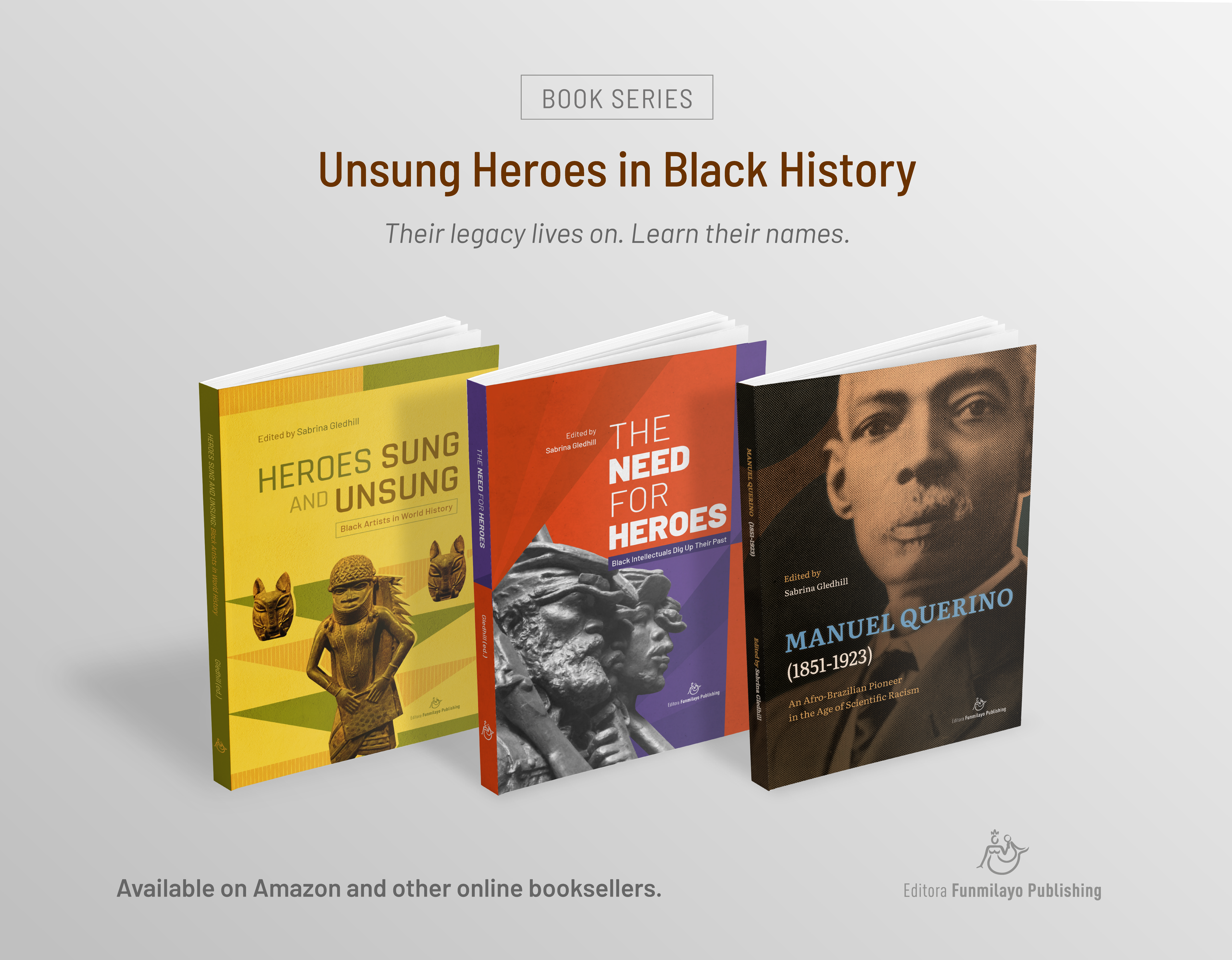
Explore the Series:
NEW: Heroes Sung and Unsung: Black Artists in World History
Manuel Querino (1851-1923): An Afro-Brazilian Pioneer in the Age of Scientific Racism
The Need for Heroes: Black Intellectuals Dig Up Their Past


 Editora Funmilayo Publishing