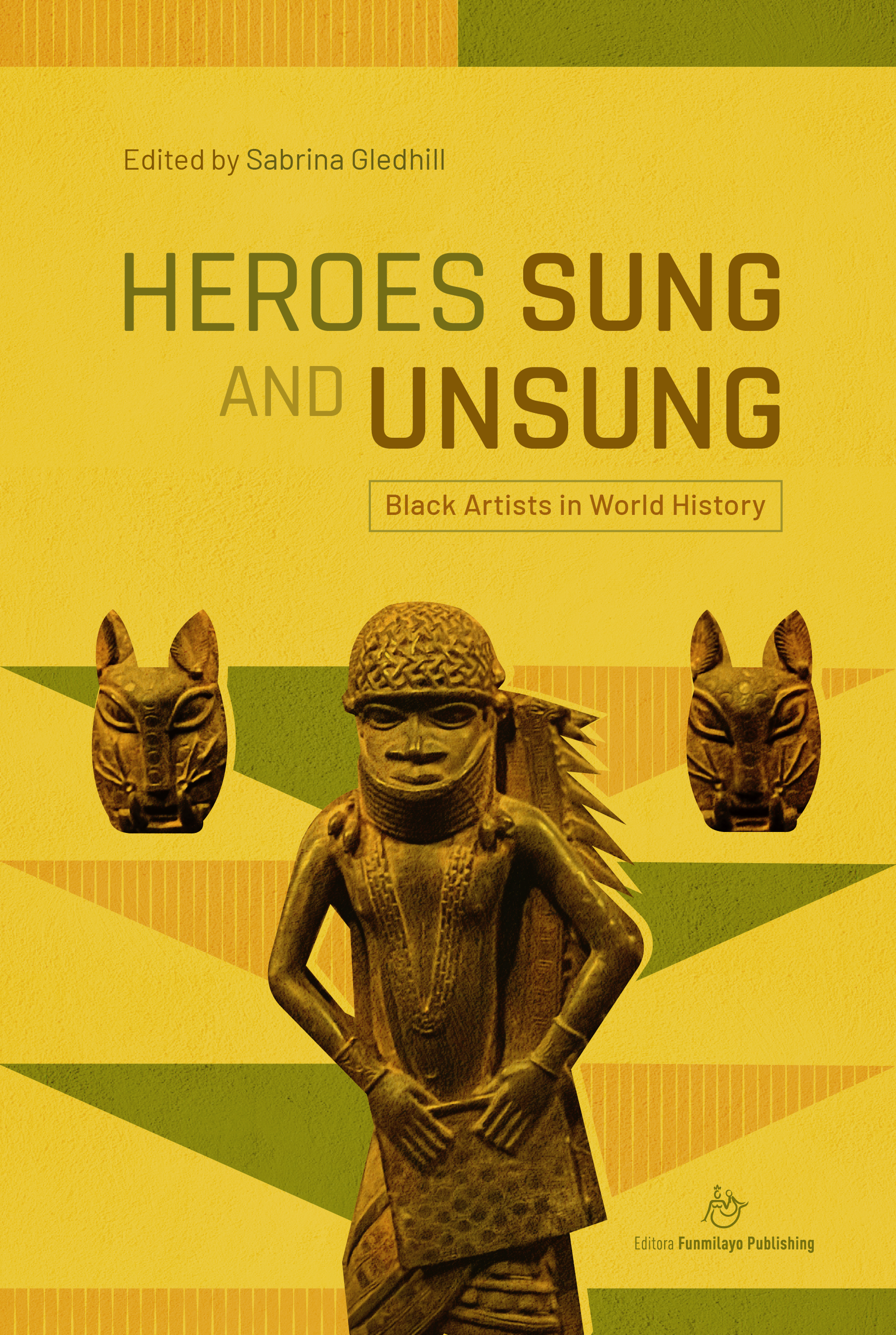
Prepare to be captivated and inspired by the untold stories of Black artistic brilliance across continents and centuries. “Heroes Sung and Unsung” is a groundbreaking anthology that shines a light on the hidden corners of art history, celebrating visionaries whose contributions have long been overlooked.
Delve into essays by figures like W.E.B. Du Bois, Booker T. Washington, Arthur Schomburg, Manuel Querino, and Benjamin Brawley, as they illuminate the struggles and triumphs of Black artists in their own words. From the foreword by Mark Steven Greenfield to the afterword by Ayrson Heráclito and Beto Heráclito, this lavishly illustrated volume is a testament to the enduring power of Black artistic expression.
Discover the breathtaking beauty of the Benin Bronzes, the evocative landscapes of forgotten painters, and the powerful verses of overlooked poets. This anthology pays homage to the sculptors, composers, photographers, and countless other artists whose works have shaped the world we know today.
From a guild of metalworkers in Africa to a sculptress who studied with Rodin. Famous writers who were “whitened” and nearly erased from Black history. A budding landscape artist who died too young. The Coleridge-Taylors: the father, a famous composer, the son of a Black physician from Sierra Leone and a White Englishwoman; and his daughter, also a composer, but whose music is only just being heard, some 80 years after it was written. You will find their stories and many more.
With essays unearthed through meticulous research and stunning visuals, “Heroes Sung and Unsung” is an essential addition to any library. It is a call to action, a reminder that the history of art is incomplete without the voices and visions of Black artists, both sung and unsung.
I launched the Unsung Heroesin Black History series without realising it was a series at all. It started with an anthology on Manuel Querino, the Afro-Brazilian scholar I have been studying and writing about since the 1980s. I realised that Querino’s activities were so varied, covering a gamut of specialisms, that it is impossible for one person to write authoritatively about them all. Fortunately, I had access to writings by E. Bradford Burns (the first bibliographic essay on Querino published in English), Jeferson Bacelar and Carlos Doria (on his pioneering study of Bahian cuisine), Eliane Nunes (on his contributions to art history), Jorge Calmon (on his involvement in labour mobilisation and politics), and Christianne Vasconcellos (on his use of photographs in anthropology) to add to essays of my own that had appeared in Brazilian peer-reviewed journals and books over the years. The result was a compendium that has been published in Portuguese (without Burns’s essay, due to translation right issues) and English, and has been very well received.
That book was published in 2021, during the Covid pandemic. Lockdown was a wonderful opportunity to focus on organising and translating the anthology. In the years since, I have worked on translating and updating a monograph based on my PhD thesis, which has been in peer review since September of last year. The Unsung Heroes series began with the second volume, which I first approached as “something to do” while awaiting the verdict on my own book. It all started with Querino, naturally. I had originally intended to publish my translation of one of his most significant works (for me), O colono preto como fator da civilização brasileira, translated as The African Contribution to Brazilian Civilisation.
First, I was intrigued by parallels between Querino’s story and that of Arthur (born Arturo) Schomburg. Then, I started wondering which works by W. E. B. Du Bois, Carter G. Woodson, Booker T. Washington, and other Black thinkers were comparable to Querino’s essay, which demands recognition for the achievements of Africans and their descendants. Instead of being seen as passive sources of manual labour, Querino asserted that they contributed knowledge they brought from their homelands, like mining and metalworking, as well as helping protect Brazil’s territorial integrity as soldiers. He also emphasised their ingenuity and courage in breaking free from the bonds of slavery to form their own communities, known as quilombos in Brazil.
That initial curiosity led to a gold mine of works on Black soldiers and maroons, which I added to Querino’s essay to produce The Need for Heroes: Black Intellectuals Dig Up their Past, published in June 2024. I realised that the concept of Unsung Heroes, inspired by the title of Elizabeth Ross Haynes’s book of children’s stories, extended to the anthology on Querino. He was well known in life, having achieved such renown in Brazil that several newspapers published his obituary in his home state (Bahia), Rio de Janeiro, and other parts of the country. Representatives of trade unions and academia attended his funeral, which was also covered by the press. But since the 1930s, he had been gradually forgotten, and if remembered at all, thought of as a lightweight scholar, the minor author of a few pamphlets, and even illiterate. There seemed to have been a deliberate effort on the part of the “hegemonic narrative” to rewrite his story as that of a poor, ill-educated Black man who made a stab at anthropology but didn’t quite succeed. This disinformation was convenient because he already contradicted the commonly held notion that all Blacks in Brazil were enslaved until Abolition in 1888, and since then had been nothing but vagrants, thieves, and scoundrels – an image still maintained in the media.
While the eminent Brazilian historian Flavio Gomes was writing the afterword for The Need for Heroes (it was worth the wait), I started putting together works that hadn’t quite fit in that collection and adding many more. Once again, I started with Querino, who is considered the Brazilian Vasari because his pioneering works on the history of art in Bahia were based on biographies of artists. The result was Heroes Sung and Unsung: Black Artists in World History, a compendium of works by Arthur Schomburg, W. E. B. Du Bois, Booker T. Washington, Benjamin Brawley, James M. Trotter, and others, with a foreword and afterword by two brilliant contemporary artists, respectively Mark Steven Greenfield and Ayrson Heraclito. It is due for publication in September 2024. In the meantime, Manuel Querino (1851-1923): An Afro-Brazilian Pioneer in the Age of Scientific Racismand The Need for Heroes are available in paperback, hardcover, and Kindle e-book editions through Amazon and other online booksellers.

 Editora Funmilayo Publishing