Celebrating Black History Month 2025 in the UK

The Significance of October

Black History Month (BHM) in the UK, observed every October, is a vital annual affirmation of the continuous and profound contributions of people of African and African Caribbean descent to British life. This month provides a crucial, focussed period to move beyond narrow, often fragmented historical narratives and instead highlight the sprawling, centuries-long legacy of Black individuals who have shaped society, culture, and intellectual life globally. While this annual celebration is necessary, its deeper purpose is to seed the knowledge and understanding that must take root all year long.

Celebrating the Sung and Unsung

The history recognised during BHM is one defined by both immense resilience and extraordinary creativity. We rightly honour the legacies of the Windrush generation and literary voices like Bernardine Evaristo and Zadie Smith. Yet, the crucial task is to move beyond the surface and uncover the foundational stories that support them. This commitment to wide recognition is central to Funmilayo’s mission, perfectly embodied by titles such as The Need for Heroes, which powerfully advocates for recognizing aspirational Black leadership, and Heroes Sung and Unsung, which is dedicated to illuminating the pioneering figures often overlooked by mainstream history. These works remind us that heroism and talent exist at all levels of society, waiting to be acknowledged.

The Global and Transatlantic Thread

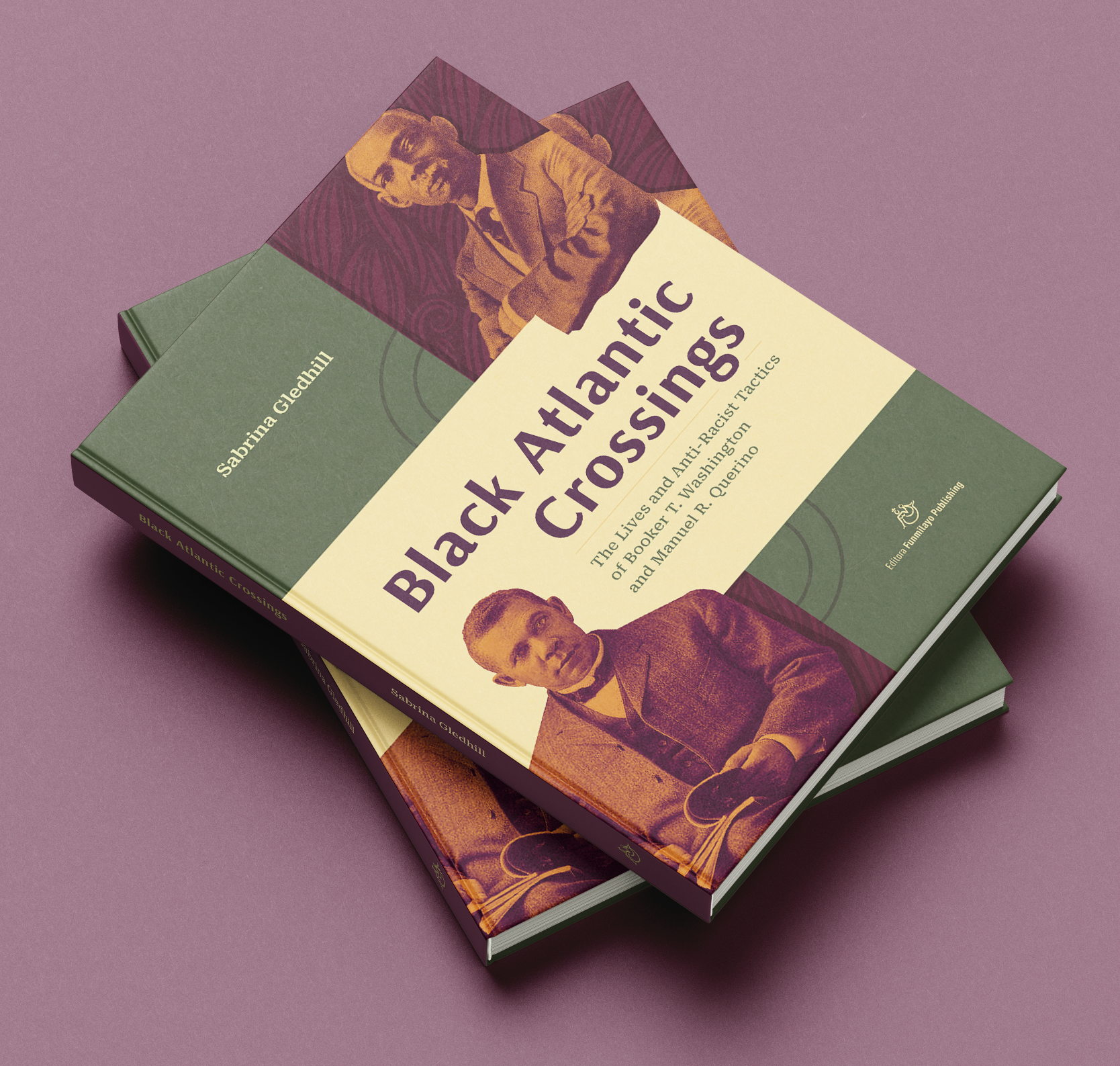
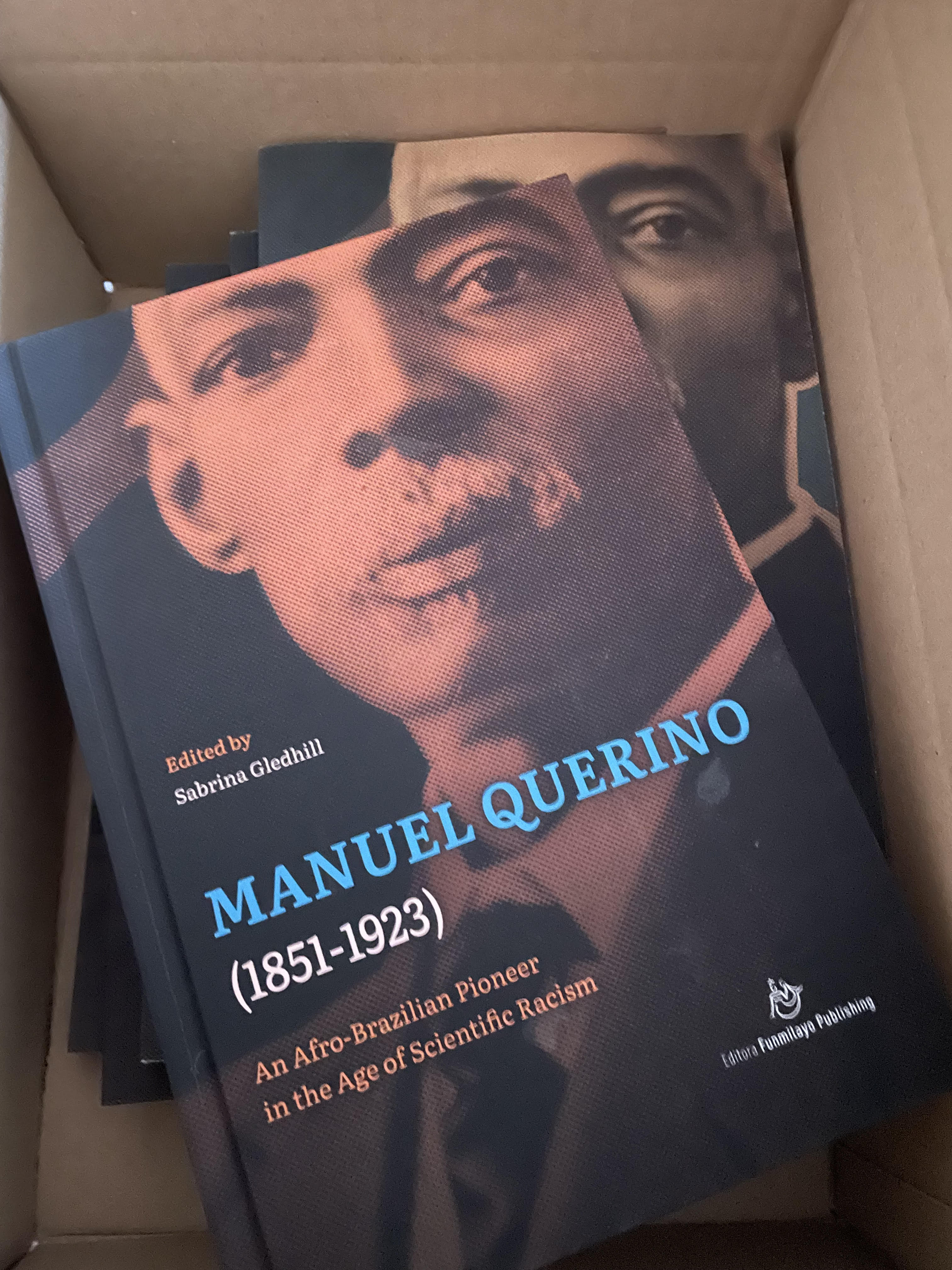
BHM demands that we understand Black history not just as a British concern, but as a global, interconnected force. We must look beyond national borders to grasp the full scope of Black intellectual achievements. For instance, Funmilayo’s scholarship on the Afro-Brazilian polymath, Manuel Querino (1851–1923): An Afro-Brazilian Pioneer in the Age of Scientific Racism, demonstrates how pioneering thought emerged in the face of brutal institutional racism. Further expanding this view is Black Atlantic Crossings, which emphasizes the vital transnational dialogues between figures separated by geography, challenging us to see Black experiences as an integral thread within the fabric of global history.

A Promise of Year-Round Learning

Ultimately, the dedicated month of October serves as a powerful catalyst for a broader cultural shift. By promoting the rigorous recovery and visibility found in publications like Black Atlantic Crossings and Heroes Sung and Unsung, we fulfill BHM’s promise. The month is a joyous celebration, but it is also a renewed promise to maintain a year-round focus where the accomplishments and heritage of all Black people, from the famous to the previously forgotten, are recognized, valued, and taught without end.

Manuel Querino: Activism and Education for Freed-persons

On 13 May 1888, the “Golden Law” officially abolished slavery in Brazil – the last country in the Americas to do so. For abolitionists like Manuel Querino, it was a huge achievement. The following year, a coup overthrew the monarchy, exiled Pedro II and his family – including Princess Isabel, the signatory of the “Golden Law” – and established the First Republic. As a life-long republican, Querino must have felt that this, too, was a dream come true, the outcome of many hard-fought struggles. Unfortunately for him and, even more so, the people recently emancipated from slavery, the new republic did not represent a step forward for Black people or their culture. Instead, it viewed Afro-Brazilian culture as “backward” and many of its expressions were criminalised, including candomblé and capoeira. Worse, the new government defunded or closed schools that had once provided vocational and higher education that would have been accessible to the poor, including those whose emancipation brought no reparations. Querino was aware of this, protested it and even felt the consequences.

Because of all the difficulties, obstacles and challenges freed-persons faced during the post-Abolition period, 13 May has become a controversial date for Black activists and their allies. Is it really something to celebrate? Today, November is Brazil’s Black History Month. Black Consciousness Day is celebrated on 20 November, the date when Zumbi dos Palmares, the last leader of possibly the oldest and certainly the best known quilombo or maroon community, was betrayed and killed.

Despite the controversy, I am sure that Querino and many Black activists like him would have celebrated 13 May in his day as a major milestone in Brazilian history – one that he personally worked hard to achieve as a militant journalist and activist.

To learn more about Querino’s fight against racism and support for the education of freed-persons, read Black Atlantic Crossings and Manuel Querino (1851-1923), available on Amazon and other online booksellers.

The Roots of Black Dandies and Fashion at the Met Gala

In 2025, the theme of the Met Gala was “Black dandies,” a phenomenon believed to date back 400 years, since the Black diaspora forcibly began. I was struck by the connection with chapter 5 of Black Atlantic Crossings, which focusses on the anti-racist tactic of portraying Black people in “gala dress.” Booker T. Washington was very careful to depict the faculty and students of the Tuskegee Institute (now an historically Black university) in a dignified manner and suppressed any images that might reinforce negative stereotypes. Manuel R. Querino went even further, by publishing photographs of Black people who practised a then-stigmatised and proscribed (read, illegal) religion and enslaved people who were clearly proud of their appearance. I particularly love the photographs of two iyalorishas (high priestesses) of one of Brazil’s best known Afro-Brazilian religious communities, the Gantois terreiro in Salvador, Bahia. Here is one of those photos:

HIgh priestess of the Gantois Afro-Brazilian religious community

Note her regal pose, not unlike the cartes de visite produced by royalty, as well as her gorgeous jewellery and sumptuous clothing. The African wrapper draped over her shoulder is an insignia of her rank. Her name was Maria Júlia da Conceição Nazaré, the founder of the Ilê Axé Iyá Omin Iyamassê, better known as Gantois.

Fighting Historical Erasure, One Book at a Time

Preface to Black Atlantic Crossings

This is an updated and expanded translation of Travessias no Atlântico Negro: reflexões sobre Booker T. Washington e Manuel R. Querino, released by the Editora da Universidade Federal da Bahia (EDUFBA) in 2020. That year also saw the birth of my grandson John Benjamin, the COVID-19 pandemic, and the beginning of the global Black Lives Matter movement, which transformed what was once considered “niche” research into a highly relevant study. I now see this book as a weapon against historical erasure and a staunch defence of affirmative action and diversity, equity, and inclusion (DEI), which are facing unprecedented assaults in the USA.

According to Florida’s “Stop WOKE Act,” any book (fiction or non-fiction) that makes White people feel uncomfortable about their country’s slaveholding past should be suppressed. Florida’s State Academic Standards—Social Studies (2023) even recommend teaching middle-school students how enslaved people benefited from slavery because, “in some instances,” it enabled them to learn useful skills.[1] Also, as I was translating the original Portuguese edition, the Supreme Court of the United States effectively gutted affirmative action in that country.

On January 21, 2025, President Donald J. Trump issued an executive order dismantling DEI initiatives across federal agencies, urging similar action in the private sector. This resulted in the removal of references to Black, Brown, LGBTQ+ individuals, and women, from government websites. That decree, followed by criticism of the Smithsonian Museum’s efforts to debunk pseudoscientific racism, further amplified this book’s relevance.

In Brazil, former president Jair Messias Bolsonaro attempted to gut higher education—particularly the Humanities—and expressed hostility towards Black civil rights and affirmative action. As a result of his policies, many Black Brazilian students dropped out or simply stopped aspiring to a university degree. Now that Bolsonaro is out of office and may even go to prison for an alleged coup attempt, the Lula administration is undoing some of the damage wrought during Bolsonaro’s time in office. Nevertheless, there is still a long way to go.

The landscape of Brazilian academia and publishing has changed substantially since I defended my PhD in Salvador, Bahia, in 2014. Initially, researching Booker T. Washington in Brazil posed considerable challenges, requiring reliance on international sources and archival research at the US Library of Congress. However, my thesis and the Portuguese edition of this book have helped establish Washington’s presence within Brazilian scholarly discourse, as demonstrated by their increasing citation and use in post-graduate programmes. Graciliano Ramos’s bowdlerised translation of Up from Slavery, Memórias de um negro (retitled Memórias de um negro americano), is back in print for the first time since the 1940s (Washington’s best-known autobiography still awaits a fresh and more objective rendering).

Efforts to reverse the erasure of Black people from history should never abate, and sometimes, they are rewarded. I wish I had made a note of the date, but the moment I felt that Manuel Querino had finally regained his rightful place in Brazilian history was when Lula—then a presidential candidate—mentioned his name along with the usual pantheon of illustrious Black Brazilians, such as Machado de Assis, Teodoro Sampaio, and Luiz Gama.

The year 2020 saw two publications on Querino—a book on his studies of Bahian cuisine by Jeferson Bacelar and Carlos Alberto Dória, published in Brazil, and Manuel Querino (1851-1923): An Afro-Brazilian Pioneer in the Age of Scientific Racism, an anthology of essays by several authors which I edited and published in Portuguese and English in Brazil (through the Sagga Editora publishing house) and the UK.

Gláucia Maria Costa Trinchão and Suely dos Santos Souza published the edited volume Os saberes em desenho do professor Manuel Raymundo Querino, on his geometric design textbooks, in 2021. It includes reproductions of those illustrated works—an invaluable contribution, as the original editions are rare.

The Afro-Brazilian polymath’s profile was raised significantly in 2022 by the Projeto Querino podcast. Inspired by The New York Times’s 1619 Project, it follows in Querino’s footsteps by increasing awareness of Black people’s role in Brazilian history—including Querino’s own contributions.[2]

In 2023, the 100th anniversary of his death, Querino received several tributes. The video maker Isis Gledhill produced a documentary on his life, including interviews with leading Querino scholars, and with the organisers and presenters of the Projeto Querino podcast, the journalist Tiago Rogero and the historian Ynaê Lopes dos Santos. The conductor and composer Fred Dantas wrote a piece for brass band called “Dobrado Manuel Querino” that was first performed during the celebrations of the bicentennial of Bahia’s Independence on the 2nd of July, a date that was particularly dear to Querino’s heart.

In 2024, I edited and published more two edited volumes inspired by Querino and including translations of his work: The Need for Heroes: Black Intellectuals Dig Up Their Past, and Heroes Sung and Unsung: Black Artists in World History. Along with Manuel Querino (1851-1923) and this monograph, they form part of Funmilayo’s Unsung Heroes in Black History series.

Although I began researching this book in the early 2000s, and some of its contents date back to my MA studies on Brazilian race relations in the 1980s, its message feels more urgent than ever. I hope this comparison of the lives and anti-racist tactics of Booker T. Washington and Manuel R. Querino will point up the fact that reparations are still due to the descendants of enslaved Africans in the United States and Brazil. Affirmative action remains a crucial tool for addressing the enduring legacy of racial injustice.

Sabrina Gledhill

Black Atlantic Crossings will be available as a Kindle e-book on 14 April 2025 and on Amazon and other booksellers as a paperback and hardback on 1 May 2025.


[1] Florida’s State Academic Standards—Social Studies, 2023. SS.68.AA.2.3 “Examine the various duties and trades performed by slaves (e.g., agricultural work, painting, carpentry, tailoring, domestic service, blacksmithing, transportation). Benchmark Clarifications: Clarification 1: Instruction includes how slaves developed skills which, in some instances, could be applied for their personal benefit.” https://www.fldoe.org/core/fileparse.php/20653/urlt/6-4.pdf

[2] https://www.theguardian.com/world/2022/oct/06/brazil-history-african-brazilians-tiago-rogero-querino-project. The podcast is available (in Portuguese) at https://projetoquerino.com.br/podcast/

On Historical Erasure

Heather Cox Richardson’s “Letters from an American” on March 17, 2025, documented the current US administration’s removal of content related to people of colour, women, and anyone else considered “DEI” from government websites, including figures buried in Arlington Cemetery and the Navajo code talkers. This is a real and present instance of the historical erasure my research seeks to counter. My edition of The Need for Heroes: Black Intellectuals Dig Up Their Past was published in 2024 precisely to amplify Black scholars’ voices and ensure the preservation of historical narratives about soldiers and maroons of African descent, narratives that must be repeatedly shared and republished to prevent their being forgotten. That same year, I also published Heroes Sung and Unsung: Black Artists in World History. The title speaks for itself.

Carrying on this work, my forthcoming publication, Black Atlantic Crossings: The Lives and Anti-Racist Tactics of Booker T. Washington and Manuel R. Querino, expands on these themes. Here is the genesis of this book:

In the mid-1980s, I stumbled upon a figure who was largely unknown outside Brazil. Manuel Querino, an Afro-Brazilian polymath, was quoted in the epigraph to Jorge Amado’s Tent of Miracles. As I was then pursuing an MA in Latin American Studies at UCLA, I mentioned Querino to my supervisor, the esteemed E. Bradford Burns. It turned out that he had not only published an article about Querino and translated the introduction to one of his works but he had also featured Querino prominently in his History of Brazil. Rather than a biography, Professor Burns encouraged me to delve into a comparative study, contrasting Querino’s perspectives on Africans and their descendants with those of other Brazilian intellectuals active before 1930—a pivotal year when the academic study of Africans and their descendants gained acceptance in Brazil. These intellectuals included Nina Rodrigues, whom I positioned at one extreme of the spectrum of “racial pessimism,” with Querino at the other. Nina not only believed in Black inferiority but also that mixed-race people were destined to die out due to their moral and physical frailties.

In late 1986, I went to Brazil for preliminary PhD research and ended up staying for twenty-eight years—but that’s another story . While I hadn’t planned to continue studying Querino, I was incensed by the distortions of his legacy. Worse than being erased, his reputation had been actively tarnished by overtly racist interpretations of his life and work. For example, it was wrongly assumed that he died a pauper and was insignificant because he was buried in a “poor people’s cemetery” (a claim proven inaccurate). Academics cast doubt on whether Querino was the inspiration for Pedro Archanjo, the protagonist of Amado’s Tent of Miracles. His scholarly output was also underestimated. Meanwhile, Nina Rodrigues was celebrated as the father of anthropology in Brazil. Fortunately, I was not the only one who was passionate about defending Querino’s memory and retelling his story—accurately, this time. Scholars like Jaime Nascimento and Maria das Graças de Andrade Leal were also writing and editing books about him. Nascimento organised seminars and lectures and graciously included me in the line-up of speakers.

By the time I finally went on for a PhD at the Universidade Federal da Bahia (UFBA) in 2010, Leal had published a biography of Querino focussing on his work as a politician and labour leader. My interest was still focussed on his defence of Africans and their descendants, but since my PhD thesis had to be “original”, I decided to compare and contrast Querino with Booker T. Washington, a Black educator the Afro-Brazilian scholar specifically admired. The result was a study that was published in Brazil in 2020 as Travessias no Atlântico Negro: reflexões sobre Booker T. Washington e Manuel R. Querino. An expanded, updated translation is now in press, entitled Black Atlantic Crossings: The Lives and Anti-Racist Tactics of Booker T. Washington and Manuel R. Querino.

On People, Ideas, and Crossings

Foreword to Black Atlantic Crossings, by Sabrina Gledhill (forthcoming)

In recent decades, social scientists have been studying connections, links and dialogues involving intersecting ideas, people and circuits. Transnational perceptions of intercultural movements have been revealed. At different times and in different spaces, from the fifteenth century to the first half of the twentieth, the populations of diasporic societies and their social, political and economic structures were linked in the four corners of the Atlantic. Using pieces of what was invented as Europe and designed as Africa, the parts called Cuba, Brazil, Jamaica, Puerto Rico, Colombia, Haiti, Martinique, Mexico, Guadeloupe, the USA, Barbados and others were linked together and redefined. Fundamentally, experiences and people produced events that were transformed into narratives.

Above all, intellectual constructs and the elaboration of ideas were processed in different contexts, reconnecting different projects and expectations. We can see the emergence of ideas around modernity and liberalism, engaging in dialogue with racism, forced labour, exclusion, and vectors of citizenship under construction.

In this complex process, we can think about intellectual roots, their agents, and the circulation of ideas, reframing ideologies and bringing together colonial, slavocratic, post-colonial and post-emancipation societies.

Today, however, it is the people involved in these processes who are mobilizing scholars and research the most. How did ideas circulate? What were the vectors? And what were the levels of reception, transformation and influence? We still need to take a careful look at the literate circulation and oral unfolding of Atlantic ideas. Books and translations came into people’s hands. International news abounded in the nineteenth-century press. Since the 1830s, debates on emancipation in the British Caribbean and its consequences were closely followed, gaining shape in the mid-nineteenth century in the French and Dutch Caribbean, Spanish America and, after the US Civil War, Puerto Rico, and Cuba.

How did Black intellectuals—albeit immersed in slavocratic societies— interpret and re-elaborate these processes? Not just by receiving ideas, but by producing and circulating them in an elaborated way. Sabrina Gledhill’s research, presented in this book, opens paths for us to get to know this adventure of ideas and its Black Diaspora characters. It begins with Manuel Querino, an outstanding intellectual and working-class leader at the turn of the twentieth century. Born on the fringes of the Bahian hinterland, amid slavery and the cholera epidemic that made him an orphan, Querino crossed some boundaries of exclusion. He learned to read and write at a very young age. This guaranteed him a brief military career as a clerk during the Triple Alliance War (1865-70). Still pursuing his studies, he entered the School of Fine Arts, studying geometric design, architecture, and later working as a teacher at the Liceu de Artes e Ofícios (School of Arts and Crafts) and the Colégio dos Órfãos de São Joaquim (St. Joachim Orphans’ College) in the city of Salvador. In the 1870s and 1880s, he was active in the abolitionist movement, joining anti-slavery societies and founding at least two newspapers. His political life was extended at the end of the century when he joined the Workers’ Party. He produced technical writings on geometric drawing and the arts, as well as humanist essays on Africans and the Black presence in Bahia.

Some of the highlights of Querino’s life and work, which are explored in Gledhill’s study, are precisely the Afro-Atlantic dimensions of his thinking, particularly his dialogues and interlocution with the ideas of Booker T. Washington (1856-1915). Thus, this is both a biography and an intellectual history with an Atlantic perspective. Receptions, appropriations, translations and resignifications reveal different roots of the Brazilian social thinking that was emerging in the first decades of the twentieth century. Urban development, exclusion, access to education, trade unions, elections, political parties, African scenarios and debates on race and colonization are the subjects of intersecting elaboration and dialogue that this pan-Africanist Bahian intellectual established.

However, we also need to know more about the intellectual landscapes framed by Querino. We will certainly find generations of Black intellectuals and literati who tried to turn skills, education and expectations of mobility into weapons in a society that was still aristocratic in Bahia, amid tremendous arrogance due to the social invisibility and economic exclusion of the Black population. More than learning about his life and chapters of tremendous personal determination, it is essential to read Querino himself. The subjects he analysed and the intellectual worlds he expanded demonstrate the Black social thinking that was made invisible at the dawn of the twentieth century. We know that these processes of intellectual erasure were recurrent. It is not a matter of being absent, non-existent or invisible. Silencings have been verified. But not just that. We have identified other Black Diaspora thinkers among Querino’s interlocutors. Not just Du Bois or Marcus Garvey, and even other non-Americans with the same origins. In Brazil, we know very little about the activities and legacy of Booker T. Washington. Why is that? On what basis did Querino establish the dialogue? What were the universes of the influences he saw? Making these connections and dialogues emerge takes us on an Atlantic voyage to the intersecting circuits of ideas and people. It is important to use stronger lenses in our observations. Querino and his work were guided by religious expressions with African roots, political parties, elections, representations, workers’ conferences and intellectual affirmation.

More than pointing out the shores of the Black Atlantic from analytical ships on calm seas, we must disembark, locating unstable and improvised territories. This study not only offers a safe haven, but, above all, charts the way forward.

Flavio dos Santos Gomes

Flavio Gomes is a Brazilian historian and author. His writings include books and articles on maroons published in Portuguese, English, French, and Spanish. The winner of the prestigious Jabuti Prize and a Guggenheim Fellow, he has been a professor of History at the Universidade Federal do Rio de Janeiro (UFRJ) since 1998.

Black History Month in the USA – 2025

Black history isn’t confined to a single month—it’s a living, breathing tapestry woven into the fabric of our world. At Funmilayo, we’re committed to sharing these vital stories every day of the year. But because it is officially Black History Month in the USA, we are celebrating with special ebook deals on our Unsung Heroes in Black History Series on Amazon.com: Heroes Sung and Unsung and Manuel Querino (1851-1923) are free, and The Need for Heroes is only $0.99. Discover the richness of Black history!

Manuel Querino: A Legacy Rediscovered (Again and Again)

For decades, I’ve been fighting to bring Manuel Querino, a pioneering Afro-Brazilian scholar, out of the shadows. Last week, I found a new ally in that fight: a PhD student at the prestigious University of São Paulo (USP), who has made Querino the focus of his thesis. His name is Fernando Filho, he is a sociologist, and his approach to what I call “Querinology” is to answer three questions:

  • how can Querino’s theses contribute to Brazilian social thinking?
  • what led to his “invisibility” in social theory?
  • to what extent are the subjects Querino dealt with also addressed by renowned authors like Gilberto Freyre and Florestan Fernandes?

Speaking on Google Meet, we spent over an hour discussing our approaches to Querino. Fernando told me how he struggled to get his PhD accepted by a university – being turned down by more than one before getting accepted at USP. He also said that he has been speaking about Querino at conferences in several Latin American countries and finding that the Afro-Brazilian polymath is still a complete unknown there.

I shared some sources, including the collection of essays in Manuel Querino (1851-1923), and explained how I began researching his life and work – thanks to my MA supervisor at UCLA, the late great E. Bradford Burns. I also observed that when I first arrived in Brazil in 1986, Querino had been largely forgotten or, worse, dismissed as an unreliable source. It took years of effort and many publications to change that.

What I took away from our conversation was

(a) despite the fact that I and other scholars, including Jeferson Bacelar, Luiz Freire, Maria das Graças de Andrade Leal, and Jaime Nascimento, have been writing and lecturing about Querino for decades, he is still largely unknown in Brazil’s elite universities; and

(b) ensuring that his life and legacy are not forgotten is a generational task.

Clearly, there is still much work to be done in bringing Querino the recognition he deserves. But with passionate scholars like Fernando Filho taking up the mantle, I’m hopeful for the future of ‘Querinology.'”

A luta continua (the fight goes on).

Sabrina Gledhill

Descobrindo obras de Manuel Querino na biblioteca do Museu Imperial

Recentemente, o pesquisador e professor universitário Fabiano Cataldo encontrou vários livros e artigos da autoria de Manuel Querino na biblioteca do Museum Imperial no Rio de Janeiro e convidou Sabrina Gledhill a escrever um texto sobre eles. Esta semana, imagens dos livros e o texto foram postados no Instagram. Segue o link: