In February 2026, Black History Month in the US, Democratic congressman Al Green held up a sign saying “Black people aren’t apes” during the State of the Union address. His protest was a direct response to a post from the President of the United States portraying Barack and Michelle Obama as simians. Knowledge of Black History would help non-Black people understand that this dehumanising comparison is nothing new.
In the UK, two leading Black actors, Delroy Lindo and Michael B. Jordan, maintained their poise but clearly expressed their shock and disbelief while a man suffering from Tourettes shouted the “N” word at the BAFTA ceremony. White people wondered what was so offensive – although knowledge of Black History would have helped them understand the centuries of trauma and violence embodied in that slur.
As Black History Month comes to a close in the United States, Funmilayo urges its readers – as we do every year – to celebrate Black History every month. This is not just because of the insistent attempts to erase it in the US, occasionally thwarted by pushback from the courts, but because “history may not repeat itself, but it rhymes”.
Funmilayo’s publications are available year-round to remind readers that Black people worldwide have been artists, soldiers, and intellectuals, and always fought back against attempts to deny their freedom and humanity. Our Unsung Heroes in Black History series is growing every year. We hope you will check out some (or all) of our titles:
The Need for Heroes: Black Intellectuals Dig Up Their Past
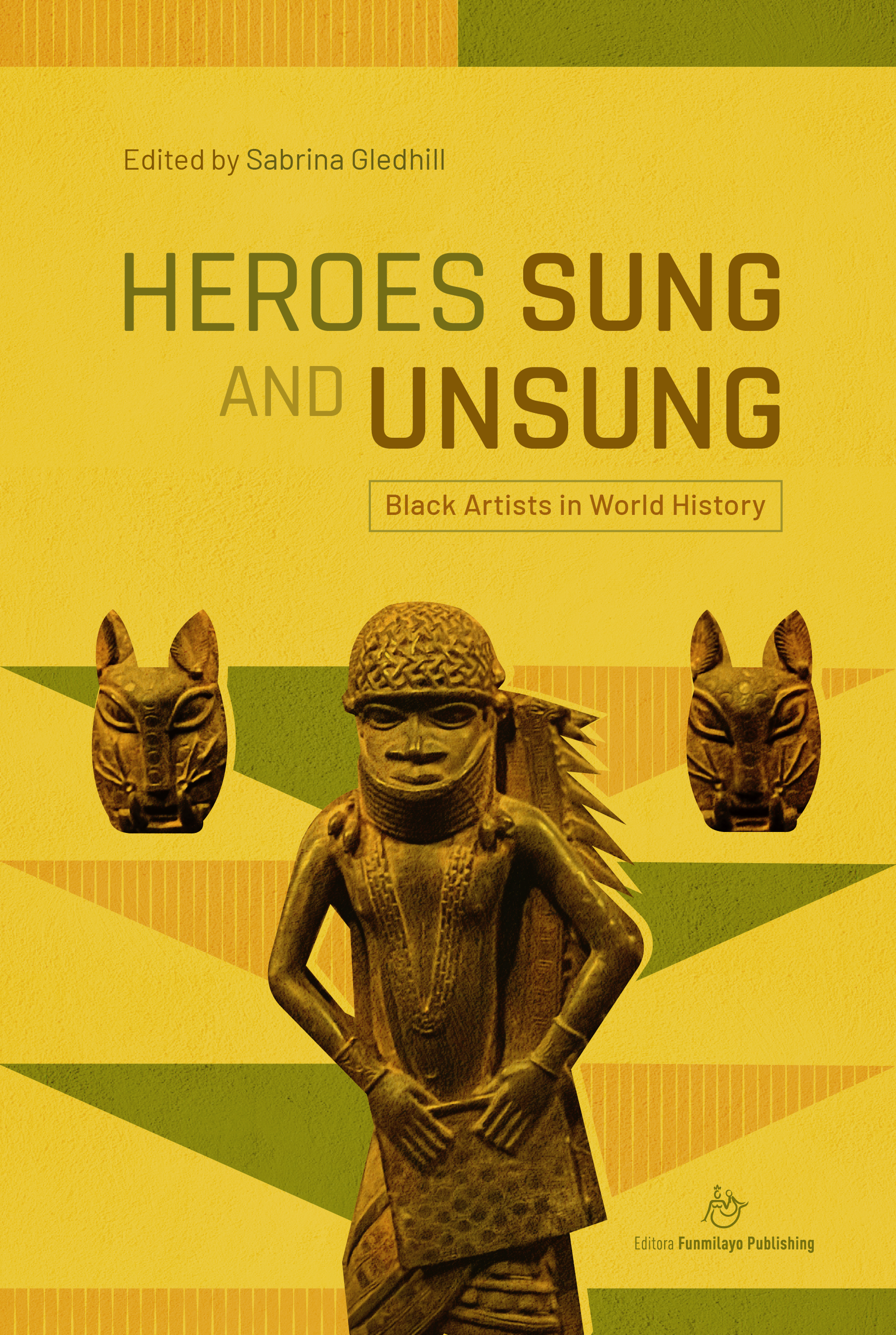
Heroes Sung and Unsung: Black Artists in World History
Manuel Querino (1851-1923): An Afro-Brazilian Pioneer in the Age of Scientific Racism
Black Atlantic Crossings: The Lives and Anti-Racist Tactics of Booker T. Washington and Manuel R. Querino
Dance of the Serpent: Portrait of Cobra Mansa, a Capoeira Angola Mestre
They are available through several online booksellers.
It’s Black History Month in the UK, but our goal is to ensure the accomplishments of Black people worldwide are celebrated and studied all year long. A reader of Heroes Sung and Unsung: Black Artists in World History recently sent us an email with herfeedback,which we wanted to share with you:
“Heroes Sung and Unsung really speaks to the reader, and every story you’ve included brings that person back to life. What I find is that I’m reading a chapter, and then the stories will trickle around in my mind, and send me back to re-read a story and see what else I can find out about the person.
“Two of them stand out for me in particular.
“The most heart-wrenching story I’ve so far come across in your book is that of Richard Lonsdale Brown. He seems to have been so modest in his own estimation of his abilities, needing to seek out George de Forest Brush, the artist in New York, to bravely approach him and ask if de Brush thought that he could ever become an artist. Imagine how differently things would have turned out, had de Brush not been so encouraging and taken on Brown as a pupil, and taken him to de Brush’s summer home in New Hampshire to paint the scenery there. After all the discouragement that Brown received when he tried to make his way on his own in New York, at least we know that his skill in landscape painting was at last recognised, and an exhibition of his work was held on Fifth Avenue. However, although the obituary on page 51 indicates that the exhibition netted him a sufficient sum to begin his studies”, other mentions on the internet indicated that he struggled to pay his way as an artist, and ended up returning to live with his parents for precise reasons which nobody seems to know. Before leaving New York, he seems to have expanded his repertoire beyond landscapes to design and decoration, such as an illustration for the front cover of the Christmas Crisis of 1915, with a powerful, bold and colourful illustration of ‘The Star of Ethiopia’ (reproduced in the link below). There was also an interview he gave in 1913, also reproduced in the link below, in which Brown sets out his thoughts on how Negroes (to use the term he gave in the interview) were perceived:
May I say without being thought guilty of egotism or a desire to boast, which is far from my intention, that I think that what I have accomplished and what has been accomplished by other negroes in other lines gives proof that the negro is capable of worthy things, and that the conception of many white persons that the negro is good for nothing but manual labour and such other work as does not call for much mental effort is not only unfair but incorrect? After a people have been held down for centuries, as we have been, is it to be expected that we should in only fifty years of freedom equal or even approach the white race in every particular? Many persons, even today, gain their ideas of the negro from story books, while it is a fact that many educated persons who have not had the opportunity to know the negro at close range still regard him as but little more removed from the position in society he occupied while a slave.
The link to the article below contains a clue as to why Brown left New York and returned to his parents in Oklahoma – his interest was expanding beyond landscape painting to watching people: “In West Virginia he only loved landscape. Now he watched faces, saw the bright girls as they went to high school, their books under their arms, interested, alert. Saw them deteriorate, their ambition lost as they saw no chance for advancement. He watched the great procession of Harlem and wanted to be able someday to paint it.” According to the article below, he appears to have been unable to make a living as an artist, “like many black artists in that time”. So this severe set-back and realisation that he might not be able to make a living as an artist in New York, may also have led to his return to the parental home.
“Tragically, while staying with his parents in Oklahoma, he appears to have caught pneumonia (despite his young age), from which he died in 1917. Du Bois, writing of Brown in editorials after the young man’s death, writes of his frustration at the loss of Brown’s talent, and appears to have blamed this on people not being willing to financially support the creativity of the artists in their midst. Du Bois in 1922 writing in The Crisis: ‘There is a deep feeling among many people and particularly among colored people that Art should not be paid for. The feeling is based on….a dream that the artist rises and should rise above paltry considerations of dollars and food’.
“In the case of Blind Tom, I was struck by the way that his superb gift for music shone through. Although he appears to have had no formal musical education (a German musician in Columbus giving his opinion that Tom didn’t need any teaching as he would ‘work it all out by himself’!), he could identify every note when a number of chords were struck simultaneously, and he learned to play music on his master’s piano after listening to others perform those pieces. Listening to the rain running down a gutter, and claiming inspiration from ‘what the wind said to me’ or ‘what the birds said to me’, shows how his sense of music encompassed the sounds of nature, as much as the more formal concept of instrumental music and song. The Wikipedia article on Blind Tom Wiggins adds a rather bitter taste, explaining how Tom’s master, the lawyer Bethune, made a great deal of money out of Tom, touring him extensively and making him perform for up to four times a day. The concert promoter to whom Bethune hired out Tom apparently marketed Tom as a ‘Barnum-style freak’, and frequently compared him to a bear, baboon or mastiff. Very sadly, Blind Tom would usually introduce himself onstage in the third person, repeating what his managers had said about him (e.g. that he was non compos mentis) without any apparent understanding of how derogatory such a label was.
“I have much more to read of this book, but I wanted to let you know how interesting I’m finding it.”
The only book I had in mind back in 2020 was an anthology on Manuel Querino, the Afro-Brazilian scholar I have been studying and writing about since the 1980s. I had just published a book in Portuguese based on my PhD thesis comparing Querino to Booker T. Washington, and I was being urged to publish something about Querino in English. I had also written several essays that had appeared in Brazilian peer-reviewed journals and books over the years and would make a small volume. Then, it occurred to me that Querino’s activities were so varied, covering a gamut of specialisms, that it is impossible for one person to write authoritatively about them all.
Fortunately, I had access to writings by E. Bradford Burns (the first bibliographic essay on Querino published in English), Jeferson Bacelar and Carlos Doria (on his pioneering study of Bahian cuisine), Eliane Nunes (on his contributions to art history), Jorge Calmon (on his involvement in labour mobilisation and politics), and Christianne Vasconcellos (on his use of photographs in anthropology) to add to my own writings . The result was Manuel Querino (1851-1923): An Afro-Brazilian Pioneer in the Age of Scientific Racism, a compendium that has also been published in Portuguese (without Burns’s essay, due to translation rights), and has been very well received.
That book was published in 2021, during the Covid pandemic. Lockdown was a wonderful opportunity to focus on organising and translating the anthology. In the years since, I have worked on translating and updating a monograph based on my PhD thesis, which has been in peer review with another publisher for several months. The Unsung Heroes series began with the second volume, which I first approached as “something to do” while awaiting the verdict on my own book. It all started with Querino, naturally. I had originally intended to publish my translation of one of his most significant works (for me), O colono preto como fator da civilização brasileira, translated as The African Contribution to Brazilian Civilisation.
First, I was intrigued by parallels between Querino’s story and that of Arthur (born Arturo) Schomburg. Then, I started wondering which works by W. E. B. Du Bois, Carter G. Woodson, Booker T. Washington, and other Black thinkers were comparable to Querino’s essay, which demands recognition for the achievements of Africans and their descendants. Instead of being seen as passive sources of manual labour, Querino asserted that they contributed knowledge they brought from their homelands, such as mining and metalworking, as well as helping maintain Brazil’s territorial integrity as soldiers. He also emphasised their ingenuity and courage in breaking free from the bonds of slavery to form their own communities, known as quilombos in Brazil.
That initial curiosity led to a gold mine of works on Black soldiers and maroons, which I added to Querino’s essay to produce The Need for Heroes: Black Intellectuals Dig Up their Past, published in June 2024. I realised that the concept of Unsung Heroes, inspired by the title of Elizabeth Ross Haynes’s book of children’s stories, extended to the anthology on Querino. He was well known in life, having achieved such renown in Brazil that several newspapers published his obituary in his home state (Bahia), Rio de Janeiro, and other parts of the country. Representatives of trade unions and academia attended his funeral, which was also covered by the press. But since the 1930s, he had been gradually forgotten, and if remembered at all, thought of as a lightweight scholar, the minor author of a few pamphlets, and even illiterate. There seemed to have been a deliberate effort on the part of the “hegemonic narrative” to rewrite his story as that of a poor, ill-educated Black man who made a stab at anthropology but didn’t quite succeed. This disinformation was convenient because he already contradicted the commonly held notion that all Blacks in Brazil were enslaved until Abolition in 1888, and since then had been nothing but vagrants, thieves, and scoundrels – an image still maintained in the media.
While the eminent Brazilian historian Flavio Gomes was writing the afterword for The Need for Heroes (it was worth the wait), I started putting together works that hadn’t quite fit in that collection and adding many more. Once again, I started with Querino, who is considered the Brazilian Vasari because his pioneering works on the history of art in Bahia were based on biographies of artists. The result was Heroes Sung and Unsung: Black Artists in World History, a compendium of works by Querino, as well as Arthur Schomburg, W. E. B. Du Bois, Booker T. Washington, Benjamin Brawley, James M. Trotter, Sojourner Truth, Frederick Douglass, and others, with a foreword and afterword by brilliant contemporary artists and writers: Mark Steven Greenfield, from the USA, and Ayrson Heráclito and Beto Heráclito, from Brazil. It joins the first two titles, Manuel Querino (1851-1923): An Afro-Brazilian Pioneer in the Age of Scientific Racismand The Need for Heroes: Black Intellectuals Dig Up their Past, which are also available in paperback, hardcover, and Kindle e-book editions.
When I’m asked what’s next, the answer seems obvious—an anthology about Black women heroes, “sung and unsung.” I might even reclaim the word “heroine.” I haven’t come up with a title yet, and I may have to write most of the bios myself, but it is something to look forward to. Watch this space.
This post is an adaptation of an essay published in Heroes Sung and Unsung
Many had a productive ‘lockdown,’ but how many Kirtonians can say that they published three books in two languages and started a publishing house in their home office? “Well, technically, it’s two books,” the author and publisher observes, because she produced two editions of a similar collection of essays. Only one of those is in English, and it is now for sale at The Bookery in Crediton’s High Street.
It was in February 2020 that, while awaiting the birth of her second grandson, local resident Dr Sabrina Gledhill signed a contract in Brazil to publish a book in Portuguese based on her PhD thesis. That work, which Dr Gledhill is now translating and adapting for English-speaking readers, focusses on two Black leaders, Booker T. Washington in the US, and Manuel R. Querino in Brazil. The founder of what is now Tuskegee University, Washington is well known around the world, but he had been largely forgotten in Brazil. Querino, on the other hand, was famous in Brazil during his lifetime, but has only recently been re-evaluated and restored to his rightful place in the ranks of pioneering Brazilian anthropologists and art historians.
The book was launched in Salvador, Bahia, in September 2020. Despite travel restrictions and thanks to the wonders of the Internet, Dr Gledhill was able to promote the book from her library near Crediton, from where she took part in round-table discussions and gave interviews to Brazilian TV and radio hosts.
Asked when she would start publishing in English, which is, after all, her native tongue, Dr Gledhill then edited a collection of essays on Manuel Querino by E. Bradford Burns and Jeferson Bacelar (respectively her MA and PhD supervisors) and other authors, including her own work, which had been published in Brazilian peer-reviewed journals. The reasoning was that Querino’s activities were so varied that it takes a number of specialists to do them justice. Dr Gledhill translated most of the essays from Portuguese into English, but since she already had the originals in Portuguese ready for publication, she thought, why not publish a Brazilian edition as well?
The result was that, by the end of 2021, when travel restrictions eased and she was finally able to visit her Brazilian family again, two more books were released in Brazil and the UK. The publisher of the English edition is Editora Funmilayo Publications, based in Crediton. Manuel Querino (1851-1923): An Afro-Brazilian Pioneer in the Age of Scientific Racismis available as an e-book, and in paperback and hardback editions on Amazon, Alibris and, of course, at The Bookery.
Published in the Crediton Courier on 25 August 2022
I launched the Unsung Heroesin Black History series without realising it was a series at all. It started with an anthology on Manuel Querino, the Afro-Brazilian scholar I have been studying and writing about since the 1980s. I realised that Querino’s activities were so varied, covering a gamut of specialisms, that it is impossible for one person to write authoritatively about them all. Fortunately, I had access to writings by E. Bradford Burns (the first bibliographic essay on Querino published in English), Jeferson Bacelar and Carlos Doria (on his pioneering study of Bahian cuisine), Eliane Nunes (on his contributions to art history), Jorge Calmon (on his involvement in labour mobilisation and politics), and Christianne Vasconcellos (on his use of photographs in anthropology) to add to essays of my own that had appeared in Brazilian peer-reviewed journals and books over the years. The result was a compendium that has been published in Portuguese (without Burns’s essay, due to translation right issues) and English, and has been very well received.
That book was published in 2021, during the Covid pandemic. Lockdown was a wonderful opportunity to focus on organising and translating the anthology. In the years since, I have worked on translating and updating a monograph based on my PhD thesis, which has been in peer review since September of last year. The Unsung Heroes series began with the second volume, which I first approached as “something to do” while awaiting the verdict on my own book. It all started with Querino, naturally. I had originally intended to publish my translation of one of his most significant works (for me), O colono preto como fator da civilização brasileira, translated as The African Contribution to Brazilian Civilisation.
First, I was intrigued by parallels between Querino’s story and that of Arthur (born Arturo) Schomburg. Then, I started wondering which works by W. E. B. Du Bois, Carter G. Woodson, Booker T. Washington, and other Black thinkers were comparable to Querino’s essay, which demands recognition for the achievements of Africans and their descendants. Instead of being seen as passive sources of manual labour, Querino asserted that they contributed knowledge they brought from their homelands, like mining and metalworking, as well as helping protect Brazil’s territorial integrity as soldiers. He also emphasised their ingenuity and courage in breaking free from the bonds of slavery to form their own communities, known as quilombos in Brazil.
That initial curiosity led to a gold mine of works on Black soldiers and maroons, which I added to Querino’s essay to produce The Need for Heroes: Black Intellectuals Dig Up their Past, published in June 2024. I realised that the concept of Unsung Heroes, inspired by the title of Elizabeth Ross Haynes’s book of children’s stories, extended to the anthology on Querino. He was well known in life, having achieved such renown in Brazil that several newspapers published his obituary in his home state (Bahia), Rio de Janeiro, and other parts of the country. Representatives of trade unions and academia attended his funeral, which was also covered by the press. But since the 1930s, he had been gradually forgotten, and if remembered at all, thought of as a lightweight scholar, the minor author of a few pamphlets, and even illiterate. There seemed to have been a deliberate effort on the part of the “hegemonic narrative” to rewrite his story as that of a poor, ill-educated Black man who made a stab at anthropology but didn’t quite succeed. This disinformation was convenient because he already contradicted the commonly held notion that all Blacks in Brazil were enslaved until Abolition in 1888, and since then had been nothing but vagrants, thieves, and scoundrels – an image still maintained in the media.
While the eminent Brazilian historian Flavio Gomes was writing the afterword for The Need for Heroes (it was worth the wait), I started putting together works that hadn’t quite fit in that collection and adding many more. Once again, I started with Querino, who is considered the Brazilian Vasari because his pioneering works on the history of art in Bahia were based on biographies of artists. The result was Heroes Sung and Unsung: Black Artists in World History, a compendium of works by Arthur Schomburg, W. E. B. Du Bois, Booker T. Washington, Benjamin Brawley, James M. Trotter, and others, with a foreword and afterword by two brilliant contemporary artists, respectively Mark Steven Greenfield and Ayrson Heraclito. It is due for publication in September 2024. In the meantime, Manuel Querino (1851-1923): An Afro-Brazilian Pioneer in the Age of Scientific Racismand The Need for Heroes are available in paperback, hardcover, and Kindle e-book editions through Amazon and other online booksellers.



 Editora Funmilayo Publishing