Foreword to Black Atlantic Crossings, by Sabrina Gledhill (forthcoming)
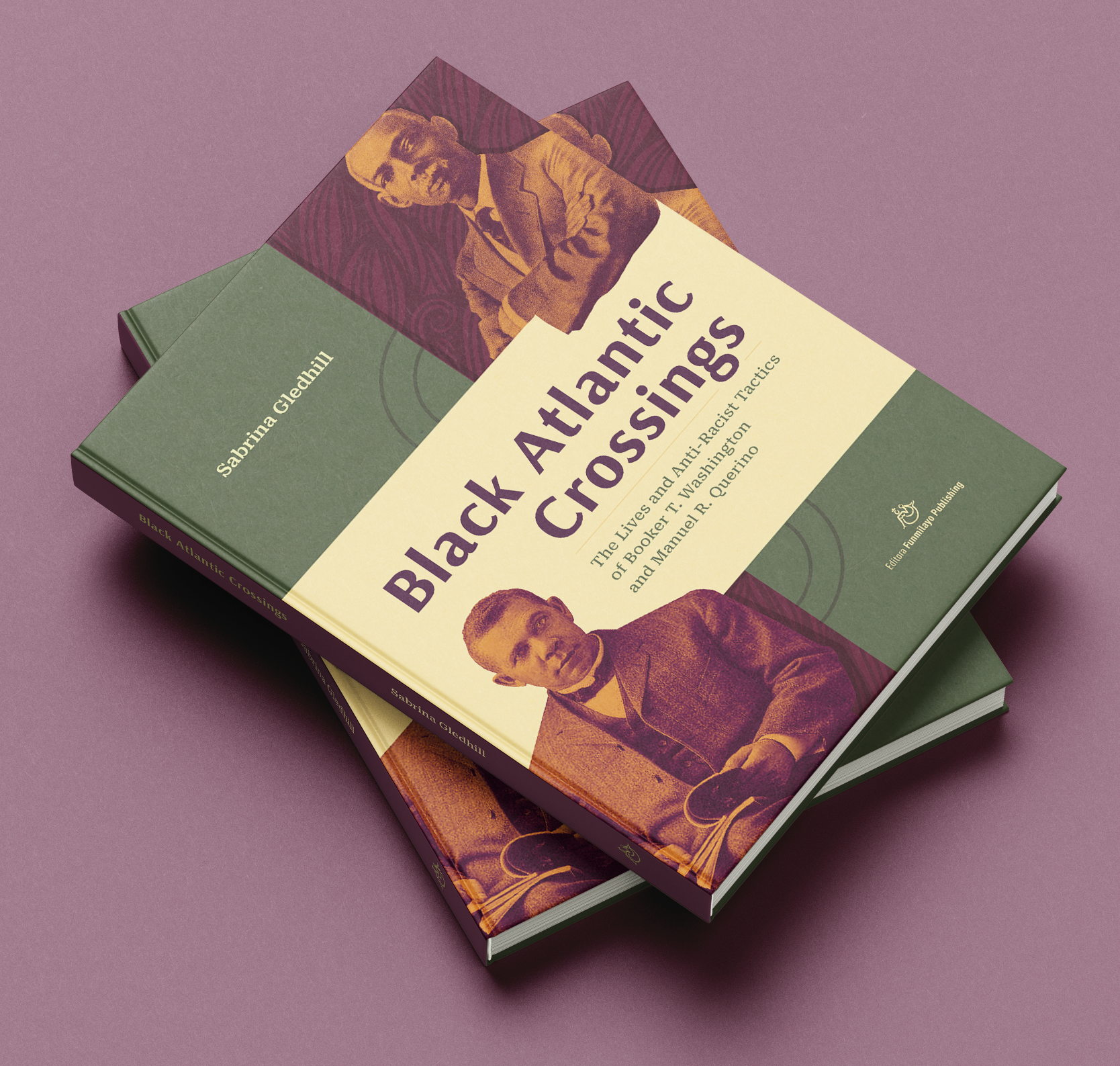
In recent decades, social scientists have been studying connections, links and dialogues involving intersecting ideas, people and circuits. Transnational perceptions of intercultural movements have been revealed. At different times and in different spaces, from the fifteenth century to the first half of the twentieth, the populations of diasporic societies and their social, political and economic structures were linked in the four corners of the Atlantic. Using pieces of what was invented as Europe and designed as Africa, the parts called Cuba, Brazil, Jamaica, Puerto Rico, Colombia, Haiti, Martinique, Mexico, Guadeloupe, the USA, Barbados and others were linked together and redefined. Fundamentally, experiences and people produced events that were transformed into narratives.
Above all, intellectual constructs and the elaboration of ideas were processed in different contexts, reconnecting different projects and expectations. We can see the emergence of ideas around modernity and liberalism, engaging in dialogue with racism, forced labour, exclusion, and vectors of citizenship under construction.
In this complex process, we can think about intellectual roots, their agents, and the circulation of ideas, reframing ideologies and bringing together colonial, slavocratic, post-colonial and post-emancipation societies.
Today, however, it is the people involved in these processes who are mobilizing scholars and research the most. How did ideas circulate? What were the vectors? And what were the levels of reception, transformation and influence? We still need to take a careful look at the literate circulation and oral unfolding of Atlantic ideas. Books and translations came into people’s hands. International news abounded in the nineteenth-century press. Since the 1830s, debates on emancipation in the British Caribbean and its consequences were closely followed, gaining shape in the mid-nineteenth century in the French and Dutch Caribbean, Spanish America and, after the US Civil War, Puerto Rico, and Cuba.
How did Black intellectuals—albeit immersed in slavocratic societies— interpret and re-elaborate these processes? Not just by receiving ideas, but by producing and circulating them in an elaborated way. Sabrina Gledhill’s research, presented in this book, opens paths for us to get to know this adventure of ideas and its Black Diaspora characters. It begins with Manuel Querino, an outstanding intellectual and working-class leader at the turn of the twentieth century. Born on the fringes of the Bahian hinterland, amid slavery and the cholera epidemic that made him an orphan, Querino crossed some boundaries of exclusion. He learned to read and write at a very young age. This guaranteed him a brief military career as a clerk during the Triple Alliance War (1865-70). Still pursuing his studies, he entered the School of Fine Arts, studying geometric design, architecture, and later working as a teacher at the Liceu de Artes e Ofícios (School of Arts and Crafts) and the Colégio dos Órfãos de São Joaquim (St. Joachim Orphans’ College) in the city of Salvador. In the 1870s and 1880s, he was active in the abolitionist movement, joining anti-slavery societies and founding at least two newspapers. His political life was extended at the end of the century when he joined the Workers’ Party. He produced technical writings on geometric drawing and the arts, as well as humanist essays on Africans and the Black presence in Bahia.
Some of the highlights of Querino’s life and work, which are explored in Gledhill’s study, are precisely the Afro-Atlantic dimensions of his thinking, particularly his dialogues and interlocution with the ideas of Booker T. Washington (1856-1915). Thus, this is both a biography and an intellectual history with an Atlantic perspective. Receptions, appropriations, translations and resignifications reveal different roots of the Brazilian social thinking that was emerging in the first decades of the twentieth century. Urban development, exclusion, access to education, trade unions, elections, political parties, African scenarios and debates on race and colonization are the subjects of intersecting elaboration and dialogue that this pan-Africanist Bahian intellectual established.
However, we also need to know more about the intellectual landscapes framed by Querino. We will certainly find generations of Black intellectuals and literati who tried to turn skills, education and expectations of mobility into weapons in a society that was still aristocratic in Bahia, amid tremendous arrogance due to the social invisibility and economic exclusion of the Black population. More than learning about his life and chapters of tremendous personal determination, it is essential to read Querino himself. The subjects he analysed and the intellectual worlds he expanded demonstrate the Black social thinking that was made invisible at the dawn of the twentieth century. We know that these processes of intellectual erasure were recurrent. It is not a matter of being absent, non-existent or invisible. Silencings have been verified. But not just that. We have identified other Black Diaspora thinkers among Querino’s interlocutors. Not just Du Bois or Marcus Garvey, and even other non-Americans with the same origins. In Brazil, we know very little about the activities and legacy of Booker T. Washington. Why is that? On what basis did Querino establish the dialogue? What were the universes of the influences he saw? Making these connections and dialogues emerge takes us on an Atlantic voyage to the intersecting circuits of ideas and people. It is important to use stronger lenses in our observations. Querino and his work were guided by religious expressions with African roots, political parties, elections, representations, workers’ conferences and intellectual affirmation.
More than pointing out the shores of the Black Atlantic from analytical ships on calm seas, we must disembark, locating unstable and improvised territories. This study not only offers a safe haven, but, above all, charts the way forward.
Flavio dos Santos Gomes
Flavio Gomes is a Brazilian historian and author. His writings include books and articles on maroons published in Portuguese, English, French, and Spanish. The winner of the prestigious Jabuti Prize and a Guggenheim Fellow, he has been a professor of History at the Universidade Federal do Rio de Janeiro (UFRJ) since 1998.
 Editora Funmilayo Publishing