Divorce, Brazilian Style

Never throw the key away!

Never throw the key away!

In my recent post “Playing by the Rules and Rueing It,” I mentioned that I got married to stay in Brazil as a legal resident. I was in a committed relationship, but marriage was against my philosophy. And, as it turned out, it was entirely unnecessary. If I had only known how hard it would be to get a contested (non-consensual) divorce…

When my marriage was no longer bearable; when I finally managed to overcome the inertia, gain momentum and break free, I found myself in a legal maze that would have made Kafka laugh.

First, under Brazilian law, I had to say that I left my husband because I was in fear of my life to avoid being charged with “abandoning the home” (abandono do lar) and losing custody of my daughter. Luckily (?) he actually had threatened to kill me – when I told him I’d slap him if he ever belted our daughter again. That remark was the death knell of our marriage. When we sat before the police officer who was taking our statements, he countered that I had threatened him too, as I’d told him that if he ever hit me, I’d pour boiling water in his ear when he was sleeping. All true, though it was mentioned as an anecdote (advice my mother gave me), not uttered as a threat. The female police officer looked knowingly at the female clerk and I realised that he had merely confirmed that I was under threat of physical violence, if not death. First step towards freedom – check.

Then I had to hire a lawyer. I turned to the foster mother of a friend of my adopted daughter and paid her R$1,000 up front (a considerable sum in those days). After a while – was it years? – the process stalled, and eventually the lawyer moved to another state, handing my case over to a colleague, and…nothing happened. I was separated but nowhere near divorced – languishing in marital limbo.

Finally, I came across another lawyer, who told me that my divorce proceedings had probably been “filed in a drawer” at the request of my husband’s uncle/attorney – the unscrupulous jailhouse kind. Fortunately, my new acquaintance knew someone at the notary’s office that had “filed” the proceedings and got them “unfiled.” On both sides, it was all about whom you knew. So far so good – what a relief! Months later, I received word that the divorce had gone through. Free at last…or was I?

One or two years down the line, when I wanted to travel abroad with my daughter, I needed her father’s authorisation, as she was still a minor. We both had to be present, and the official asked us if we had a divorce certificate. A what?? My elder daughter checked into it and found that I would have to go to several notary’s offices – all housed in the same courthouse by that time – to get the right stamps and signatures. Finally, my marriage certificate had a big stamp on the back saying the divorce had been finalised.

Oh by the way, I don’t think my ex ever knew that I managed to push the divorce through. I don’t believe he’ll read this, since he never learned English, but if anyone wants to tell him, feel free…

‘Freeing’ a modern-day slave (part one)

breaking chains I like to think that I freed a slave – a young girl who was being forced to work as a maid for no pay in Brazil – but looking back, I realised that she was, in her own way, a free agent…

The regulations governing domestic service in Brazil have changed dramatically in recent years, giving maids and nannies nearly all the rights provided to officially employed workers under the country’s draconian labour laws. Their most recent achievement is the right to the Length-of-Service Guarantee Fund (FGTS). Unfortunately, as householders find themselves having to pay their servants the minimum salary plus benefits, and the tax burden rises, many are no longer able to afford full-time, live-in help and are adopting a system more common in the ‘First World’ – having cleaners come by twice a week at most, to avoid the risk of being sued for failing to sign their work papers.

One way of getting around this is bringing in a young girl from the countryside to work as a maid in exchange for an education. Sometimes the bargain is honoured. In many cases, she becomes a modern-day slave.

My elder daughter befriended one such domestic worker, a fourteen-year-old girl I’ll call Bela. She worked for a couple that lived in the flat above ours. Through my daughter, I would hear that, although Bela was allowed to study, her activities were being increasingly curtailed. After a while, she was only allowed to leave the flat to go to the bakery, and made to work every day of the week, including Sunday, when she did the ironing.

Another sad fact about Brazilian maids is that they are often subjected to sexual harassment. I gathered from the news that filtered through my daughter that this underage girl was being sexually stalked by the man of the house. His jealousy might be the reason for her virtual house arrest, as she was even accused of flirting with the baker!

Even worse – again, according to Bela – she did not receive any money directly. The couple claimed to be depositing her wages in a savings account in Bela’s home town, but there was no proof that this was actually the case.

One weekend, I was taking my family with me on a scouting mission to organise a tour of the region for architects who would be planning a resort on the North Coast of Bahia, and invited Bela to go along. My daughter wanted her to go with us to keep her company, and I felt sorry for her, as she was rarely allowed to cross the street, let alone go on a day trip into the countryside. Bela agreed with alacrity, and we all had a good time visiting the colonial landmarks and resorts I selected for the architects’ itinerary.

When we got back, I was startled to hear Bela say that she could not return to her home/workplace because she had left without permission. She seemed fearful of the consequences. I immediately offered to let her stay with us, and she accepted. My daughter was pleased and I thought I had done a good deed. Then things got complicated…


Playing by the rules and rueing it

6 months

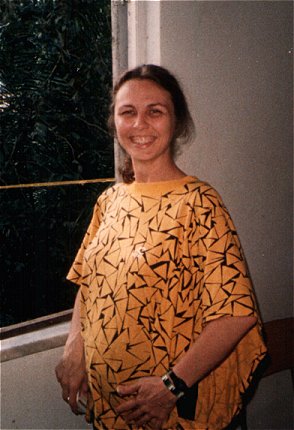
Happily pregnant, at 6 months, I had no idea that it was my ‘bump’ that would get me over the ‘hump’  and make me an official resident alien in Brazil. 

When I arrived in Brazil, I had a three-month tourist visa and no intention of overstaying. By the time the three months were up, I had decided to stay, and my Brazilian friends told me not to worry when it expired, since that would happen on Fat Tuesday. “Just tell them it was Carnival! They’ll understand.”

Carnival came and went, and then I was told that I should wait until a “friendly” federal policeman returned from holiday. I waited a few more weeks, and there was no sign of him. Finally I decided to fling myself on the mercy of the immigration office, which was run by the fearsome Federal Police (note that this was shortly after the end of the dictatorship, when they had had a hand in torture and “disappearing” people, and that mentality still lingered), and found no sympathy at all. I was fingerprinted for the first time in my life – with black ink – fined and given a few days to leave the country.

Fortunately, a friend lent me the money for a plane ticket, for there were no buses available at such short notice. I paid the fine and headed for Paraguay to renew my visa. In those days, that was possible. If it had happened nowadays, I would have had to return to my home country. That gave me another three months, renewable in Brazil for another three, after which I would once again have to go to Paraguay. I enjoyed the beautiful blue butterflies at Iguaçu Falls, crossed the Friendship Bridge on the Paraguayan border, got my visa renewed and headed back to Salvador, Bahia.

By the time I was due to travel to Paraguay for the second time, I was engaged to be married. Normally, I would not have done so, since it was against my philosophy, but since I was in a committed relationship and it seemed to be the only way to become a legal resident, I decided to tie the noose, erm, knot. Before I left, I had a divination reading done – a consultation with the cowries – and all sorts of negative portents appeared. “Work” was done to protect me and I set off on my own, this time by plane to Sao Paulo and bus from there to the triple border region where I would once again cross the bridge and briefly enter Paraguay. The first time I had done it, I had walked across, done some shopping and walked back before I realised that the most important thing was missing – a stamp in my passport! I then had to go back and sit in the Paraguay immigration office, where men in dark sunglasses scrutinised my documents, gave me the stamp – for a fee – and watched me head back across the bridge to their Brazilian counterpart, which looked for all the world like a toll booth.

The first time, I had got my stamp and headed back home. This time, however, the computer said I couldn’t re-enter because I hadn’t paid the fine levied when I overstayed my visa. But I had paid it! Unfortunately, I had left the receipt behind in Salvador. For the Federal Police, the computer was never wrong, so I wandered disconsolately back to my hotel, and listened to pigeons (doves?) rustling and cooing outside my hotel window over the course of a sleepless night. Later I was told that was a blessing. Fortunately, the Federal Police officer I saw the next morning allowed me to re-enter the country officially, but just for three days! Enough time to go home, fetch the receipt and take it to the local immigration office so they could renew my visa for another three months. Three months and three days instead of six months to plan the wedding and, of course, get married!

When I arrived at the Federal Police office in Salvador, receipt in hand, the officer – the same one who had had me fined and fingerprinted – was very understanding. He told me to go to the bank where I had paid the fine to get the receipt officialised. I did, but when I returned to the policeman with the proper stamps, I realised that his supposed understanding had masked utter disbelief. He clearly thought I had either bribed someone at the bank or forged the stamp, because he rushed off with the paper in hand to see for himself. Some time later, he returned and admitted that, this time, the computer really had made a mistake. I got my three months, got married, and was at least spared the need to make a third visit to Paraguay. So far so good, and I was still perfectly legal.

Fast forward about a year. I was nine months pregnant. An amnesty programme was in effect for illegal aliens. When I visited the Federal Police to see about applying for permanent residence, I was advised to apply for amnesty! “But, but, I’m not here illegally, never have been,” I stammered. “It’s easier for us if we do it that way.” And then, looking at my belly: “How far along are you?” When I told the officer, he gave me a form to fill out and sign, stamped it, and told me that that should suffice. It did. Because I was having a baby in Brazil. There had been no need to get married at all, except to give my child my surname…

After making every effort to play by the rules, I finished up getting the same treatment that every illegal immigrant received when they even remotely qualified for residency. That was typical of my experience in Brazil – play by the rules and rue it. I’m not advocating unlawful behaviour, certainly not malandragembut it did make me understand why Brazilians tend to view the law as a “guideline” and invented the jeitinho brasileiro.

Driving Dr Gledhill: Taxi drivers I have known (part two)

On a more serious note, the worst experience I ever had with a taxi driver was very recent. It was fortunately just a short way from the Historic District to the Historical and Geographic Institute. Somewhere en route, the driver and I got to talking about crime (always a meaty subject with taxi drivers, as they are unusually exposed to it) and he revealed that he was a police officer. Then he regaled me with the story of how he was jogging along Dique do Tororo in his expensive trainers, wearing an even more expensive watch, when a mugger pointed a knife at him and demanded that he hand them over.

He did, but as the mugger was walking away, the cop/cabbie pulled out his concealed gun and aimed it at his assailant. When the mugger pleaded for his life, the former victim, now executioner, said he was going to send him somewhere no lawyer could get him out of and riddled him with bullets. Then he rang up his friends on the force and had forensics clean up the crime scene!

I was chilled. And terrified. There I was in the same vehicle with a confessed cold-blooded killer who was clearly proud of his exploits. We were close to the institute, so instead of asking him to go around Piedade Square and leave me at the front gate as I would normally have done, I asked him to pull over at the other side of the square, hopped out, paid my fare, and breathed untainted air again. I was reminded of my first impression of Brazil when I arrived in December 1986 – people seemed to be more afraid of the cops than of the robbers. In nearly 30 years, nothing seems to have changed…

Driving Dr Gledhill: Taxi drivers I have known (part one)

One thing I will miss about Bahia is the taxi drivers. They range from friendly, reliable and helpful – particularly Henrique (henriquetaxi@gmail.com), who was recommended to me by the Sacatar Institute – to the downright psychotic. Since the friendly, reliable and helpful taxi drivers don’t make for a good story, I will focus on the psychos.

The worst was the guy I call ‘rabid road runner meets The Shining’. I was going home in the company of an American friend – which meant that although we were speaking Portuguese in the taxi, his accent betrayed the fact that he was a ‘gringo’ – and hailed a cab near the Afro-Asian Studies Centre. Half-way along, the driver started speeding and I asked him to slow down. Using paggro with which I was all too familiar, he slowed to a crawl until he thought we’d had enough (I said nary a word) and started speeding again. Both my friend and I protested, but to no avail.

When we were finally nearing our destination, I told the driver to turn left into the cul-de-sac where I lived. Instead  he revved and tore up the hill to the right. My friend and I both shouted at him to stop, so he pulled over, turned around, and grinned at us with a manic expression that made me think he’d pull out a butcher knife and growl “Here’s Johnny!” We paid and jumped out of the car as fast as we could while he did a 180, burned rubber and vanished around a corner.  Just another taxi ride in Bahia…not!

Driving Dr Gledhill: Intro*

I have been back in the UK for exactly one month and many things spring to mind as a posting topic, but none so emphatically as driving! Of course, there are the obvious differences like driving on the left, as everyone else calls the right side of the road (or as they call it in Brazil, ‘mão inglesa’), but my experience has revealed much sharper contrasts.

When I arrived in Brazil in December 1986, the economy was at a standstill. The day I arrived in Bahia, a general strike had been declared and the beaches were full. There was a price freeze in place and most basic commodities had vanished from the shelves, awaiting a thaw. The people I was staying with obtained dairy products and meat from their relatives in the countryside. The supermarkets were bare. The very thought of purchasing a car was a far-fetched dream for most. When I asked a Capoeira teacher if he had a car, he said he had to sell it because he couldn’t afford the petrol. It took a few minutes to realise he was joking. By the time I left, it was so easy to buy a car that the roads were clogged. Endless traffic jams were making Salvador worse than São Paulo. But in all that time, I never wanted to buy a car. Wondering why? Let me explain.

I had just arrived from Los Angeles, which of course is a city designed for driving cars. Public transport was (still is) so bad that anyone who could afford the cheapest hulk would prefer one. My first automobile in that city cost $100 (purchased from a friend of a friend) and listed to one side. I seem to recall that it was a Ford with push-button transmission. I was immediately pulled over after taking delivery because it didn’t have a catalytic converter!

Thanks to hand-me-downs from my family, I went on to better wheels, but my experience on the roads was pretty much the same – lots of motorway (expressway) driving, both within the city and en route to other parts of the state. I was a prudent driver and kept strictly to the speed limit – living dangerously by LA standards because shortly after I left I heard that drivers who did the same were being shot at! I drove for a total of 8 years before settling in Brazil. And that is where my driving experience ended until last week.

Why, you may ask. would I willingly give up my freedom of movement and put myself in the hands of bus and taxi drivers (the Metro only started running last year and I’ve only taken it once)? Of course, buying a car would have been very expensive – the monthly payments, insurance, maintenance, petrol (or ethanol, which is also an option in Brazil), and parking! But that was not the main or only reason. In short, drivers in Salvador, Bahia, Brazil (being careful not to generalise) are completely insane. Road rage is normal behaviour, especially for bus drivers. Signalling is more like gaslighting. Thought I was turning left? Hah! Gotcha! And motorcyclists weave among the sweltering motorists (who keep their air conditioning turned off to save money) like extras from a Mad Max film. Long story short, as long as I could afford to take a taxi, I preferred to have a professional behind the wheel, but even that had its perils…. (to be continued)

^^^^^^^^^^^^^^^^^^^^^^^^^^^^^^^^^^^^^^^^^^^^^^^^^^^^^

*It has always amused me that in Brazil – at least, in Bahia – if a taxi driver wants to ingratiate himself with a passenger, he (they are usually men) will call them ‘doutor’ or ‘doutora’ (or even worse, for females, ‘madame’). When I was working towards my PhD, I would joke that I wasn’t a ‘doutora’ – just a ‘doutoranda’ (PhD candidate). Then when I actually had a doctorate, I would suggest to those who called me ‘madame’ that ‘doutora’ would be more appropriate! Here in Blighty, people I don’t know routinely call me Dr Gledhill. Still getting used to it.

Musings on the Term ‘Expat’

Recent controversy about the use of the term ‘expat’ for Europeans (as opposed to ‘migrants’ or ‘immigrants’ for people from other parts of the world) gave me pause when choosing the new title of this blog. It is no longer ‘A View from Brazil’ because I’m now in Blighty (aka the UK). However, in my specific, somewhat unique case, I can safely use the term without fear of inflicting a micro (or macro) aggression of any kind because I was raised British in Puerto Rico, have always considered myself British, have never held or desired any other nationality, and never intended to spend my entire life away from the one country where I can legally vote!

That being said, nearly three decades in Brazil – more specifically Bahia – have left me thoroughly acculturated, and that is going to be the main theme of this blog from now on: readapting to life in the UK after living in northeastern Brazil, whilst reminiscing about and keeping an eye on the country I left behind in body but not in spirit. I’ve established a family there which is now in its second generation (also thinking of starting a blog titled Yummy Grannies – all rights reserved).

Forging through the Red-Tape Jungle in Bahia

I need an international driving license and have been putting it off for years. When I finally get around to it, it becomes a Kafkaesque comedy. Of sorts. I’ll laugh about it one day!

Here’s how it’s been going so far…

Day 1 

Today I went to the Brazilian equivalent of the DVLA/DMV and had to queue to get a number, only to be told that I didn’t need one – I just had to talk to the man standing next to me, who was helping a little old lady and taking a very long time. When he was finally free (and there was already someone behind me in the no-number queue), he told me to go to desk X and say M___ sent me, only to be told that I was in the wrong place – they didn’t issue what I wanted there, and I had to go to their outlet at the Citizens Service Centre (SAC) in a nearby shopping mall, where I was told that I didn’t have all the documents I needed, so I went home and will try again tomorrow…

Day 2

It seems to be a guideline for bureaucrats (unwritten, I hope), even if their job is supposedly to make services more efficient – the whole point of the Citizens Service Centre – that they must always hold back at least one piece of vital information. Yesterday, I was told that I needed a document I had not been informed about when I checked the requirements online. Could be I’d missed it, so no worries, here it is. Then I was told that I also needed to provide black and white photocopies of all documents (fortunately available for an exorbitant price in the mall). No worries, done in a flash. Finally, when I returned with the copies, I was asked if I knew how much it cost! “Erm, has it gone up much? It used to be R$80…” “It went up in March – now it’s R$520! Oh, and there’s another thing – you can’t just bring a 3×4 cm photo any more. It’s all computerised…and the computer isn’t working.” “Any idea when it will be up and running?” “Nope!” “Can you give me a number so I can find out if it’s working or do I have to come by in person again?” “Come by in person! If we gave out our number we’d do nothing but answer the phone all day!” Hoping the third time will be the charm… (By the way, the dialogue was summarised and involved more than one interlocutor – in case it seemed it was that easy to get all the information required!)

Day 3

The third day was definitely the charm. I have just confirmed hat I don’t need an international driving license in the UK. My Brazilian one will do nicely for up to a year. Just shows that greed doesn’t pay. I would happily have paid R$80 but R$520 gave me pause! Now I find that I don’t have to pay anything…for now. (If anyone knows differently, please tell me!)

What do Brazilians look like?

I recently came across an article that has sparked all kinds of responses online, and the time has come to add one of my own. Titled Future Humans Will All Look Brazilian, Researcher Says it naturally caught my eye! Without even reading it, my first question was, which Brazilians, from where? 

While I was brunching in Paris with a fellow Brit, two women asked to share our table and started speaking Spanish. I initially assumed they were from Spain, since we were in Europe. Also, one was “Mediterranean” looking and the other was a blue-eyed blonde, which is entirely possible in Iberia. When we eventually joined in the conversation (in English), it turned out that the “Mediterranean” woman was from Argentina and the blonde was…wait for it…from Brazil! My British companion was surprised, and said she didn’t look Brazilian. I explained that they come in all shapes and sizes.

The reason for that is immigration – and a policy of “whitening” that began in the 19th century. There is a large population of German descent in southern Brazil whose best-known representative nowadays is Gisele Bundschen (note the German-sounding surname!). It comes as a surprise to some that long before the influx of Nazis on the run after Hitler’s defeat in the mid-1940s, a much bigger wave of migrants arrived in what is now the state of Santa Catarina in the 1800s from the region now called Germany. There is even a city called Blumenau, founded in 1850, that holds an annual Oktoberfest.

Many Italians settled in the Central South, and there is a large population of Italian descent in São Paulo. A popular soap opera, Terra Nostra (1999-2000), portrayed the stories of white immigrants from Italy who replaced enslaved Black people’s labour on coffee farms in São Paulo State at the turn of the nineteenth/twentieth centuries.

Centuries of racial mixture and  immigration, not only from Europe but from Asia and other parts of South America, as well as more recent arrivals from Africa (particularly former Portuguese colonies) have produced Brazilians of all colours on a wide spectrum ranging from Pelé to Gisele and even paler and blonder than she (like TV children’s presenter Xuxa Meneghel, also Pelé’s former girlfriend). However, there is an image of what Brazilians should look like, formed among Brazilians themselves.

The original “three sad races” of Brazil are Amerindians, Europeans and Africans, in order of arrival, and the population that resulted from that mixture is considered “typically” Brazilian. For that reason, people of Asian descent, for example, may never be considered 100% Brazilian. A third-generation Sansei will find him or herself referred to as “Japa” because of their appearance. I have read of cases where Nipo-Brazilian workers in Japan – dekasseguis – feel more Brazilian outside their country than they do at home.

For more information on race relations in Brazil today, see my entry on that subject in the Brazil Today encyclopaedia

Xuxa and Pelé when they were dating