Joining Forces to Reverse Historical Erasure

Recently, Brazilian actress Tais Araújo posted a photograph of herself on Instagram, with a copy of Projeto Querino, by journalist Tiago Rogero. Earlier, on 31 October, Tiago published an article in The Guardian about his book, explaining how it developed from the Projeto Querino podcast, which, in turn, was inspired by the New York Times‘s 1619 Project. That article contained a link to this website, boosting its visitors considerably. According to Tiago:

“Projeto Querino is based on a journalistic project that involved a team of more than 40 people, over two years and seven months of work.
Inspired by the New York Times’ 1619 Project, it launched in 2022 as a podcast produced by Rádio Novelo and a series of magazine articles. Before joining the Guardian in April, I spent another year conducting further research and writing the book.
A central idea was to understand and illustrate how Black people participated in crucial moments of Brazilian history – such as independence in 1822 or the extensively delayed abolition of slavery in 1888 – something that some school curriculums and parts of the media refuse to acknowledge.
Its name is a tribute to Manuel Raimundo Querino (1851-1923), a groundbreaking Brazilian intellectual born free in Bahia state. He is considered the first person to portray Africans and Afro-descendants positively in the country’s historiography.”

‘We built Brazil’: how descendants of enslaved Africans have helped shape the country, by Tiago Rogero

Tiago Rogero and the historian Ynaê Lopes dos Santos interviewed Sabrina Gledhill about Manuel Querino for the podcast in 2021, and Projeto Querino was launched in 2022. Sabrina`s interview can be found in episode 4 (the link is to the PDF in English).

The next major project was Isis Gledhill’s bio-documentary on Querino, which was launched on YouTube in November 2023 and has already racked up over 8,500 views and been selected for screening at two Brazilian film festivals. Tiago and Ynaê gave interviews for the documentary, as did Sabrina and several other scholars who study Querino.

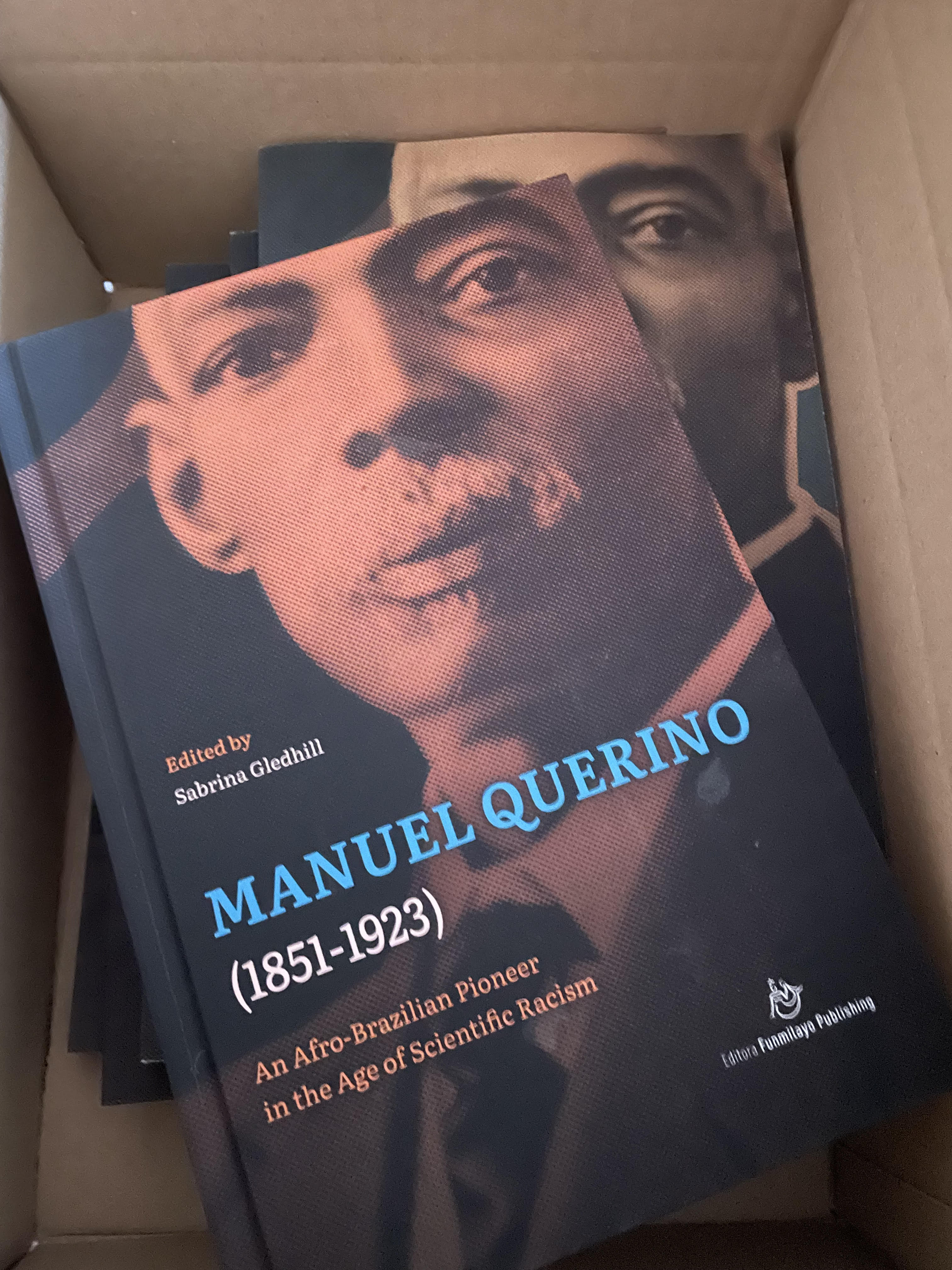
Someone asked if the Projeto Querino book was competing with Funmilayo’s anthology Manuel Querino (1851-1923): An Afro-Brazilian Pioneer in the Age of Scientific Racism. The answer is not at all. We are very pleased that the word is getting out there about Manuel Querino and his legacy. Tiago has used the platform of The Guardian to spread the word about his own book, while generously sharing a link that enables his readers to find out more about Querino through our publications. One of these days, our work will be done, but as long as the process of erasure continues, “a luta continua” (the fight goes on).

The Legacy of Manuel Querino: Challenging Historical Narratives

Manuel Querino

The only book I had in mind back in 2020 was an anthology on Manuel Querino, the Afro-Brazilian scholar I have been studying and writing about since the 1980s. I had just published a book in Portuguese based on my PhD thesis comparing Querino to Booker T. Washington, and I was being urged to publish something about Querino in English. I had also written several essays that had appeared in Brazilian peer-reviewed journals and books over the years and would make a small volume. Then, it occurred to me that Querino’s activities were so varied, covering a gamut of specialisms, that it is impossible for one person to write authoritatively about them all.

Fortunately, I had access to writings by E. Bradford Burns (the first bibliographic essay on Querino published in English), Jeferson Bacelar and Carlos Doria (on his pioneering study of Bahian cuisine), Eliane Nunes (on his contributions to art history), Jorge Calmon (on his involvement in labour mobilisation and politics), and Christianne Vasconcellos (on his use of photographs in anthropology) to add to my own writings . The result was Manuel Querino (1851-1923): An Afro-Brazilian Pioneer in the Age of Scientific Racism, a compendium that has also been published in Portuguese (without Burns’s essay, due to translation rights), and has been very well received.

That book was published in 2021, during the Covid pandemic. Lockdown was a wonderful opportunity to focus on organising and translating the anthology. In the years since, I have worked on translating and updating a monograph based on my PhD thesis, which has been in peer review with another publisher for several months. The Unsung Heroes series began with the second volume, which I first approached as “something to do” while awaiting the verdict on my own book. It all started with Querino, naturally. I had originally intended to publish my translation of one of his most significant works (for me), O colono preto como fator da civilização brasileira, translated as The African Contribution to Brazilian Civilisation.

First, I was intrigued by parallels between Querino’s story and that of Arthur (born Arturo) Schomburg. Then, I started wondering which works by W. E. B. Du Bois, Carter G. Woodson, Booker T. Washington, and other Black thinkers were comparable to Querino’s essay, which demands recognition for the achievements of Africans and their descendants. Instead of being seen as passive sources of manual labour, Querino asserted that they contributed knowledge they brought from their homelands, such as mining and metalworking, as well as helping maintain Brazil’s territorial integrity as soldiers. He also emphasised their ingenuity and courage in breaking free from the bonds of slavery to form their own communities, known as quilombos in Brazil.

That initial curiosity led to a gold mine of works on Black soldiers and maroons, which I added to Querino’s essay to produce The Need for Heroes: Black Intellectuals Dig Up their Past, published in June 2024. I realised that the concept of Unsung Heroes, inspired by the title of Elizabeth Ross Haynes’s book of children’s stories, extended to the anthology on Querino. He was well known in life, having achieved such renown in Brazil that several newspapers published his obituary in his home state (Bahia), Rio de Janeiro, and other parts of the country. Representatives of trade unions and academia attended his funeral, which was also covered by the press. But since the 1930s, he had been gradually forgotten, and if remembered at all, thought of as a lightweight scholar, the minor author of a few pamphlets, and even illiterate. There seemed to have been a deliberate effort on the part of the “hegemonic narrative” to rewrite his story as that of a poor, ill-educated Black man who made a stab at anthropology but didn’t quite succeed. This disinformation was convenient because he already contradicted the commonly held notion that all Blacks in Brazil were enslaved until Abolition in 1888, and since then had been nothing but vagrants, thieves, and scoundrels – an image still maintained in the media.

While the eminent Brazilian historian Flavio Gomes was writing the afterword for The Need for Heroes (it was worth the wait), I started putting together works that hadn’t quite fit in that collection and adding many more. Once again, I started with Querino, who is considered the Brazilian Vasari because his pioneering works on the history of art in Bahia were based on biographies of artists. The result was Heroes Sung and Unsung: Black Artists in World History, a compendium of works by Querino, as well as Arthur Schomburg, W. E. B. Du Bois, Booker T. Washington, Benjamin Brawley, James M. Trotter, Sojourner Truth, Frederick Douglass, and others, with a foreword and afterword by brilliant contemporary artists and writers: Mark Steven Greenfield, from the USA, and Ayrson Heráclito and Beto Heráclito, from Brazil. It joins the first two titles, Manuel Querino (1851-1923): An Afro-Brazilian Pioneer in the Age of Scientific Racism and The Need for Heroes: Black Intellectuals Dig Up their Past, which are also available in paperback, hardcover, and Kindle e-book editions.

When I’m asked what’s next, the answer seems obvious—an anthology about Black women heroes, “sung and unsung.” I might even reclaim the word “heroine.” I haven’t come up with a title yet, and I may have to write most of the bios myself, but it is something to look forward to. Watch this space.

This post is an adaptation of an essay published in Heroes Sung and Unsung

From Brazil to The Bookery

Manuel R. Querino

Many had a productive ‘lockdown,’ but how many Kirtonians can say that they published three books in two languages and started a publishing house in their home office? “Well, technically, it’s two books,” the author and publisher observes, because she produced two editions of a similar collection of essays. Only one of those is in English, and it is now for sale at The Bookery in Crediton’s High Street.

It was in February 2020 that, while awaiting the birth of her second grandson, local resident Dr Sabrina Gledhill signed a contract in Brazil to publish a book in Portuguese based on her PhD thesis. That work, which Dr Gledhill is now translating and adapting for English-speaking readers, focusses on two Black leaders, Booker T. Washington in the US, and Manuel R. Querino in Brazil. The founder of what is now Tuskegee University, Washington is well known around the world, but he had been largely forgotten in Brazil. Querino, on the other hand, was famous in Brazil during his lifetime, but has only recently been re-evaluated and restored to his rightful place in the ranks of pioneering Brazilian anthropologists and art historians.

The book was launched in Salvador, Bahia, in September 2020. Despite travel restrictions and thanks to the wonders of the Internet, Dr Gledhill was able to promote the book from her library near Crediton, from where she took part in round-table discussions and gave interviews to Brazilian TV and radio hosts.

Asked when she would start publishing in English, which is, after all, her native tongue, Dr Gledhill then edited a collection of essays on Manuel Querino by E. Bradford Burns and Jeferson Bacelar (respectively her MA and PhD supervisors) and other authors, including her own work, which had been published in Brazilian peer-reviewed journals. The reasoning was that Querino’s activities were so varied that it takes a number of specialists to do them justice. Dr Gledhill translated most of the essays from Portuguese into English, but since she already had the originals in Portuguese ready for publication, she thought, why not publish a Brazilian edition as well?

The result was that, by the end of 2021, when travel restrictions eased and she was finally able to visit her Brazilian family again, two more books were released in Brazil and the UK. The publisher of the English edition is Editora Funmilayo Publications, based in Crediton. Manuel Querino (1851-1923): An Afro-Brazilian Pioneer in the Age of Scientific Racism is available as an e-book, and in paperback and hardback editions on Amazon, Alibris and, of course, at The Bookery.

Published in the Crediton Courier on 25 August 2022

AI Reviews “Manuel Querino” Anthology*

Manuel Querino (1851-1923): An Afro-Brazilian Pioneer in the Age of Scientific Racism” – A Review

This meticulously edited anthology serves as a long overdue tribute to Manuel Querino, a remarkable Afro-Brazilian intellectual who challenged the prevailing scientific racism of his era. By showcasing Querino’s multifaceted contributions across diverse fields such as history, sociology, art criticism, and public service, the anthology offers a captivating glimpse into the life and work of this trailblazing figure.

The collection brings together an impressive array of essays that delve into Querino’s intellectual legacy, contextualizing his work within the socio-political climate of 19th and early 20th century Brazil. Querino emerges not only as a scholar of exceptional calibre but also as a tireless advocate for social justice, dedicated to dismantling the racist ideologies that sought to marginalise Afro-Brazilians. His writings on Afro-Brazilian culture and history stand as a testament to his unwavering commitment to reclaiming and celebrating his rich ancestral heritage.

The anthology’s contributors offer insightful analyses of Querino’s most significant works, including his seminal study “The African Contribution to Brazilian Civilisation.” They also explore his writings on art history, showcasing his profound understanding of the aesthetic dimensions of Brazilian culture. By situating Querino’s ideas within their historical and intellectual context, the anthology illuminates his prescient challenge to scientific racism.

The book’s strength lies in its comprehensive and nuanced exploration of Querino’s intellectual contributions. It provides a much-needed corrective to the historical neglect of this important figure, while also highlighting the ongoing relevance of his ideas in contemporary debates on race and social justice.

While the anthology is a valuable resource for scholars and students of Afro-Brazilian studies, its dense and scholarly style may pose a challenge for general readers. Nonetheless, its significance as a testament to Manuel Querino’s extraordinary legacy cannot be overstated. This anthology serves as an essential contribution to our understanding of the complex and often-overlooked history of race and intellectual thought in Brazil.

*Produced by Gemini, with some tweaks from HI (human intelligence)

The Forefather of Affirmative Action

Marcos Rodrigues

MA in Ethnic and African Studies, UFBA

ORCID: 0000 0002-6662-2350

Review of GLEDHILL, Sabrina (ed.). Manuel Querino (1851-1923): An Afro-Brazilian Pioneer in the Age of Scientific Racism. Crediton: Funmilayo, 2021.[1]

Edited by the independent scholar Sabrina Gledhill, this book introduces—or reintroduces—the life and work of the Brazilian intellectual and activist Manuel Querino (1851-1923), a pioneer in the construction of the civilizing Afro-Brazilian discourse in the age of scientific racism. Born in Santo Amaro, Bahia, in colonial times, Querino can certainly be considered the forefather of the struggle for affirmative action for the Black population, based on the spaces he occupied as an educator, labour leader, politician, ethnologist, and writer.

It was a time when evolutionist theories affirmed the classification of inferiority and the prospect of extinction for the Black population, favouring European immigration and the culture of “whitening.” Manuel Querino emerged as a pioneer in several advanced lines of thought, such as ethnology, food anthropology, art history, and the struggle for affirmative action. These qualities marked his trajectory in this book, which also includes essays by E. Bradford Burns, Jorge Calmon, Eliane Nunes, Cristianne Vasconcellos, Jeferson Bacelar, and Carlos Dória.

With the aim of presenting a many-sided biographical analysis against a framework of concepts and definitions of blackness from an evolutionary standpoint, this book was organised from the perspective of scholars from the fields of politics, history, anthropology and social science who focussed on shedding light on Manuel Querino’s legacy. This anthology is also the result of the interconnected movement of humanists from different generations, which certainly contributes in grand style to the reintroduction of its protagonist and his multifaceted trajectory.

Constructing a discourse involves transgressing, deconstructing, and selecting the paradigm or category of thought to be followed. This foray by Sabrina Gledhill dates back to her previous book, Travessias no Atlântico Negro: Reflexões sobre Booker T. Washington e Manuel Querino (Black Atlantic Crossings: Reflections on Booker T. Washington and Manuel R. Querino; Edufba, 2020), and her participation in other edited volumes, with the aim of spotlighting activist intellectuals from the world of the African diaspora. Now, very opportunely, she has written essays and linked them to narratives by other authors to help establish Manuel Querino’s rightful place as a political subject of his time, whose leading role must be explored.

But what is the place which Manuel Querino occupies in the history of the Brazilian arts and culture, specifically in the state of Bahia? Certainly, in this book, there are several clues to follow to obtain an answer from each author’s perspective. In every field of activity, Querino produced a work that has left its mark on our time. Although he was never enslaved, he seems to have constructed a public discourse based on the perspective of Black people in a society that was being transformed after losing its economic foundations, the culture of bondage.

In her introduction, Sabrina Gledhill, a British Brazilianist and award-winning translator educated in the UK, the US, and Brazil, reveals that her interest in Querino began in the early 1980s, when she was looking for a subject for her MA research at UCLA. Putting Manuel Querino’s life and work in context, she keeps a close eye on the path followed by a controversial man who experienced the final phase of the colonial era and the consequences of slavery in the early twentieth century. The author and editor describes Querino as a lone voice, a Black man who won a place among the White elite and tried to use his position to spread a message that few people of his colour could or were willing to deliver.

Few Brazilians followed such an enlightened path as Manuel Querino, now reintroduced to all those who work in the field of social science and are still surprised when he is mentioned. The importance of revitalising this memory comes from his being a pioneer in the fight against scientific racism as dictated by forensic medicine, from underscoring the African influence in Brazilian history, from introducing the field of art history in Bahia, as well as research on the anthropology of food.

Of the nine chapters that make up this book, two, in particular, stand out. Chapter 6, which focuses on the use of photographs in ethnographic studies, is a direct reflection on a debate that is now actively ongoing in anthropology. The author, Christianne Vasconcellos, sheds light on Manuel Querino’s anthropology in his ethnographic studies of Africans in Bahia with an essay that induces the reader to return to the path of recognising and knowing him as a way of understanding our historic process.

Chapter 8 is the key to understanding the origins of what is now known as Bahian cuisine. The scholars and guest authors Jeferson Bacelar and Carlos Dória reveal that Manuel Querino was the first to study Bahian cuisine, giving rise to a segment of food anthropology. Thus, it should be recalled that the tourist attraction now promoted on a grand scale came from the research done by Querino in difficult times marked by a strictly Eurocentric culture in a colonising intellectual market.

Reading that essay easily leads us to reflect on how the African diaspora in the Americas and Caribbean contains thousands of hidden human values that struggled and played a leading role in overcoming adversity, and the effectiveness of post-slavery affirmative action. The civilising discourse that shaped our thinking, always on the basis of European colonisers as a tentacular reinforcement for scientific racism, was already showing its contradictions. Hence, the merit of the narratives gathered here in delving against the grain of invisibility and bringing to light the life and works of Manuel Querino.

This anthology seems to achieve an important objective. It leaves the reader with the desire to find or re-examine Manuel Querino’s work and include him among the main sources in discussions or research that will be forthcoming when the subject is Bahian culture. The objectivity of the essays leads to a sphere of knowledge hitherto neglected by the canonical thought of the intellectual “classics” of the past. Therefore, recent generations are grateful for this act of reparation on behalf of a vibrant historical and cultural legacy that is clearly overlooked.

Certainly, digging into Querino’s life is no easy task for scientific research. The sources consulted and the authors invited to take part in this publication indicate the extent of the activity surrounding a personage who paved the way for ethnological, historical, and artistic studies focused on Africanity and its offshoots in the diaspora. Therefore, this book is also an example of intellectual responsibility.


[1] Adapted from a review of the Brazilian edition.


(Re)introducing Manuel Querino

I recently published an anthology entitled Manuel Querino (1851-1923): An Afro-Brazilian Pioneer in the Age of Scientific Racism. All but one of the chapters were originally published in Portuguese and are available in English for the first time. They cover several aspects of Querino’s life and career – leaving enough topics for at least a revised and expanded edition. The facets included in this publication are his work as a politician and militant journalist, art historian, Black vindicationist (he was the first Afro-Brazilian scholar to underscore the positive contribution of Africans and their descendants to Brazilian society), ethnologist and food scholar. For more information on the e-book, paperback and hardback editions, visit https://www.amazon.co.uk/dp/B097N4F8CB/ref=cm_sw_r_tw_dp_RS4D5PVVYJYDMW0B34CS via @AmazonUK or search for Gledhill Querino on your country’s Amazon website.

‘Freeing’ a modern-day slave (part two)

breaking chainsAs I wrote in part one, I like to think that I freed a slave – a young girl who was being forced to work as a maid for no pay in Brazil – but looking back, I realised that she was, in her own way, a free agent…

Although this story could have taken place today, it happened nearly twenty years ago. I was helping organise the first PercPan percussion festival in Salvador’s Castro Alves Theatre, and had to spend a few nights at the nearby Hotel da Bahia (now the Sheraton). Whilst there, I invited my daughters and Bela over to the hotel to enjoy the pool. I noticed (or was told) that Bela spent most of her time talking to the hotel manager’s son, who was about her age. I thought nothing of it. The next day, I rang home to see if anyone wanted to stay at the hotel whilst I was working (I usually got back at about 2 am). Bela answered the phone and pipped my daughters at the post, eagerly accepting the invitation. Again, I thought nothing of it. When I got back from work at the usual time, I knocked on the hotel room door and no one answered. I thought Bela must be asleep, so I went down to the lobby and rang the room (I only had one key and had left it with her). No answer. Unable to get into my room and not knowing where Bela was or what she was doing, I decided to take the lift to the penthouse and say good-night to my boss, thought better of it when I reached the 10th floor, and headed back down the staircase. There, in the stairwell, I found Bela in a clinch with the hotel manager’s son!

As a result of that and other indications, I began to worry that Bela was trying to use her youthful sexual charms to get a leg up in life. I feared that if she stayed in the ‘big city’ she would finish up as a prostitute, so I purchased a bus ticket to her home town and sent her back to her mother with a small amount of cash to tide her over. She rang me when she arrived to say she had ‘lost’ the money and I commiserated, but didn’t offer any more.

It turns out that I was right about Bela’s use of her sexuality, but she did so within the legal smokescreen of marriage. She accepted a much older suitor who had been pursuing her before she moved to Salvador (yes, she was still underage) and eventually came to own a chain of beauty parlours. Either divorced or widowed, she went on to marry a doctor who was closer to her age, and as far as I know, she is still happily married and a successful businesswoman to boot.

Did I ‘rescue’ Bela or was I merely a pawn in her gambit for freedom? I don’t believe I would have done anything differently, either way. Also, I can’t help wondering how many other young women are still enduring a similar situation but cannot find a ‘saviour’ – or save themselves.

Looking back on 2015: A disturbing trend in Brazil

12442953_10153275458884599_1103433685_n

Graffiti artists’ protest against the Cabula massacre, seen in that district in 2015. Photo by Sabrina Gledhill (all rights reserved)

On 6 February, 2015, policemen shot and killed 12 robbery suspects in the Cabula district of Salvador, Bahia. An internal investigation by state’s Public Prosecutor’s office found that the victims – all of them young black men – had been executed. The black movement calls it genocide, a disturbing trend in a country where racism has traditionally been veiled and racially motivated lynching almost unheard of. That being said, exterminating street children (the best-known incident being the Candelaria massacre in Rio in 1993) and known or suspected criminals as if they were vermin is nothing new in Brazil. Ironically, there is no official death penalty in that country.

***

The graffiti art in the photo illustrating this post was not the only response to the Cabula massacre by the Bahian arts community. From May to August 2015, the Museu Afro-Brasileiro (MAFRO) held an exhibition curated by the museum’s director, Graça Teixeira that displayed thought-provoking installations and artworks protesting the genocide of black youth in Brazil.


Coup-driven change?

juraci e agildo barata em 1930

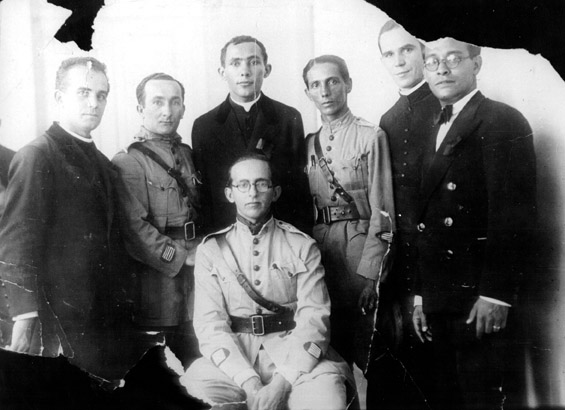
Ernesto Geisel (far right) with Juracy Magalhaes, Agildo Barata and other prominent figures of the ‘1930 Revolution’

I am increasingly concerned by the upsurge in demands for a military or political coup to overthrow the Dilma Rousseff/PT administration. I arrived in Brazil shortly after the end of the 1964 coup – which its perpetrators and sympathisers called a ‘revolution’. It lasted 21 years and left deep scars (physical and metaphorical) on the Brazilian people. History shows that coups have been a standard form of regime change in Brazil since the early nineteenth century. It’s time for a fresh start and a different approach

Years ago, when I was working on a biographical project about political figures in Bahia for the late Brazilian historian Consuelo Novais, I noticed that at least one of the generals who took part in the 1964 coup had also played an important role in the so-called Revolution of 1930 that overthrew the First Republic and brought Getulio Vargas to power.

That got me thinking. Brazil negotiated the independence of the south, but had to fight to free the northeast and north from Portuguese rule (with the help of Lord Cochrane, but that is another story for another post). The first Brazilian emperor, Pedro I, was the son of the ousted Portuguese king, Joao (John) VI. Pedro was forced to abdicate in favour of his son, Pedro II, who was ousted by the 1889 coup that established the First Republic. Are you sensing a pattern here?

When I suggested to Consuelo Novais that the 1964 coup was just another link in a chain of ‘regime-change revolutions’, she interrupted me vehemently and said that, no, it was the Americans who engineered it. Admittedly, the CIA played a key role, but a seed has to fall on fertile soil…

That is why I am extremely concerned about the current machinations to remove Dilma from office (Brazil is a first-name culture). Although the PT (Workers’ Party) has been in office far too long and may well have rigged the last elections as its opponents claim, it would be salutary for Brazil to see her mandate through and elect an anti-corruption candidate from another party. However, as I have written elsewhere, all of Brazil’s political parties are alike in that respect. None is less venal than any other, and all of them have (or would, given an opportunity) looted the public coffers. Eliminating corruption in politics requires a cultural sea change.


Divorce, Brazilian Style

Never throw the key away!

Never throw the key away!

In my recent post “Playing by the Rules and Rueing It,” I mentioned that I got married to stay in Brazil as a legal resident. I was in a committed relationship, but marriage was against my philosophy. And, as it turned out, it was entirely unnecessary. If I had only known how hard it would be to get a contested (non-consensual) divorce…

When my marriage was no longer bearable; when I finally managed to overcome the inertia, gain momentum and break free, I found myself in a legal maze that would have made Kafka laugh.

First, under Brazilian law, I had to say that I left my husband because I was in fear of my life to avoid being charged with “abandoning the home” (abandono do lar) and losing custody of my daughter. Luckily (?) he actually had threatened to kill me – when I told him I’d slap him if he ever belted our daughter again. That remark was the death knell of our marriage. When we sat before the police officer who was taking our statements, he countered that I had threatened him too, as I’d told him that if he ever hit me, I’d pour boiling water in his ear when he was sleeping. All true, though it was mentioned as an anecdote (advice my mother gave me), not uttered as a threat. The female police officer looked knowingly at the female clerk and I realised that he had merely confirmed that I was under threat of physical violence, if not death. First step towards freedom – check.

Then I had to hire a lawyer. I turned to the foster mother of a friend of my adopted daughter and paid her R$1,000 up front (a considerable sum in those days). After a while – was it years? – the process stalled, and eventually the lawyer moved to another state, handing my case over to a colleague, and…nothing happened. I was separated but nowhere near divorced – languishing in marital limbo.

Finally, I came across another lawyer, who told me that my divorce proceedings had probably been “filed in a drawer” at the request of my husband’s uncle/attorney – the unscrupulous jailhouse kind. Fortunately, my new acquaintance knew someone at the notary’s office that had “filed” the proceedings and got them “unfiled.” On both sides, it was all about whom you knew. So far so good – what a relief! Months later, I received word that the divorce had gone through. Free at last…or was I?

One or two years down the line, when I wanted to travel abroad with my daughter, I needed her father’s authorisation, as she was still a minor. We both had to be present, and the official asked us if we had a divorce certificate. A what?? My elder daughter checked into it and found that I would have to go to several notary’s offices – all housed in the same courthouse by that time – to get the right stamps and signatures. Finally, my marriage certificate had a big stamp on the back saying the divorce had been finalised.

Oh by the way, I don’t think my ex ever knew that I managed to push the divorce through. I don’t believe he’ll read this, since he never learned English, but if anyone wants to tell him, feel free…