When the police go on strike

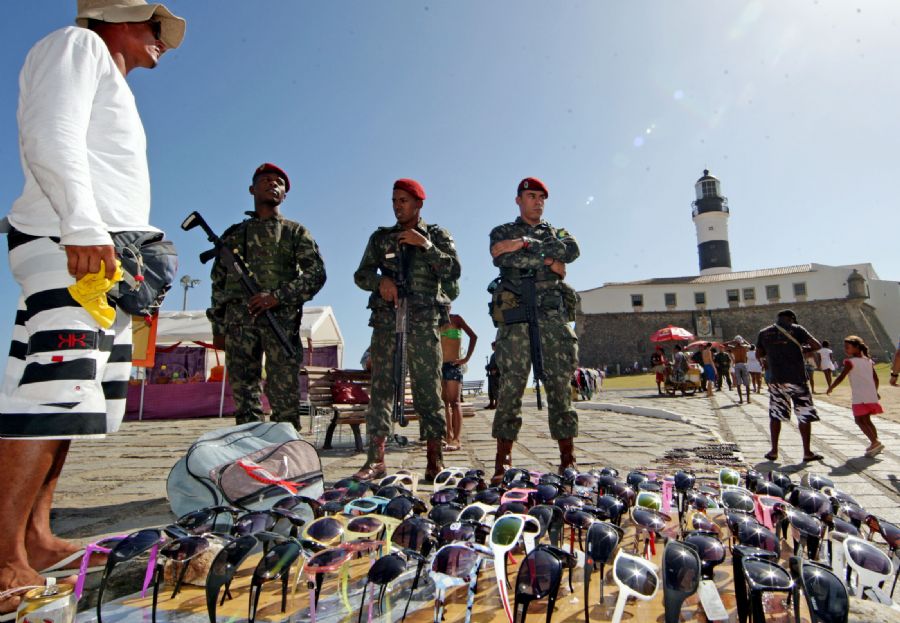
Scene from the 2012 police strike - source: http://historiadenina.blogspot.com.br/2012/02/salvador-na-greve-da-policia-militar-da.html

Scene from the 2012 police strike in Salvador, Bahia – source: http://historiadenina.blogspot.com.br/2012/02/salvador-na-greve-da-policia-militar-da.html

One of the first words I learned in my Portuguese class for Spanish-speakers at UCLA was greve. “Strike” is huelga in Spanish. Like earthquakes, your first police strike is the hardest. The shock of seeing troops and military tanks in the streets before realising that, no, it isn’t another coup. But this one – the third in my experience – is the worst in terms of violence and fear. A siege mentality has set in, and it’s only day two. Salvador’s unarmed municipal guard is refusing to police the streets because it isn’t safe for them, so imagine how ordinary civilians feel. Some buses run, others don’t. All of them stop much earlier than the 6-pm “curfew.” Most shops are shut, including grocery stores. Opportunistic individuals and gangs are robbing business establishments and sweeping down streets and beaches snatching wallets, mobile phones, handbags, necklaces, whatever dangles. Some of the “hooligans” are probably striking police officers, making sure we miss them – they’re never around when they aren’t on strike.

Another day in Paradise.


Quick update on April 18, 2014

OK…so the military police strike ended last night, and today one of the leaders (now a city councilman) was arrested for his role in the 2012 strike – just a coincidence, I’m sure. And now the strike seems to be back on, in reprisal for the arrest of the city councilman who, by rights, shouldn’t be out there leading strikes in the first place… And the beat(down) goes on.

Russian around Havana

I’m feeling a bit bereft because I’ve just finished reading all of Martin Cruz Smith’s beautifully written Renko novels. It turned into a project that lasted several months, starting with the most recent, Tatiana, and going back and forth till I finally decided to reread Gorky Park and move forward from there. After that strange, meandering journey with the poetic Russian chief inspector and sometime exile – an itinerary including lyrically rendered visits to Moscow, Alaska and Siberia – the last novel I read was Havana Bay. Incredibly enough (or perhaps not, since the author took the pen name “Cruz” from his abuelita), it includes a sensitive portrayal of Cuban Santeria. One could even call it emic – seen from the practitioner’s point of view. My only complaint is that it gives the impression that the only orishas worshipped in Cuba are Chango, Oshun, Oggun and Yemaya. Otherwise, I highly recommend it. But be sure to read Gorky Park, Polar Star and Red Square first.

(PS Since this is “a view from Brazil,” I should also add that I only managed to enjoy that journey without gaps of several months by purchasing the Kindle editions from Amazon)

Lesson learned

cropped-sarava-shop.jpg

In my last post, I mentioned that practitioners of the traditional Afro-Brazilian religion Candomblé are sick and tired of being studied. We’re also tired of being misunderstood – yes, I’m speaking as a practitioner. I was initiated as a novice more than 20 years ago, and over the last couple of decades, I have taken several people to visit Candomblé temples and even for divination sessions by having cowries or Ifá opeles (divining chains) cast for them by respected religious leaders. Some experiences were positive, and some left me full of regret.

My most recent experience was the worst. I naively neglected to give a visitor “the lecture” to give her some background on the subject, or at the very least some reading materials, like the entry on Afro-Brazilian religions I wrote for the Brazil Today encyclopaedia. Somehow, I assumed that she would approach the subject with an open mind. I also assumed that she respected my knowledge and judgement and would let me be her guide. Unfortunately, people who firmly believe that Candomblé, orisha worship and their cousins, like Santeria (Lukumi) and Vodun, are purely negative and devoted to doing harm had already influenced her mindset.The result was a bizarre post on a major blog – with a much larger readership than this one – calling Candomblé “black magic” and “witchcraft.” When I explained that these terms have been used to persecute my religion for centuries, she simply removed my name from the post. Later, after receiving comments from two of my friends and presumably many others, she changed the wording, but left in “black magic mini-break” because it was a “joke.”

I’m deeply saddened and disappointed by this experience. As a result, anyone who turns up asking about Candomblé and cowrie divination in the future will have to sit through “the lecture” and read up on the subject first – I recommend Robert Farris Thompson’s Flash of the Spirit, for starters. Otherwise they will find any doors I could open firmly shut. There are plenty of charlatans about who will be more than happy to take their money.

Piled higher and deeper

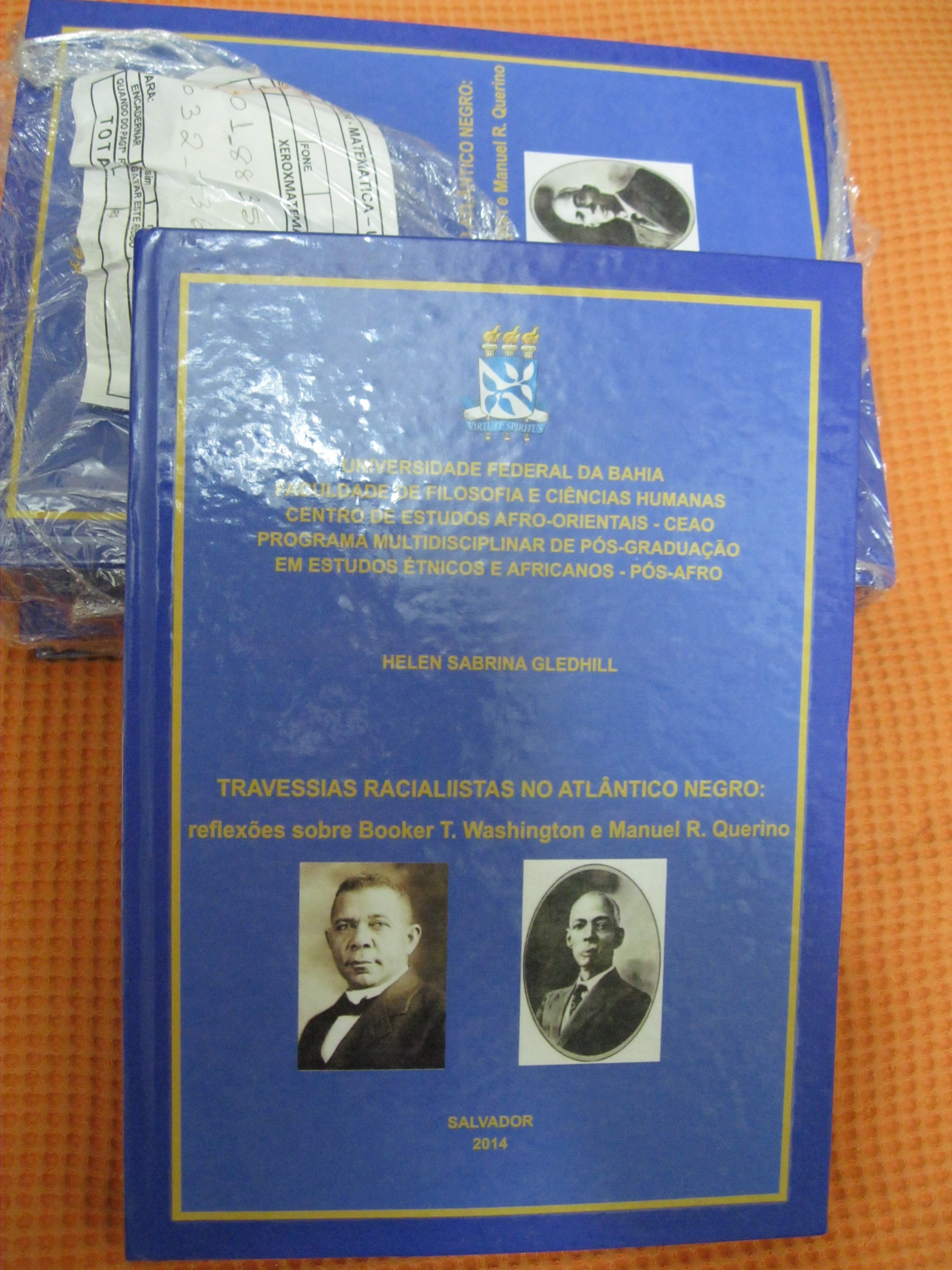
Bound dissertation

The hardcover version of my dissertation

When I arrived in Brazil in December 1986, I was only going to stay for three months. I had just completed my MA in Latin American Studies and was enrolled in the PhD program in History at UCLA. The plan was to gather information on the role of iyalorixás (high priestesses of the Afro-Brazilian religion Candomblé) in the lay community. Mãe Menininha, one of the most famous iyalorixás in history, had died that year, and I wanted to explore her influence in society at large and go beyond that to take a look at other religious leaders. I soon learned that the Candomblé community was (is) sick and tired of being studied, and decided that I’d rather be a part of it – and Bahian culture in general – than study it. Then I got involved in Capoeira Angola, building on the basics I had learned in LA. It was more of an activist movement than a martial art – helping revive and perpetuate another aspect of African resistance in Brazil.

Before the three months were up, I came to a decision: I would find a new home for my only “family” back in California – Lily, a lovely lilac-point Siamese cat – and stay in Brazil. With the help of good friends who made that possible – Susan, Steve and Cynthia, this  is a shout-out to you – I made my home in Bahia, and for a while there, I thought I had left academia behind me. I married a Capoeira classmate, had a beautiful daughter (who is now 25), got divorced, adopted another daughter, and worked as a translator and English teacher. But then, after a while, I started dreaming of that PhD I had left behind.

Fast forward a few decades. Based on the research I did for my MA, which focused on Brazilian intellectuals who studied Africans and Afro-Brazilian culture before it became an accepted field of study in the 1930s, I decided to turn my attention to an Afro-Brazilian, Manuel Querino, and an African American, Booker T. Washington. Both were self-made men who lived in the late 19th and early 20th centuries. They both believed that education was the best path for former slaves and their descendants to get ahead, and led by example. Although they were both highly respected in life, they were later maligned, Washington as an “accommodationist” and Querino as a “humble Black teacher” who lacked “intellectual sophistication”. My aim was to put both men in context and shed some light on their tactics and trajectories.

Reader, I graduated on March 18, 2014. After all these years I have earned a PhD in Ethnic and African Studies from the Federal University at Bahia Center for Afro-Asian Studies (CEAO/UFBA). And that is just the first step. Watch this space.

 Here’s a link to my dissertation (in Portuguese)

National health services: Real and imagined

Brazilian NHS

This week, a close relation had back surgery in London, and a dear friend got a root canal done in Paris. Both used their respective countries’ public health services. Both were very happy with the excellent care they received. During the health care debate in the US, Brazil was held up as one of the countries that offers its citizens a universal public health system. That is a travesty. The above photo, which recently circulated on Facebook, shows expectant mothers waiting to have their babies delivered in Brasilia. This is what this country’s national health service (called SUS, or Universal Health Service) looks like. Brazil has the worst of both worlds – on one hand, predatory insurance companies that often fail to cover life-saving services like radiotherapy for cancer without being taken to court (my personal experience), and on the other, a taxpayer-funded public health system that is an option of last resort for the truly desperate.

Ash Wednesday

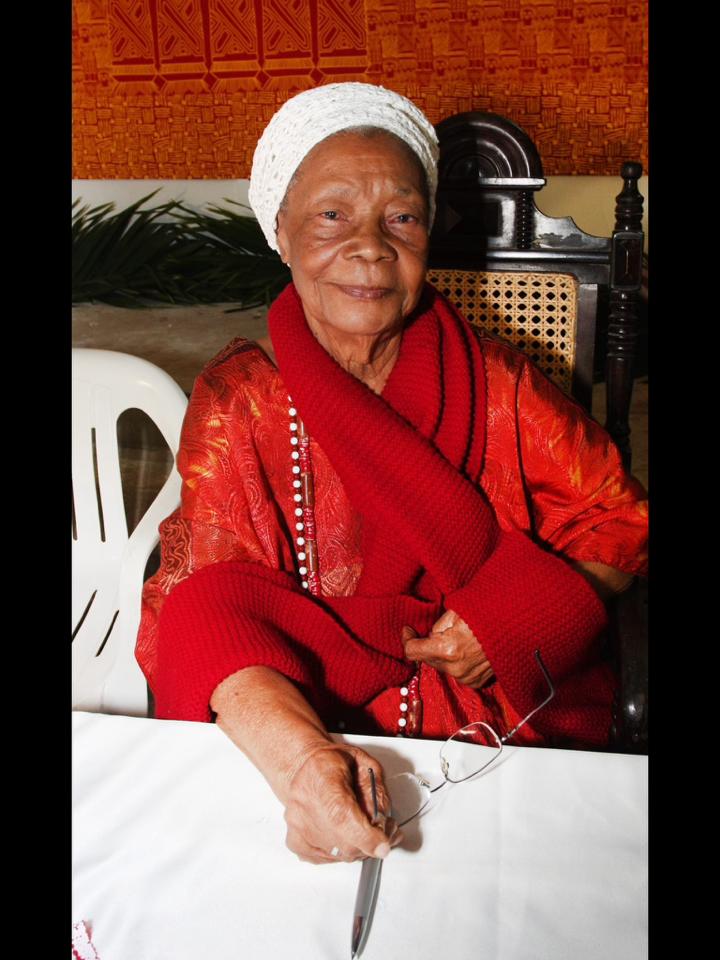
Carnival is still going strong somewhere in Salvador, but for me, Ash Wednesday began on Sunday. On the morning of March 2, a beloved elder, mentor, spiritual guide and friend, Valdete Ribeiro dos Santos, better known as Detinha de Xangô and Obá Gesim, passed on and became an ancestral spirit. She was best known for her gorgeous orixá dolls, an art and craft that she handed down to her daughter-in-law, Maria Izabela “Bezita” dos Santos Silva, but for the Ilê Axé Opô Afonjá community, she was a haven, a consolation, a font of ancestral wisdom. Irreplaceable. R.I.P.

Detinha at book signing

Afro-Brazilian syncretism

Image

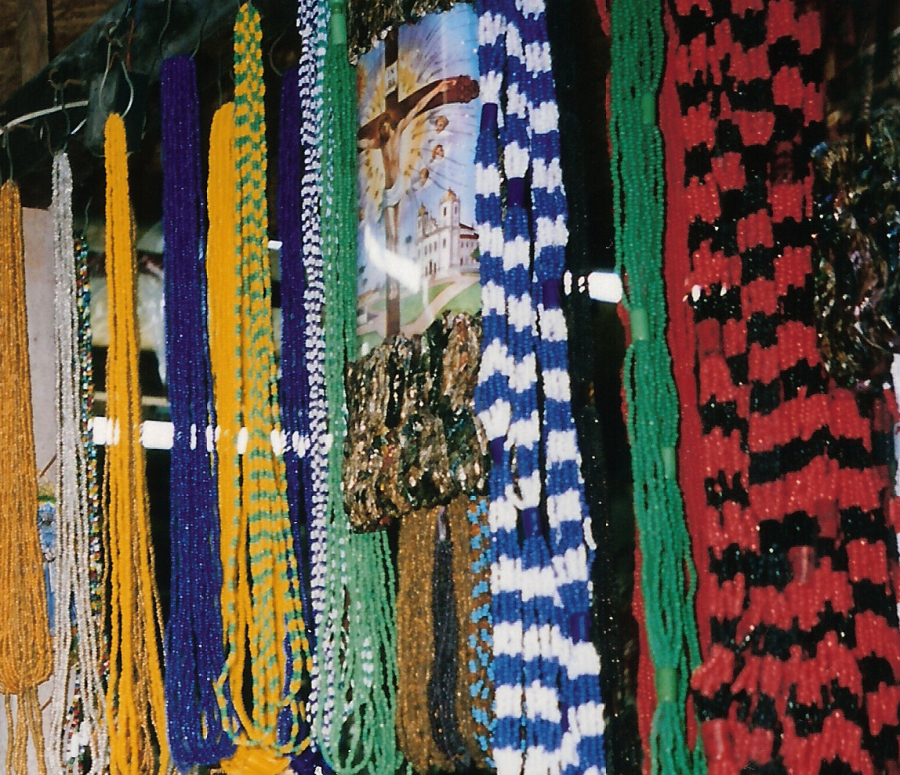
Syncretism – or one religion “passing” as another – is a controversial topic in Brazil and other countries where Traditional African Religions are practised in various forms and guises. According to anthropologist Luis Nicolau Parés, African cultural groups traditionally adopted (and suppressed) the divinities of the groups they conquered and the defeated groups also adopted the divinities of their conquerors. Therefore, it is perfectly understandable that enslaved Africans should adopt or assimilate the saints worshipped by their Catholic conquerors – now called “masters.” Instead of being a form of camouflage, where people originally pretended to pray to Catholic saints in order to protect the worship of Afro-Brazilian divinities, syncretism could actually be the perpetuation of an ancient African practice. A different kind of resistance.

Back to blogging

Oba Gesi and Wara OminIt’s been quite a while since I’ve posted on this blog. I’ve been inspired to get back to it by a British blogger who is visiting Brazil and posting her impressions. I also get questions on Brazil – especially race relations – via Facebook, which has been my main “blogging” platform for the past few years (basically because I’ve been too busy to sit down and write). What has changed? Today is Mardi Gras – an official holiday in Brazil. Plus, I turned in my dissertation on 18th February – I’m due to defend it on 18th March – so I can focus on other things. To start with, here’s a link to an entry I wrote for Brazil Today: An Encyclopedia of Life in the Republic, titled Race Relations in Brazil Today I welcome your comments and questions (especially those which can’t be answered by Googling).