As white supremacy resurges and attempts to erase Black history intensify, our publications stand as an act of resistance. They showcase essays by Black intellectuals, demonstrating the enduring strength and resilience of Black people in the face of prejudice. Our books amplify Black voices from the US and Brazil, clearly showing that Africans and their descendants in the diaspora have always defied racist stereotypes. Ironically, even proponents of scientific racism acknowledged Black artistic talent–a rare point of agreement with the intellectuals whose work we champion.
For decades, I’ve been fighting to bring Manuel Querino, a pioneering Afro-Brazilian scholar, out of the shadows. Last week, I found a new ally in that fight: a PhD student at the prestigious University of São Paulo (USP), who has made Querino the focus of his thesis. His name is Fernando Filho, he is a sociologist, and his approach to what I call “Querinology” is to answer three questions:
how can Querino’s theses contribute to Brazilian social thinking?
what led to his “invisibility” in social theory?
to what extent are the subjects Querino dealt with also addressed by renowned authors like Gilberto Freyre and Florestan Fernandes?
Speaking on Google Meet, we spent over an hour discussing our approaches to Querino. Fernando told me how he struggled to get his PhD accepted by a university – being turned down by more than one before getting accepted at USP. He also said that he has been speaking about Querino at conferences in several Latin American countries and finding that the Afro-Brazilian polymath is still a complete unknown there.
I shared some sources, including the collection of essays in Manuel Querino (1851-1923), and explained how I began researching his life and work – thanks to my MA supervisor at UCLA, the late great E. Bradford Burns. I also observed that when I first arrived in Brazil in 1986, Querino had been largely forgotten or, worse, dismissed as an unreliable source. It took years of effort and many publications to change that.
What I took away from our conversation was
(a) despite the fact that I and other scholars, including Jeferson Bacelar, Luiz Freire, Maria das Graças de Andrade Leal, and Jaime Nascimento, have been writing and lecturing about Querino for decades, he is still largely unknown in Brazil’s elite universities; and
(b) ensuring that his life and legacy are not forgotten is a generational task.
Clearly, there is still much work to be done in bringing Querino the recognition he deserves. But with passionate scholars like Fernando Filho taking up the mantle, I’m hopeful for the future of ‘Querinology.'”
Recentemente, o pesquisador e professor universitário Fabiano Cataldo encontrou vários livros e artigos da autoria de Manuel Querino na biblioteca do Museum Imperial no Rio de Janeiro e convidou Sabrina Gledhill a escrever um texto sobre eles. Esta semana, imagens dos livros e o texto foram postados no Instagram. Segue o link:
20 November marks the anniversary of the assassination of Zumbi dos Palmares, the best-known leader of Brazil’s most famous and enduring quilombo. This maroon settlement was established in the mountains of what is now Pernambuco by enslaved people who self-emancipated by escaping bondage.
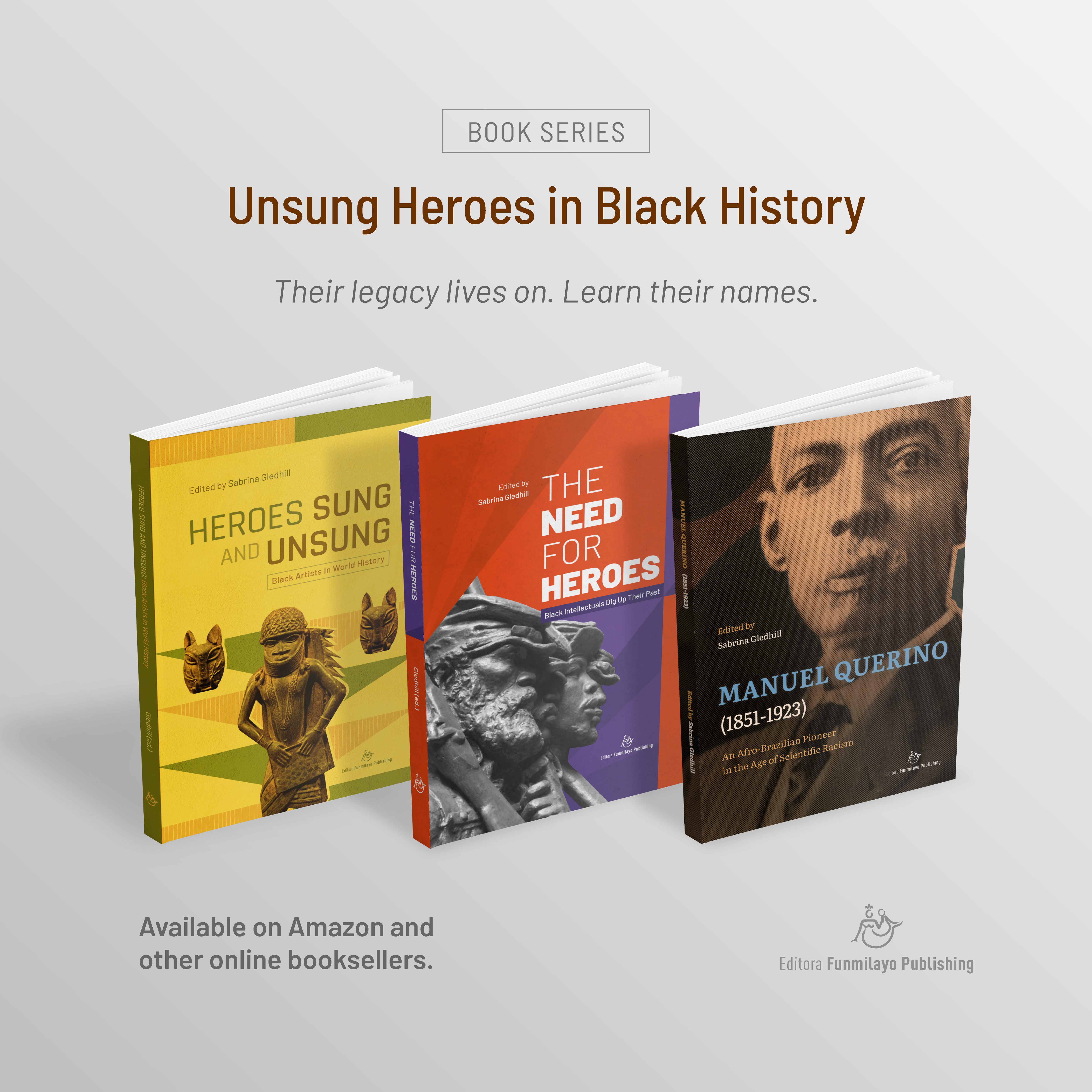
This year, we published an anthology entitled The Need for Heroes. It contains writings by Black intellectuals from the US and Brazil that celebrate the heroism of maroons and soldiers who fought for liberation. One of the authors is Manuel Querino, writing about Palmares over a century ago.
Recently, Brazilian actress Tais Araújo posted a photograph of herself on Instagram, with a copy of Projeto Querino, by journalist Tiago Rogero. Earlier, on 31 October, Tiago published an article in The Guardian about his book, explaining how it developed from the Projeto Querino podcast, which, in turn, was inspired by the New York Times‘s 1619 Project. That article contained a link to this website, boosting its visitors considerably. According to Tiago:
“Projeto Querino is based on a journalistic project that involved a team of more than 40 people, over two years and seven months of work. Inspired by the New York Times’ 1619 Project, it launched in 2022 as a podcast produced by Rádio Novelo and a series of magazine articles. Before joining the Guardian in April, I spent another year conducting further research and writing the book. A central idea was to understand and illustrate how Black people participated in crucial moments of Brazilian history – such as independence in 1822 or the extensively delayed abolition of slavery in 1888 – something that some school curriculums and parts of the media refuse to acknowledge. Its name is a tribute to Manuel Raimundo Querino (1851-1923), a groundbreaking Brazilian intellectual born free in Bahia state. He is considered the first person to portray Africans and Afro-descendants positively in the country’s historiography.”
Tiago Rogero and the historian Ynaê Lopes dos Santos interviewed Sabrina Gledhill about Manuel Querino for the podcast in 2021, and Projeto Querino was launched in 2022. Sabrina`s interview can be found in episode 4 (the link is to the PDF in English).
The next major project was Isis Gledhill’s bio-documentary on Querino, which was launched on YouTube in November 2023 and has already racked up over 8,500 views and been selected for screening at two Brazilian film festivals. Tiago and Ynaê gave interviews for the documentary, as did Sabrina and several other scholars who study Querino.
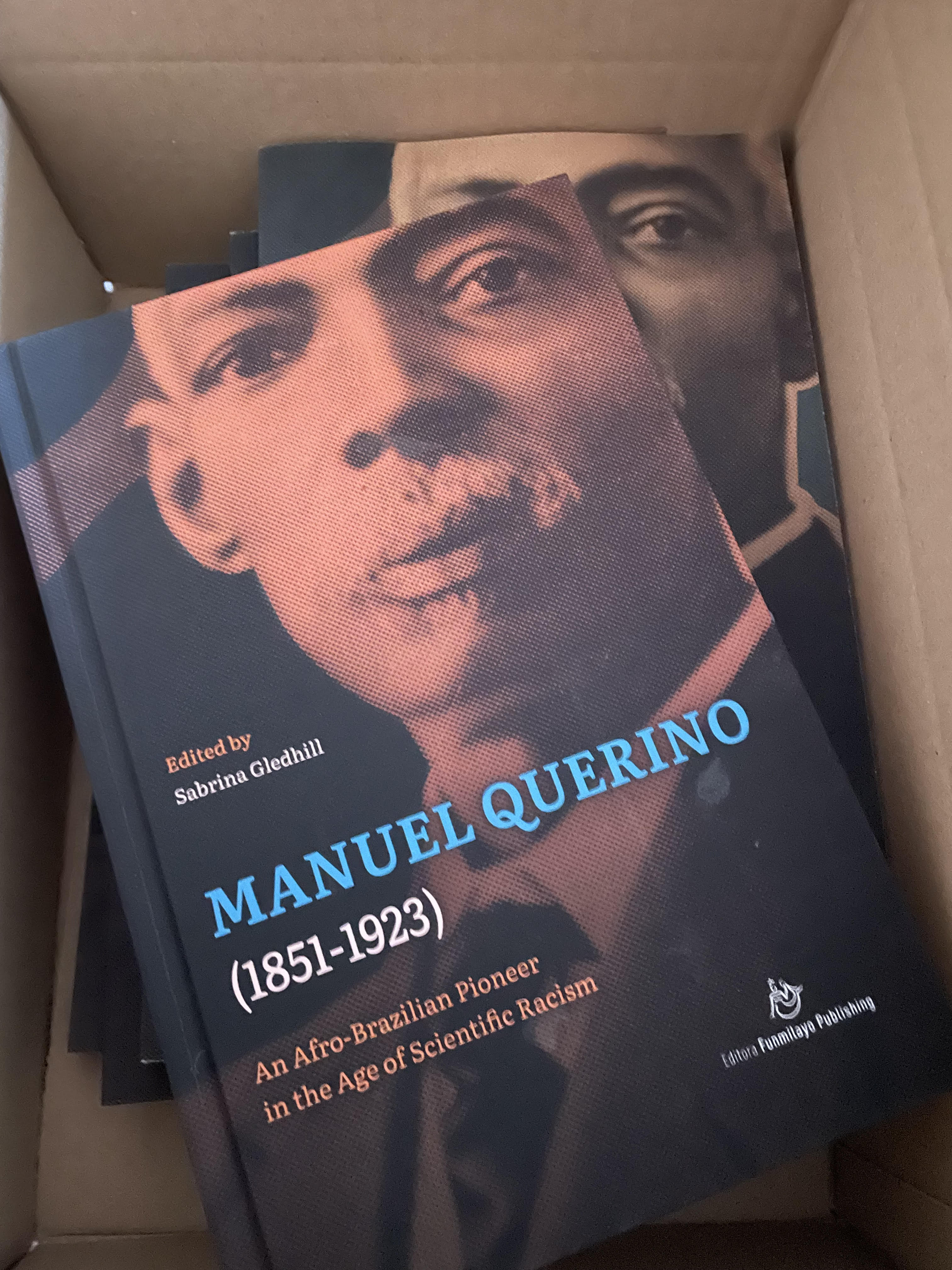
Someone asked if the Projeto Querino book was competing with Funmilayo’s anthology Manuel Querino (1851-1923): An Afro-Brazilian Pioneer in the Age of Scientific Racism. The answer is not at all. We are very pleased that the word is getting out there about Manuel Querino and his legacy. Tiago has used the platform of The Guardian to spread the word about his own book, while generously sharing a link that enables his readers to find out more about Querino through our publications. One of these days, our work will be done, but as long as the process of erasure continues, “a luta continua” (the fight goes on).
The only book I had in mind back in 2020 was an anthology on Manuel Querino, the Afro-Brazilian scholar I have been studying and writing about since the 1980s. I had just published a book in Portuguese based on my PhD thesis comparing Querino to Booker T. Washington, and I was being urged to publish something about Querino in English. I had also written several essays that had appeared in Brazilian peer-reviewed journals and books over the years and would make a small volume. Then, it occurred to me that Querino’s activities were so varied, covering a gamut of specialisms, that it is impossible for one person to write authoritatively about them all.
Fortunately, I had access to writings by E. Bradford Burns (the first bibliographic essay on Querino published in English), Jeferson Bacelar and Carlos Doria (on his pioneering study of Bahian cuisine), Eliane Nunes (on his contributions to art history), Jorge Calmon (on his involvement in labour mobilisation and politics), and Christianne Vasconcellos (on his use of photographs in anthropology) to add to my own writings . The result was Manuel Querino (1851-1923): An Afro-Brazilian Pioneer in the Age of Scientific Racism, a compendium that has also been published in Portuguese (without Burns’s essay, due to translation rights), and has been very well received.
That book was published in 2021, during the Covid pandemic. Lockdown was a wonderful opportunity to focus on organising and translating the anthology. In the years since, I have worked on translating and updating a monograph based on my PhD thesis, which has been in peer review with another publisher for several months. The Unsung Heroes series began with the second volume, which I first approached as “something to do” while awaiting the verdict on my own book. It all started with Querino, naturally. I had originally intended to publish my translation of one of his most significant works (for me), O colono preto como fator da civilização brasileira, translated as The African Contribution to Brazilian Civilisation.
First, I was intrigued by parallels between Querino’s story and that of Arthur (born Arturo) Schomburg. Then, I started wondering which works by W. E. B. Du Bois, Carter G. Woodson, Booker T. Washington, and other Black thinkers were comparable to Querino’s essay, which demands recognition for the achievements of Africans and their descendants. Instead of being seen as passive sources of manual labour, Querino asserted that they contributed knowledge they brought from their homelands, such as mining and metalworking, as well as helping maintain Brazil’s territorial integrity as soldiers. He also emphasised their ingenuity and courage in breaking free from the bonds of slavery to form their own communities, known as quilombos in Brazil.
That initial curiosity led to a gold mine of works on Black soldiers and maroons, which I added to Querino’s essay to produce The Need for Heroes: Black Intellectuals Dig Up their Past, published in June 2024. I realised that the concept of Unsung Heroes, inspired by the title of Elizabeth Ross Haynes’s book of children’s stories, extended to the anthology on Querino. He was well known in life, having achieved such renown in Brazil that several newspapers published his obituary in his home state (Bahia), Rio de Janeiro, and other parts of the country. Representatives of trade unions and academia attended his funeral, which was also covered by the press. But since the 1930s, he had been gradually forgotten, and if remembered at all, thought of as a lightweight scholar, the minor author of a few pamphlets, and even illiterate. There seemed to have been a deliberate effort on the part of the “hegemonic narrative” to rewrite his story as that of a poor, ill-educated Black man who made a stab at anthropology but didn’t quite succeed. This disinformation was convenient because he already contradicted the commonly held notion that all Blacks in Brazil were enslaved until Abolition in 1888, and since then had been nothing but vagrants, thieves, and scoundrels – an image still maintained in the media.
While the eminent Brazilian historian Flavio Gomes was writing the afterword for The Need for Heroes (it was worth the wait), I started putting together works that hadn’t quite fit in that collection and adding many more. Once again, I started with Querino, who is considered the Brazilian Vasari because his pioneering works on the history of art in Bahia were based on biographies of artists. The result was Heroes Sung and Unsung: Black Artists in World History, a compendium of works by Querino, as well as Arthur Schomburg, W. E. B. Du Bois, Booker T. Washington, Benjamin Brawley, James M. Trotter, Sojourner Truth, Frederick Douglass, and others, with a foreword and afterword by brilliant contemporary artists and writers: Mark Steven Greenfield, from the USA, and Ayrson Heráclito and Beto Heráclito, from Brazil. It joins the first two titles, Manuel Querino (1851-1923): An Afro-Brazilian Pioneer in the Age of Scientific Racismand The Need for Heroes: Black Intellectuals Dig Up their Past, which are also available in paperback, hardcover, and Kindle e-book editions.
When I’m asked what’s next, the answer seems obvious—an anthology about Black women heroes, “sung and unsung.” I might even reclaim the word “heroine.” I haven’t come up with a title yet, and I may have to write most of the bios myself, but it is something to look forward to. Watch this space.
This post is an adaptation of an essay published in Heroes Sung and Unsung
A moving response to The Need for Heroes: Black Intellectuals Dig up their Past
The book is extremely timely, given the state/conditions of the politics of the US currently.
It is good having all this detailed background information in one place. It provides historical background/examples of how and why the current politic and society have reached this point.
The essays of the authors and stories of various heroes humanize them: enslaved Harriet Tubman doing housework to the displeasure of her mistress, Booker T. Washington’s friendship with Charles Banks of Mount Bayou, Mississippi and with Bishop George W. Clinton of Lancaster, South Carolina, the town where my ancestors lived.
Learning about individuals of the years immediately after slavery making their way in the post-slavery era in US is extremely important, not to mention those who struggled for Freedom before the Civil War. Learning about Blacks who were not enslaved, like Crispus Attucks, but struggled for the freedom during American Revolutionary War was eye opening, as well as details of abuses/discrimination against Blacks after the 1812 war.
For myself, I can say “Heroes” makes me want to know and read more about Black people/heroes, past and present, who have contributed to the march forward to Freedom. A copy of The Need for Heroes should be in the home of all “Black Folk” and other Americans!
Travessias was reviewed in the Bulletin of Latin American Research (BLAR) last October, and the review of the anthology just came out this month (August 2024) in the Hispanic American Historical Review (HAHR) in Portuguese.
Querino is finally reaching academic outlets outside Brazil. The first time, that I know of, was when E. Bradford Burns’s bibliographical essay about the Afro-Brazilian polymath came out in The Journal of Negro History in the 1970s (that essay is also included in the Manuel Querino anthology).
Meanwhile
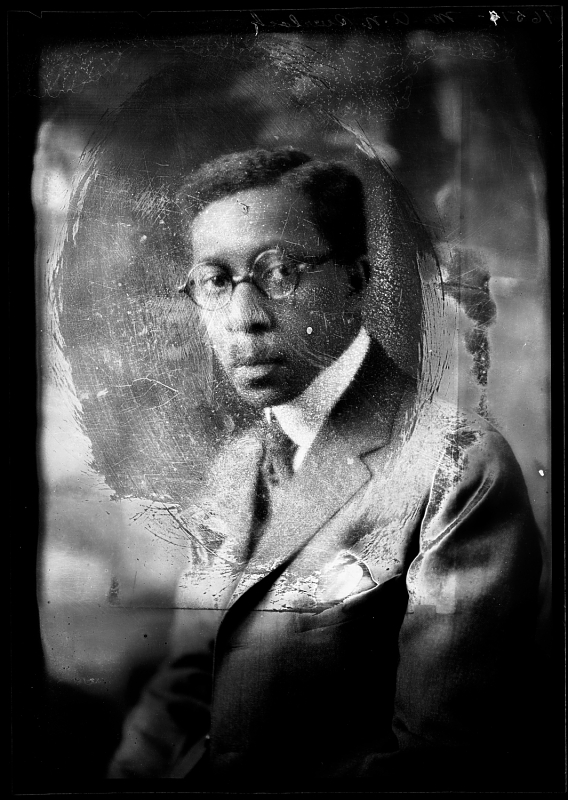
We’re putting the finishing touches on the latest addition to the Unsung Heroes in Black History series – Heroes Sung and Unsung: Black Artists in World History is in press and scheduled for publication in September. The illustrations include a self-portrait of the photographer Addison Scurlock (above). Here is another illustration, included in the afterword by Ayrson Heráclito and Beto Heráclito:
Xango Eyes, by Bauer Sá (reproduced with permission from the photographer)