The Forefather of Affirmative Action

Marcos Rodrigues

MA in Ethnic and African Studies, UFBA

ORCID: 0000 0002-6662-2350

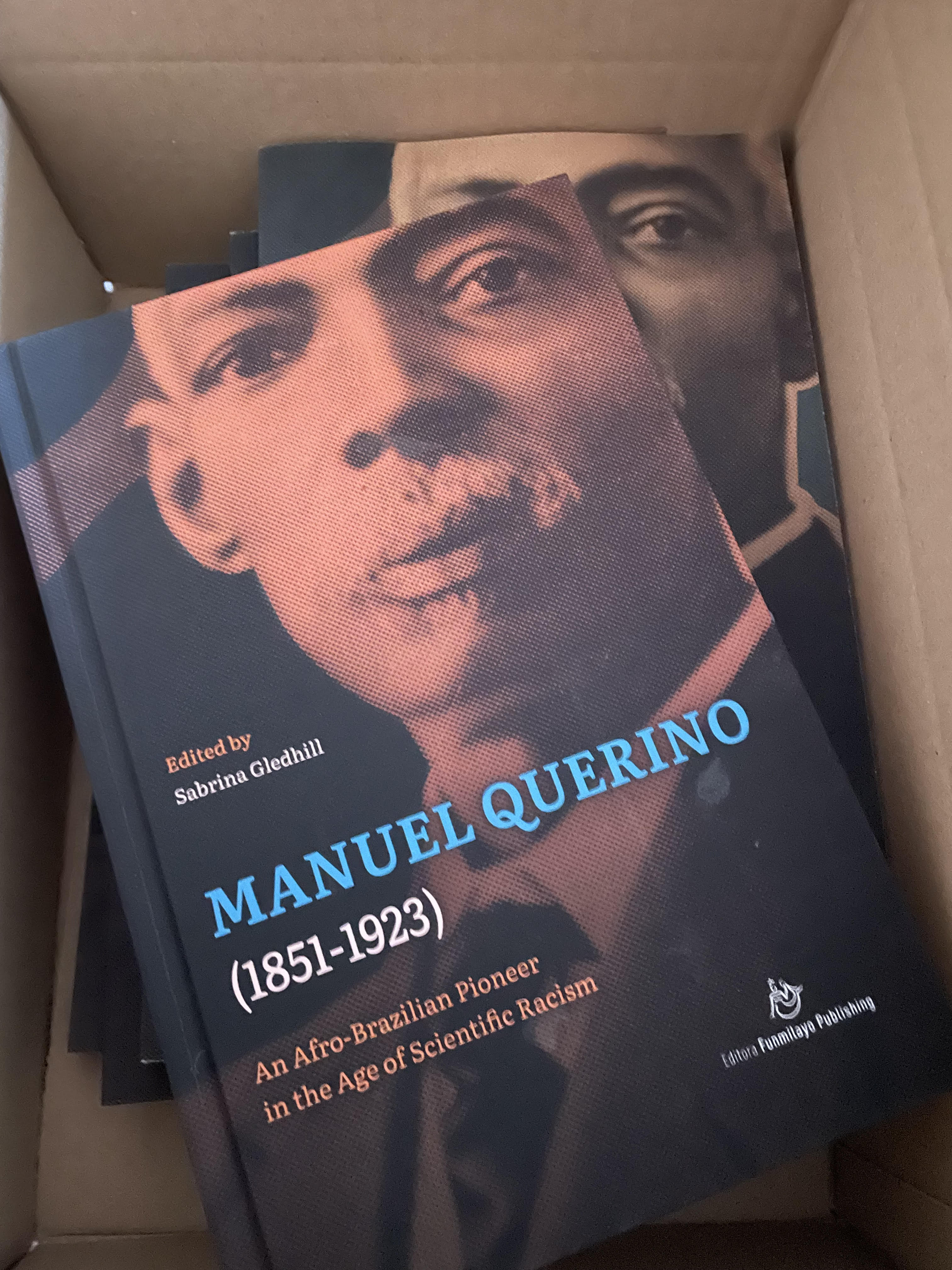
Review of GLEDHILL, Sabrina (ed.). Manuel Querino (1851-1923): An Afro-Brazilian Pioneer in the Age of Scientific Racism. Crediton: Funmilayo, 2021.[1]

Edited by the independent scholar Sabrina Gledhill, this book introduces—or reintroduces—the life and work of the Brazilian intellectual and activist Manuel Querino (1851-1923), a pioneer in the construction of the civilizing Afro-Brazilian discourse in the age of scientific racism. Born in Santo Amaro, Bahia, in colonial times, Querino can certainly be considered the forefather of the struggle for affirmative action for the Black population, based on the spaces he occupied as an educator, labour leader, politician, ethnologist, and writer.

It was a time when evolutionist theories affirmed the classification of inferiority and the prospect of extinction for the Black population, favouring European immigration and the culture of “whitening.” Manuel Querino emerged as a pioneer in several advanced lines of thought, such as ethnology, food anthropology, art history, and the struggle for affirmative action. These qualities marked his trajectory in this book, which also includes essays by E. Bradford Burns, Jorge Calmon, Eliane Nunes, Cristianne Vasconcellos, Jeferson Bacelar, and Carlos Dória.

With the aim of presenting a many-sided biographical analysis against a framework of concepts and definitions of blackness from an evolutionary standpoint, this book was organised from the perspective of scholars from the fields of politics, history, anthropology and social science who focussed on shedding light on Manuel Querino’s legacy. This anthology is also the result of the interconnected movement of humanists from different generations, which certainly contributes in grand style to the reintroduction of its protagonist and his multifaceted trajectory.

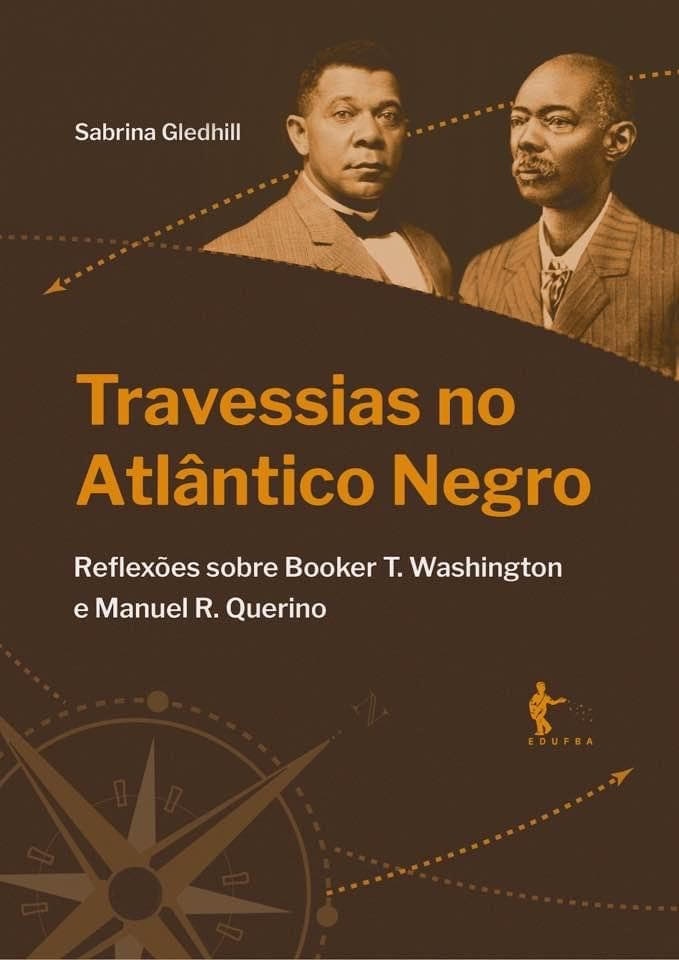
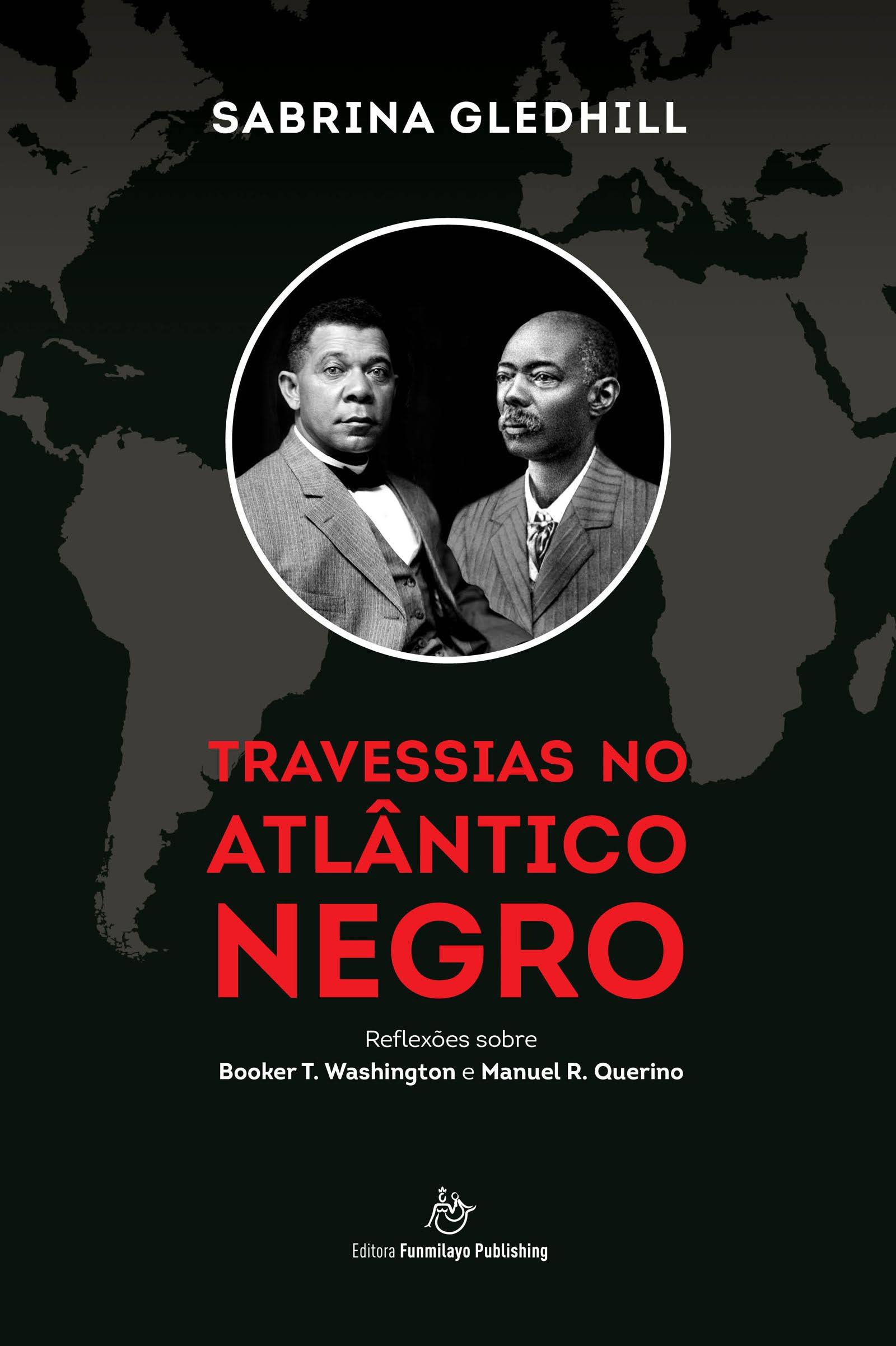
Constructing a discourse involves transgressing, deconstructing, and selecting the paradigm or category of thought to be followed. This foray by Sabrina Gledhill dates back to her previous book, Travessias no Atlântico Negro: Reflexões sobre Booker T. Washington e Manuel Querino (Black Atlantic Crossings: Reflections on Booker T. Washington and Manuel R. Querino; Edufba, 2020), and her participation in other edited volumes, with the aim of spotlighting activist intellectuals from the world of the African diaspora. Now, very opportunely, she has written essays and linked them to narratives by other authors to help establish Manuel Querino’s rightful place as a political subject of his time, whose leading role must be explored.

But what is the place which Manuel Querino occupies in the history of the Brazilian arts and culture, specifically in the state of Bahia? Certainly, in this book, there are several clues to follow to obtain an answer from each author’s perspective. In every field of activity, Querino produced a work that has left its mark on our time. Although he was never enslaved, he seems to have constructed a public discourse based on the perspective of Black people in a society that was being transformed after losing its economic foundations, the culture of bondage.

In her introduction, Sabrina Gledhill, a British Brazilianist and award-winning translator educated in the UK, the US, and Brazil, reveals that her interest in Querino began in the early 1980s, when she was looking for a subject for her MA research at UCLA. Putting Manuel Querino’s life and work in context, she keeps a close eye on the path followed by a controversial man who experienced the final phase of the colonial era and the consequences of slavery in the early twentieth century. The author and editor describes Querino as a lone voice, a Black man who won a place among the White elite and tried to use his position to spread a message that few people of his colour could or were willing to deliver.

Few Brazilians followed such an enlightened path as Manuel Querino, now reintroduced to all those who work in the field of social science and are still surprised when he is mentioned. The importance of revitalising this memory comes from his being a pioneer in the fight against scientific racism as dictated by forensic medicine, from underscoring the African influence in Brazilian history, from introducing the field of art history in Bahia, as well as research on the anthropology of food.

Of the nine chapters that make up this book, two, in particular, stand out. Chapter 6, which focuses on the use of photographs in ethnographic studies, is a direct reflection on a debate that is now actively ongoing in anthropology. The author, Christianne Vasconcellos, sheds light on Manuel Querino’s anthropology in his ethnographic studies of Africans in Bahia with an essay that induces the reader to return to the path of recognising and knowing him as a way of understanding our historic process.

Chapter 8 is the key to understanding the origins of what is now known as Bahian cuisine. The scholars and guest authors Jeferson Bacelar and Carlos Dória reveal that Manuel Querino was the first to study Bahian cuisine, giving rise to a segment of food anthropology. Thus, it should be recalled that the tourist attraction now promoted on a grand scale came from the research done by Querino in difficult times marked by a strictly Eurocentric culture in a colonising intellectual market.

Reading that essay easily leads us to reflect on how the African diaspora in the Americas and Caribbean contains thousands of hidden human values that struggled and played a leading role in overcoming adversity, and the effectiveness of post-slavery affirmative action. The civilising discourse that shaped our thinking, always on the basis of European colonisers as a tentacular reinforcement for scientific racism, was already showing its contradictions. Hence, the merit of the narratives gathered here in delving against the grain of invisibility and bringing to light the life and works of Manuel Querino.

This anthology seems to achieve an important objective. It leaves the reader with the desire to find or re-examine Manuel Querino’s work and include him among the main sources in discussions or research that will be forthcoming when the subject is Bahian culture. The objectivity of the essays leads to a sphere of knowledge hitherto neglected by the canonical thought of the intellectual “classics” of the past. Therefore, recent generations are grateful for this act of reparation on behalf of a vibrant historical and cultural legacy that is clearly overlooked.

Certainly, digging into Querino’s life is no easy task for scientific research. The sources consulted and the authors invited to take part in this publication indicate the extent of the activity surrounding a personage who paved the way for ethnological, historical, and artistic studies focused on Africanity and its offshoots in the diaspora. Therefore, this book is also an example of intellectual responsibility.


[1] Adapted from a review of the Brazilian edition.


O Precursor das Ações Afirmativas

Marcos Rodrigues

Mestre em Estudos Étnicos e Africanos pela UFBA

ORCID: 0000 0002-6662-2350

Resenha do livro GLEDHILL, Sabrina (org.). (Re)apresentando Manuel Querino – 1851/1923: um pioneiro afro-brasileiro nos tempos do racismo científico. Salvador: Sagga editora, 2021. 194 p.

Palavras-chave: Ações afirmativas; Manuel Querino; Racismo científico.

O livro organizado pela pesquisadora Sabrina Gledhill nos apresenta ou reapresenta a trajetória do intelectual e ativista baiano Manuel Querino (1851-1923), um pioneiro na construção do discurso civilizatório afro-brasileiro, nos tempos do racismo científico, conforme anunciado na capa. Nascido em Santo Amaro (BA), ainda no período colonial, Querino certamente pode ser considerado o precursor da luta por ações afirmativas da população negra, com base nos lugares que ocupou como educador, sindicalista, político, etnólogo e escritor.

Era uma época em que a teoria evolucionista fazia valer a classificação da inferioridade e a perspectiva de desaparecimento da população negra, em favor da imigração europeia e da cultura do branqueamento, e então surgia o pioneiro em várias linhas de frente como a etnologia, a antropologia da alimentação, a história da arte e a luta por ações afirmativas. São qualidades que marcam a trajetória de Manuel Querino nesse livro que também traz a participação dos autores Jorge Calmon, Eliane Nunes, Christianne Vasconcellos, Jeferson Bacelar e Carlos Dória.

Com o objetivo de apresentar uma análise biográfica em várias vertentes contra um marco de conceitos e definições em torno da negritude sob uma perspectiva evolucionista, o livro foi elaborado a partir da visão de pesquisadores(as) da política, da história, da antropologia e das ciências sociais que se debruçaram a iluminar o legado do baiano Manuel Querino. Também a coletânea resulta de um movimento articulado entre humanistas de diferentes gerações, o que certamente contribui em grande estilo para a reapresentação do personagem em foco com sua trajetória multifacetada.

A construção de um discurso implica antes em transgredir, desconstruir e selecionar o paradigma ou categoria de pensamento a ser trilhado. E essa investida de Sabrina Gledhill já vem desde o livro anterior Travessias no Atlântico Negro: Reflexões sobre Booker T. Washington e Manuel R. Querino e Booker Washington (Edufba, 2020) e de sua participação em outras coletâneas, na intenção de tornar visíveis intelectuais ativistas do mundo da diáspora africana. Agora, de modo muito feliz, escreve e anexa narrativas de autores convidados para fazer valer o lugar de Manuel Querino como sujeito político do seu tempo, cujo protagonismo deve ser revisto.

Mas, que lugar ocupa Manuel Querino na história da cultura baiana? Certamente, nesse livro são várias pistas a seguir como resposta a partir do ângulo de cada autor. Em cada área de atuação, uma construção que deixou sua marca em nossos dias. Ainda que não tenha passado pela condição de escravizado, Querino parece ter construído um discurso público sobre a perspectiva do negro em uma sociedade que se transformava ao perder seu ponto de sustentação econômica, a cultura do cativeiro.

Brasilianista inglesa, tradutora premiada, com estudos realizados nos Estados Unidos e no Brasil, a pesquisadora Sabrina Gledhill revela no texto de apresentação que seu interesse por Querino começou na primeira metade dos anos 1980, quando buscava um tema de pesquisa na Universidade da Califórnia, em Los Angeles (EUA). Ao expor as referências de Manuel Querino, concentra na sua bagagem um olhar atento sobre o percurso de um homem controverso que viveu durante a última fase da era colonial e, ao lado dos desdobramentos da escravidão, no início do século 20. A autora define Querino como uma voz solitária, “um negro que conquistou um lugar no meio da elite branca, tentou utilizar sua posição para divulgar a mensagem que poucas pessoas de sua cor podiam ou estavam dispostas a proferir”. (p. 18)

O volume tem prefácio do historiador e professor Jaime Nascimento, que chama atenção para importância de Manuel Querino, cujo caminho seria improvável para um negro do século 19. E mais, com muita propriedade, o evidencia como antropólogo autodidata no seu lugar de precursor dos estudos civilizatórios da cultura africana na formação social brasileira e um dos principais pesquisadores da História da Bahia.

Poucos brasileiros ocuparam uma carreira ilustrada como Manuel Querino, agora reapresentado a todos aqueles que transitam na área dos estudos sociais e ainda o estranham quando mencionado. A importância de revitalizar esta memória advém de ser pioneiro na contramão do racismo científico ditado pela medicina legal, de reforçar a influência africana na história nacional, de inaugurar a historicidade da arte na Bahia e as pesquisas em antropologia da alimentação.

Dos oito capítulos que compõem o volume, dois deles se destacam. O capítulo 5, com abordagem sobre o uso de fotografias no estudo etnográfico, é um reflexo direto sobre essa discussão atualmente muito em curso na antropologia. A autora Christianne Vasconcellos expõe a antropológica de Manuel Querino seus estudos etnográficos sobre os africanos na Bahia com um texto que seduz o leitor a retomar o caminho de (re)conhece-lo como via de entendimento do nosso processo histórico.

O capitulo 7 é a chave para entender a origem do que hoje se chama de comida baiana. Os pesquisadores convidados Jeferson Bacelar e Carlos Dória revelam o pioneiro dos estudos da culinária baiana, segmento que deu corpo à antropologia da alimentação. Desse modo, vale lembrar que o produto turístico difundido hoje em grande escala veio das investigações feitas por Manuel Querino em tempos sombrios marcados pelo rigor da cultura eurocêntrica de um mercado intelectual colonizador.

Após uma leitura como essa, não é difícil refletir como a diáspora africana nas Américas e no Caribe esconde milhares de valores humanos que lutaram e foram protagonistas na superação da adversidade e pela eficácia das ações afirmativas pós-escravidão. O discurso civilizatório formador do nosso pensamento sempre a partir do europeu colonizador, com o reforço tentacular do racismo científico, já mostrava suas contradições desde então. Daí, o mérito das narrativas aqui reunidas ao mergulharem na contramão da invisibilidade e trazer à luz o perfil de Manuel Querino.

A coletânea parece atingir um objetivo importante. Deixa no leitor a vontade de buscar ou rever a obra de Manuel Querino e adotá-lo entre as principais fontes em discussões ou pesquisas que estarão por vir quando o assunto for cultura baiana. A objetividade das narrativas conduz a uma esfera do conhecimento até então negligenciada pelo pensamento canônico dos “clássicos” intelectuais de outrora. Com isso, as gerações recentes agradecem essa atitude de reparação em favor de um legado histórico e cultural pulsante, sabidamente ignorado.

Garimpar a vida de Querino certamente não sugere muita facilidade para um trabalho de caráter científico. As fontes consultadas e os autores convidados para essa publicação sinalizam a extensão da atividade em torno de um personagem que abriu caminho dos estudos etnológicos, históricos e artísticos voltados à africanidade e suas vertentes na diáspora. Por isso, o livro também demonstra ser um exemplo de responsabilidade intelectual.

Artigo sobre as obras pioneiras de Querino

Recentemente, um artigo meu saiu na revista do Instituto Geográfico e Histórico da Bahia – IGHB. O artigo apresenta e analisa as obras do intelectual afro-brasileiro Manuel Querino (1851-1923) consideradas pioneiras nas áreas de História da Arte, Antropologia da Alimentação, Estudos Étnicos e Africanos. Segue o link para a edição Jan/Dez 2021 da revista:

: Artigo sobre as obras pioneiras de Querino

(Re)introducing Manuel Querino

I recently published an anthology entitled Manuel Querino (1851-1923): An Afro-Brazilian Pioneer in the Age of Scientific Racism. All but one of the chapters were originally published in Portuguese and are available in English for the first time. They cover several aspects of Querino’s life and career – leaving enough topics for at least a revised and expanded edition. The facets included in this publication are his work as a politician and militant journalist, art historian, Black vindicationist (he was the first Afro-Brazilian scholar to underscore the positive contribution of Africans and their descendants to Brazilian society), ethnologist and food scholar. For more information on the e-book, paperback and hardback editions, visit https://www.amazon.co.uk/dp/B097N4F8CB/ref=cm_sw_r_tw_dp_RS4D5PVVYJYDMW0B34CS via @AmazonUK or search for Gledhill Querino on your country’s Amazon website.

Lançamento(s) do livro Travessias – agora da edição impressa


O mês de novembro – mês da Consciência Negra no Brasil – foi marcado com uma série de lives e entrevistas divulgando o lançamento de uma nova edição do livro Travessias no Atlântico Negro: reflexões sobre Booker T. Washington e Manuel R. Querino. A edição eletrônica foi lançada em 2018 pela Editora Funmilayo Publishing e está disponível pelo Kindle (na Amazon). Desta vez, as comemorações foram em torno da edição impressa, pelo selo da Edufba, a editora da Universidade Fedral da Bahia, onde a autora fez o doutorado em Estudos Étnicos e Africanos e defendeu a tese que deu origem ao livro em 2014.

Acesse o blog sobre Manuel Querino – http://mrquerino.blogspot.com/ – e confira os vídeos postados.

Caso queira adquirir o livro, pode ser comprado no Instituto Geográfico e Histórico da Bahia, na Praça da Piedade e na Livraria LDM em Salvador-BA. Também está disponível online, pela Amazon.com.br https://www.amazon.com.br/dp/6556300055/ref=cm_sw_r_tw_dp_x_bYF0FbP5NYACF via @amazonBR e a Estante Virtual. Boa leitura!

Promoção de livro sobre Manuel Querino e Booker Washington

O livro Travessias no Atlântico Negro, reflexões sobre Booker T. Washington e Manuel R. Querino está disponível pelo preço promocional de R$4,99 até amanhã (3 de setembro de 2018). O valor normal é R$34,99. Promoção válida apenas no Brasil, nos sites da Amazon – http://www.amazon.com.br (Kindle) – e da Livraria Cultura – http://www.livrariacultura.com.br (Kobo)TAN capa final small

Apologies, and moving on

I apologize for the last few posts, publicising my new e-book in Portuguese. I am working on an English translation, adapted for a non-Brazilian readership. I have changed the name of this blog to encompass other topics that might arise. I have recently noticed, for example, that the debate on the supposed Booker T. Washington/W.E.B. Du Bois dichotomy is still alive and well, and intend to weigh into it shortly. Watch this space!

Novo e-book no prelo

Neste livro, Sabrina Gledhill analisa as trajetórias e táticas antirracialistas de Booker T. Washington (1856/1915) e Manuel Raymundo Querino (1851/1923), dentro do contexto do Atlântico Negro. Apesar do prestígio que desfrutaram em vida, suas imagens foram dilapidadas após a morte: Washington com a mácula de “comodista” e até “traidor da raça”; e Querino com a imagem de um “humilde professor negro” de parcos poderes intelectuais. A realidade, como os dois educadores negros que são o enfoque deste trabalho, foi muito mais complexa.

Querino foi uma figTAN capa final smallura multifacetada: pintor-decorador, artista, abolicionista, jornalista, líder operário, político, professor de desenho industrial e pesquisador, fundador da historiografia da arte baiana, defensor dos terreiros de candomblé, sócio fundador do Instituto Geográfico e Histórico da Bahia, inspiração para Pedro Archanjo (protagonista de Tenda dos Milagres) e o primeiro intelectual afrobrasileiro a destacar a contribuição do africano à civilização brasileira.

Educador, orador e conselheiro de presidentes dos Estados Unidos, Washington nasceu escravo e chegou a ser considerado o “negro mais famoso do mundo”. Após a Emancipação, trabalhou como zelador para custear seus estudos no Instituto Hampton, fundou o Instituto Normal e Industrial Tuskegee e tornou-se o líder da “nação negra” nos Estados Unidos, tendo como seu maior rival o intelectual negro W.E.B. Du Bois.

Depois de apresentar o contexto em que viveram e traçar as interconexões entre suas realidades, Gledhill analisa suas trajetórias durante a vida e após a morte. Mostra como Manuel Querino poderia ter acesso a informações detalhadas sobre a vida e obra de Washington décadas antes que sua autobiografia mais conhecida, Up from Slavery, fosse lançada no Brasil, traduzida por Graciliano Ramos. Paul Gilroy, o idealizador do conceito do Atlântico Negro, usa a metáfora de navios atravessando o oceano. Gledhill mostra que as “travessias” também poderiam ser realizadas por meio de traduções e da telegrafia.


A “Brazilian” in Blighty

park-here-1233560-1280x960

Photo by wynand van niekerk


When I used to visit the UK while living in Brazil, I sometimes found myself doing what I would do in Bahia – like slapping the side of a London bus that was pulling away from the stop in hopes that it would let me on (not a chance, and I found myself stared at). Now that I live here, I am becoming rapidly acculturated. I even think 14 degrees (Celsius) is mild! However, a recent experience has shown that I haven’t stopped being (or acting) Brazilian in Blighty.

When my daughter was visiting me in Birmingham, we went out for an Indian meal with an old friend who wanted to meet her. My friend had advised me to use a particular car park, so when we got there I pulled out the ticket as the gate spat it out, and popped it under the windscreen. I think. As we were walking away from the car, I realised that it wasn’t a “pay and display” but a “walk and pay” system, so I went back for the ticket. It was nowhere to be found. Neither my daughter nor I could remember what I’d done with it after I pulled it from the gate, although I was sure I had stuck it under the windscreen. We tore the car apart. No ticket to be seen. Finally, I resigned myself to paying the full fee – about £16 – and we walked glumly to the restaurant to meet up with my friend.

Hours later, cheered by a varied and not-too-pricey meal at Jimmy Spices, the three of us returned to the car park. While my daughter went back to the car to make a last-ditch effort to retrieve the *&(£$% ticket, my friend and I tried to find someone I could pay to let us leave. The glassed-in office was dark and empty, and for a moment I thought we would be there all night, but then I noticed a light gleaming through a crack in an inner door. Instinct took over and I suddenly slapped on the glass. Instantly, a man sprang out and opened the outer door to see what the fuss was about. “My ticket has vanished!” I cried with all the scene-chewing passion of a Brazilian soap star. “Here, take this,” he blurted, handing me a ticket. “It’ll let you out.” I was confused at first. How much would I have to pay? I tried to validate the ticket but the machine refused to recognise its existence. Finally, I decided to take a chance, said good-night to my friend and drove up to the barrier. The ticket went in, the barrier went up, and my daughter and I drove through. Free of charge. When I told my friend he couldn’t believe it. I still can’t. I wouldn’t try it again.